
The Year's Best Kit
We’ve been busy testing in the past year. Here is what we’ve found that works.
WHAT THE TRIANGLES MEAN
For more than two decades, the RiDE Best Buy and Recommended triangles have stood for performance and value for money.

A RiDE Best Buy award means that a product has been tested and found to excel in its field, while offering exceptional value for money
A RiDE magazine Recommended triangle means a product has done an outstanding job at a higher price or an acceptable job at a much lower price.
FEBRUARY 2025
BATTERY-POWERED HEATED GLOVES

Keis G901 Extreme £295 (inc batteries)
Excellent fit, very good on-bike comfort and feel warm at any speed, but not waterproof in our testing. Best for cold, dry rides.

Merlin Curborough £229.99
Sporty gloves that are comfortable and fit very well. Keep water out but need greater heating power. Best for warmer, wet rides.
MARCH 2025
SUB £500 TEXTILE SUITS

Rebelhorn Hiker IV £429.90
A great performance in most conditions, only limited by having no thermal lining. Great fit, comfortable, flexible, and excellent venting for warmer rides.

Oxford Calgary 2.0 £409.98
Just what you would expect from Oxford; warm, dry, comfortable, a good fit. The brand’s familiar quality. Vents offer useful airflow for warmer rides.
APRIL 2025
GROUND ANCHORS

Artago 61 £104.99
A very solid piece of kit, accepting up to a 20mm chain and resisting attack by hand and power tools for the greatest time.
RECOMMENDED - Oxford Beast £99.99
MAY 2025
CHAIN LUBES

Zing Chain Lube £4.99
Consistency and incredibly low price mean you can clean and reapply often and easily. A great option for day to day, year-round use.
RECOMMENDED - S100 Chain Lube White 2.0 £19.99
JUNE 2025
LIGHTWEIGHT ADVENTURE LUGGAGE

Kriega OS-Base £508
Not cheap, but the legendary Kriega quality and flexibility are present. Choose exactly the bags you need for your trip and away you go.

Enduristan Blizzard 2 £530
Less flexible but still with expansion options, the Enduristan saddle bags are very stable. Pair them with a flexible bag for greater storage.
JULY 2025
WATERPROOF MESH JACKETS

Oxford Dakar D2D Air £169.99
The ideal accompaniment for an everyday or touring trip. High safety rating, good fit and decent waterproofing, it’s a genuine alternative to conventional textiles.

Furygan WB0 8 Vented+ £209.90
Full of well-designed features, waterproof when required and with a lovely fit, the Furygan ticks all the right boxes. If you want a sporty look, it’s a great option.

Merlin Shenstone II Cotec Air £299.99
If you own a retro bike and generally ride in the summer only, this is all the jacket you’d need. It’s worth the – admittedly high - price tag.
AUGUST 2025
PEAKED FLIP-FRONT HELMETS

Nexx X.Lifecountry £539.99
A great helmet that is comfortable straight out of the box. Despite being the heaviest, it wears it well and offers excellent vision with low noise.

Schuberth E2 £589.99
Excellent quality and features, and while the fit is very good the comfort can be tweaked through adjustable inserts to achieve day-long security.

HJC i80 £219.99
A very good proposition. Great value, huge vision and a top vent that genuinely keeps your head cool. Here as it is £300 less than the other two, but still good.
SEPTEMBER 2025
BIKE BOOTS YOU CAN WALK IN

Richa Andorra WP £189.99
A well-considered boot, the Andorra WPs feel very protective and comfortable, and delivered on their promise of waterproofing.
RECOMMENDED - Sidi Nucleus GTX £199.99
OCTOBER 2025
LIGHTWEIGHT ALLWEATHER GLOVES

Oxford Omega 1.0 Dry2Dry £59.99
Not the most stylish glove here, but 100 per cent waterproof, comfortable, and the cheapest – meaning they’re a winning combination of price and performance.
RECOMMENDED - RST Fulcrum CE £69.99
NOVEMBER 2025
30-LITRE RUCKSACKS

Oxford Atlas B-30 £169.99
A great multi-purpose rucksack, its versatility sets it aside from its competition and quality construction means it delivers where it counts.
RECOMMENDED - Klim Arsenal 30 Backpack £200
DECEMBER 2025
DO-ANYTHING SPORTY BOOTS

Sidi Performer Gore-Tex £279.99
Stylish, lightweight, excellent fit and allday comfy, and totally waterproof in our tests – a winning combination. Expensive, but worth it.

RECOMMENDED - Alpinestars SMX Plus v2 £449.99
JANUARY 2026
TORX T-BAR KEYS

Halfords Advanced 7pc £26.50
Great feel, good quality and superb value combined with a great price and a lifetime guarantee, they make perfect sense as a purchase.
RECOMMENDED - Teng TTTX7 7pc £76.44
FEBRUARY 2026
WINTER BASE LAYERS

Alpinestars Ride Tech Winter £89.99 top, £79.99 pants
Performance and quality to top our score charts. High-tech fabrics justify the price tag for the serious year-round rider.
RECOMMENDED - Oxford Advanced £24.99 top, £19.99 pants
MARCH 2026
SUB - £1500 GORE-TEX SUITS
Alpinestars ST-7 £1179


Does everything a Gore-Tex jacket and trouser combo should – warm, dry, fits well, easy to wear, not too bulky, fully featured and well thought out.
RECOMMENDED - Rukka Kalix 3.0 £1409.97
Head into stores to grab your latest issue, or why not subscribe to RiDE Magazine?
A great route to ride... BALMORAL BLASTING

Route Bridge of Dee, Durris, Crathes, Banchory, Aboyne, Ballater, Braemar.
Roads B9077, B979, B9077, A957, A93.
Love it because You ride alongside one of Scotland’s most impressive and picturesque rivers. You may not be able to afford to fish it, but salmon fishers can dream.
Take a picture at Balmoral Castle. King Charles might pop out for a selfie.
Stop for a cuppa at Ride Cafe, Banchory, like we did on the Cairn o’ Mount ride.
Google Maps
GPX file
2025 Honda CB1000 Hornet SP: What we’ve learned after 3302 miles
LONG-TERM TEST BIKES
This time last year we took delivery of a base Hornet. For the past few months we’ve had an SP – is it worth the extra?
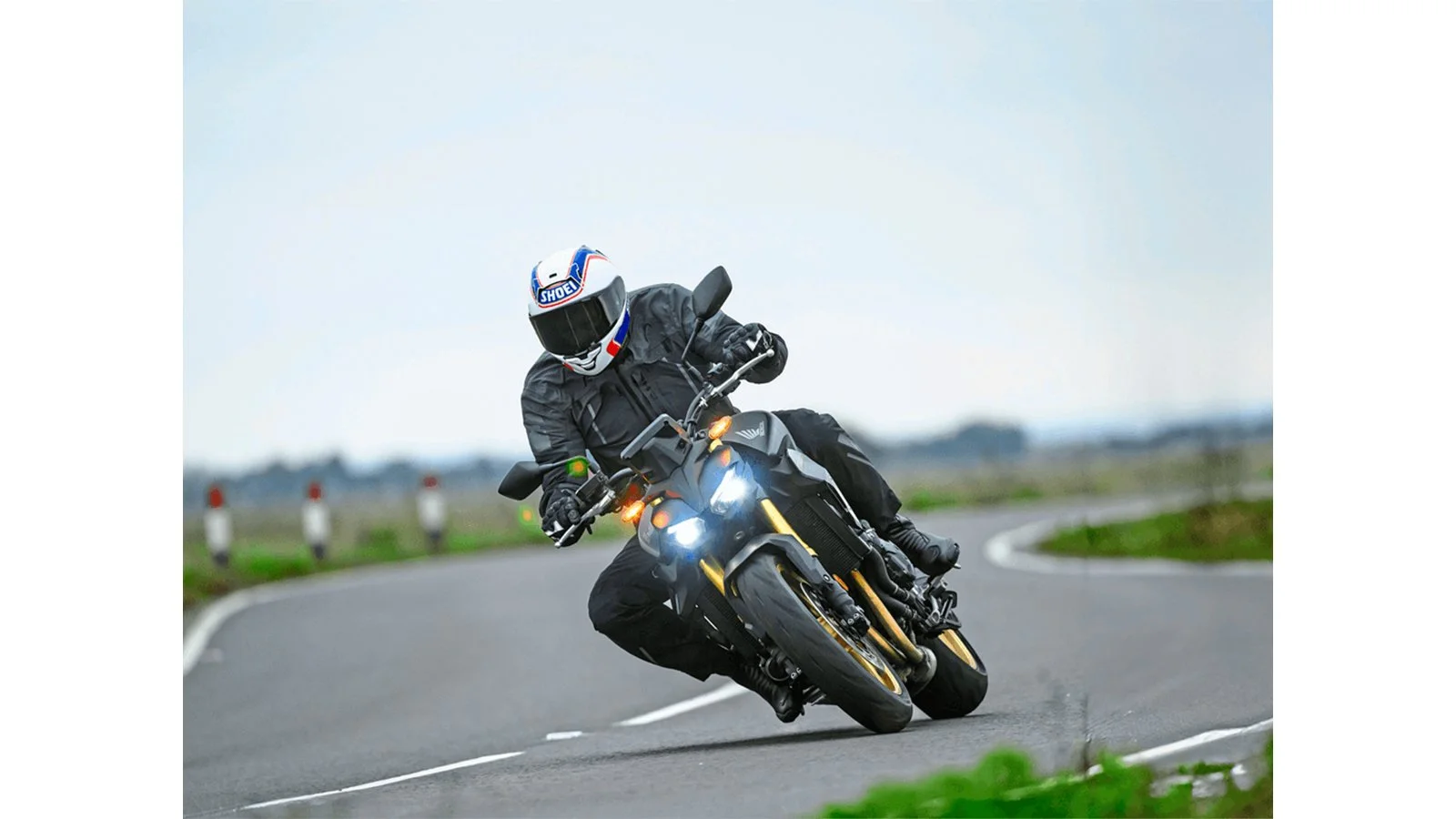
Pictures Bauer Archive
WE’VE BEEN A big fan of the Hornet over the past year – it impressed on our first test in Spain then blew us away with its completeness and value for money on our first ride in the UK. Since then a Hornet – first the base model and now the SP – has been a constant in our lives on RiDE, propelling us to every corner of the country, normally with a smile on our face and joy in our hearts.
Now, 12 months later, we know much more about the Hornets having clocked thousands of miles on both models. We know all about the base model – that’s now ticked off. But what’s the sporty one like?
1 SP’s abilities are broader than the base model’s
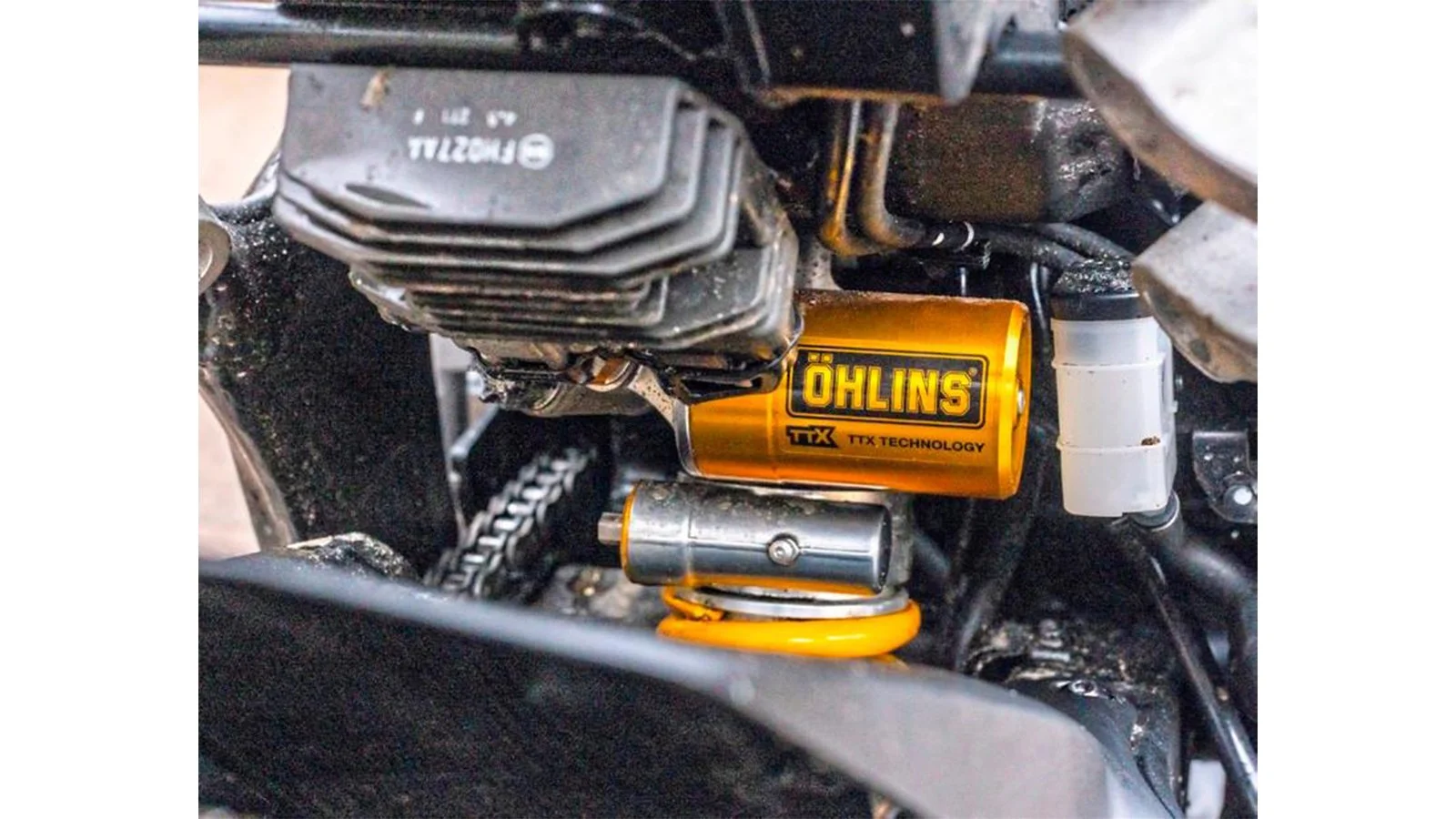
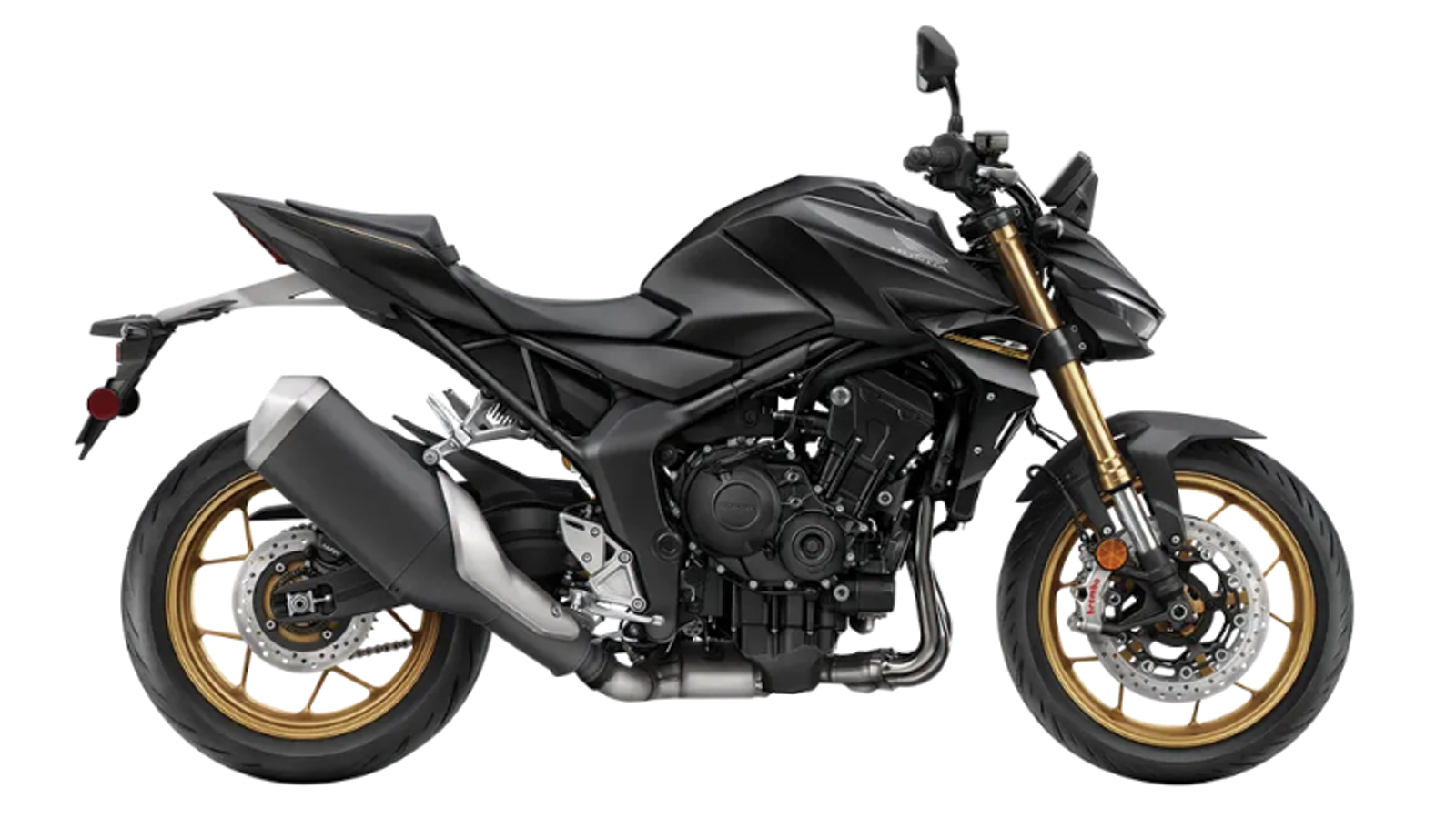
The SP has a host of equipment over a stock Hornet: a fully adjustable Öhlins TTX shock; Brembo Stylema calipers; an up/down quickshifter; the black paint and gold wheels; and a tad more power. The biggest difference is the rear shock: the SP is more nimble, holds a line well, and handling is a step ahead. The improved dynamics move the bike from naked UJM territory to something closer to a supernaked, without affecting the things that made it good in the first place.
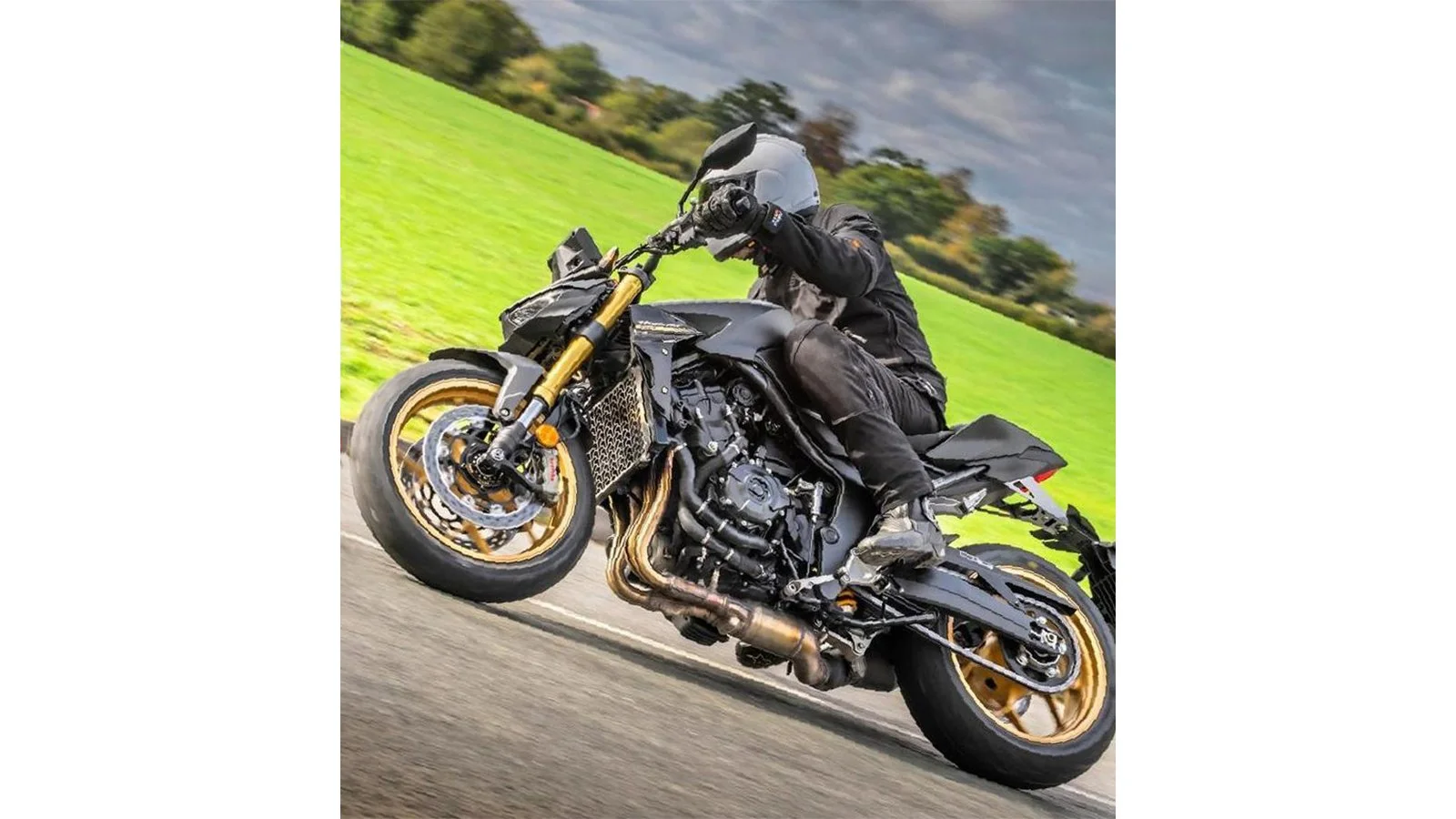
Clever packaging makes levering it around fun and easy
2 The engine is spectacular
Compared to the base model, the SP has different mapping and a valve that opens in the exhaust, liberating gas flow and allowing for more power. They’re surprisingly different to ride: the SP is raspier, has a little less in the middle, and the revs climb faster higher up the rev range. It’s not as good for pottering, but for brisk riding it’s more exciting and involving, but still with nice fuelling and 48mpg on a long run. With a measured 145bhp it has five more horses than the base bike, too.
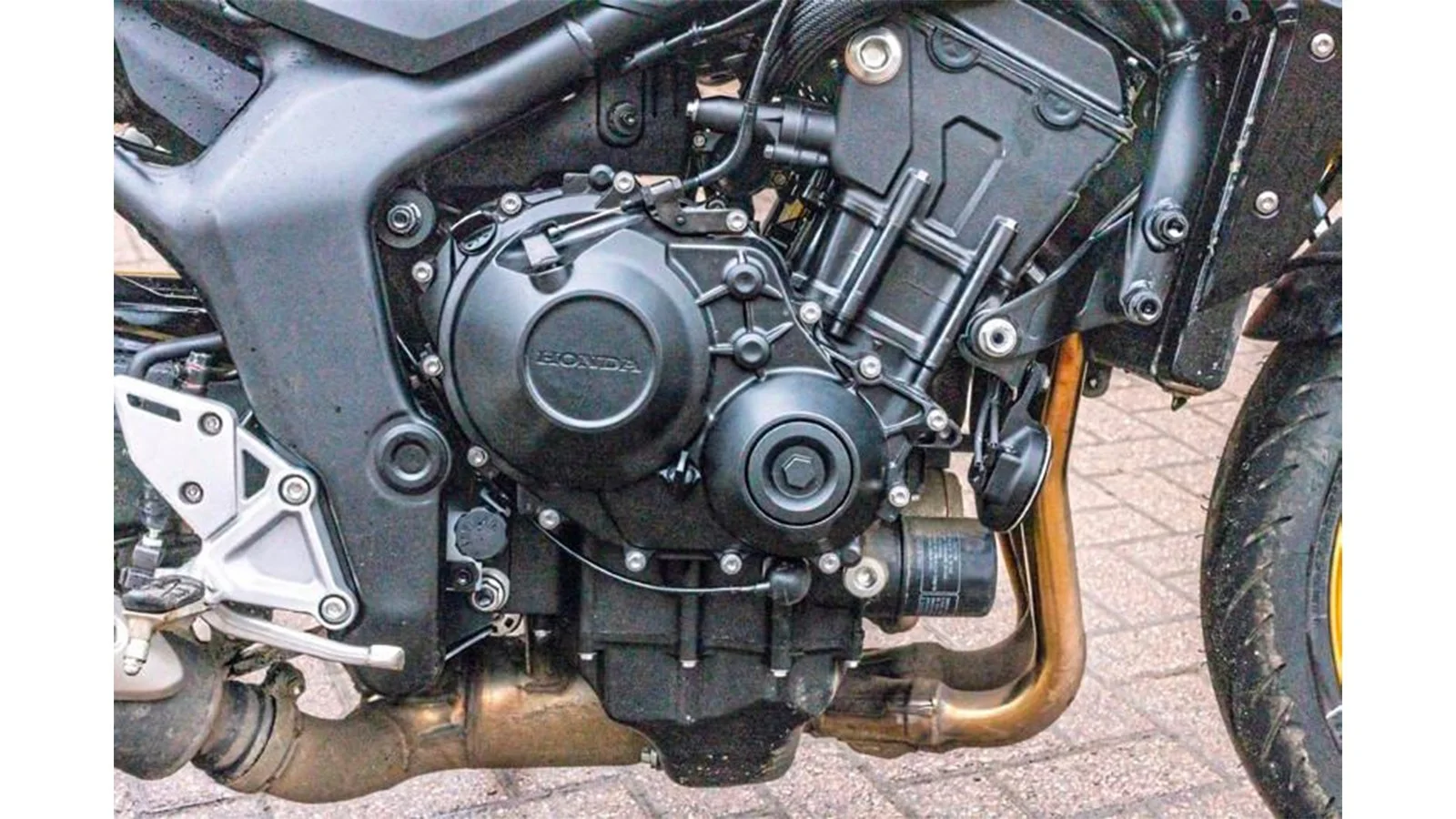
It started out in the Fireblade – so no surprise it’s super
3 The electronics frustrate
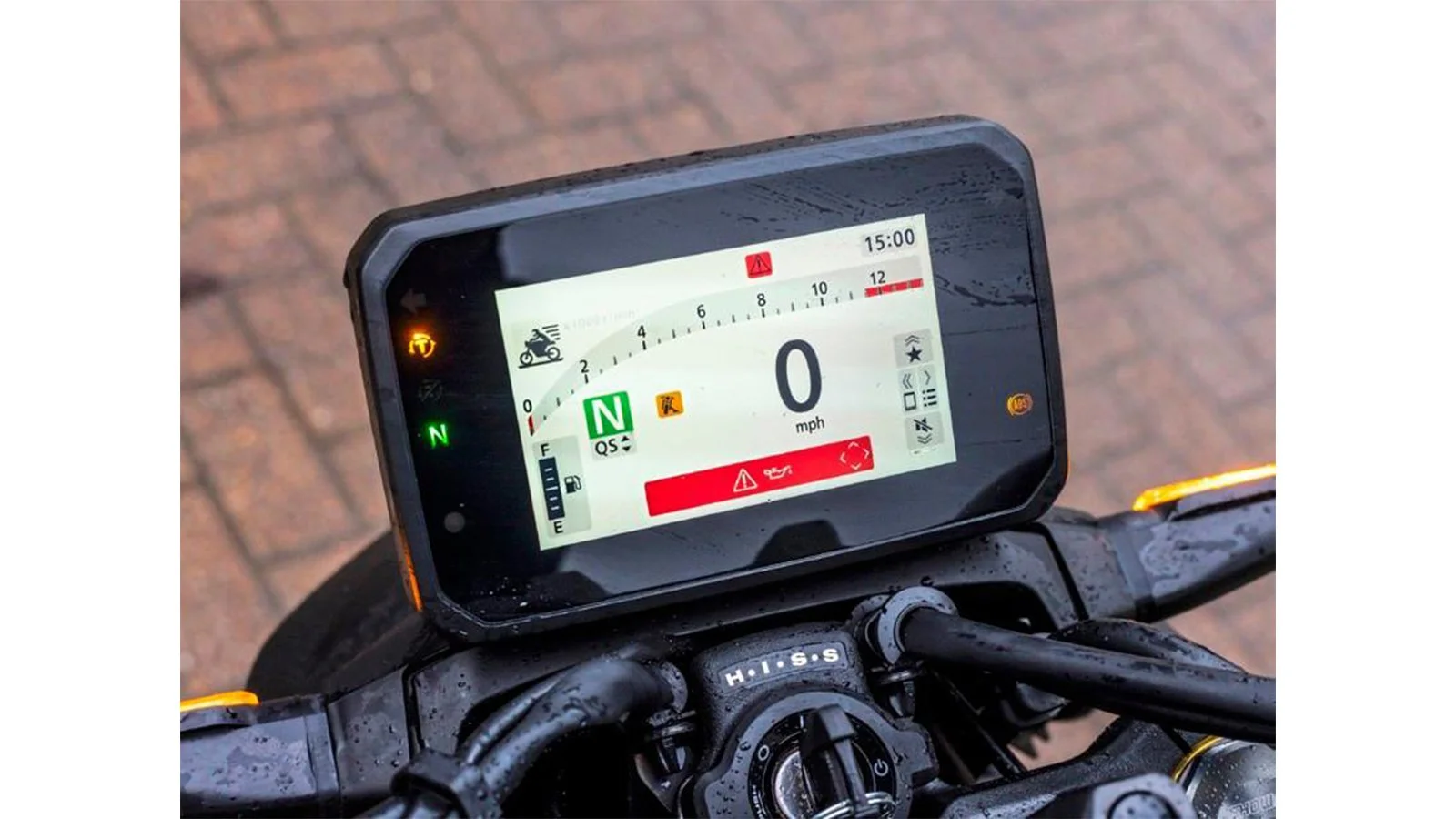
This is the SP’s weak spot. The chassis and engine promote brisk riding, but the rider aids don’t operate on the same level. The crude traction control interferes frustratingly and sometimes erratically when you push on and the front gets light, especially at lower speeds and in lower gears. Equally, the ABS triggers worryingly early, though it doesn’t produce heart in the mouth moments. Neither are a safely issue, but the next model would benefit from an IMU for fine adjustment and intervention. As it is you’re tempted to turn everything off, which feels weird in 2026.
That rear shock is seriously good kit for a mid-market bike
4 The ergonomics are class-leading
Honda invariably always get this stuff right, and it’s a lovely motorcycle to sit on. The handlebars are the perfect width, the seat’s good enough for a morning of solid riding and the little nosefairing does enough to ease windblast for reasonable motorway touring. All of this has a real effect on its day-to-day usage and enjoyment, and take the pain (literally) out of owning a naked bike.
Dash is pretty good, but the TC and ABS could be smarter
5 It’s definitely worth the extra money
Considering the Öhlins shock costs more than the difference between the Hornet and the Hornet SP, it’s hard to make much of a case for the standard bike, especially as the rear shock hasn’t deteriorated like it did with the stocker. The fact a bike feels this special and has so many trinkets on it, for what these days is a middling price point, is to be applauded. It’s a great bike and we’re hanging onto it until we can try the new CB1000GT – so expect more of it in these pages.
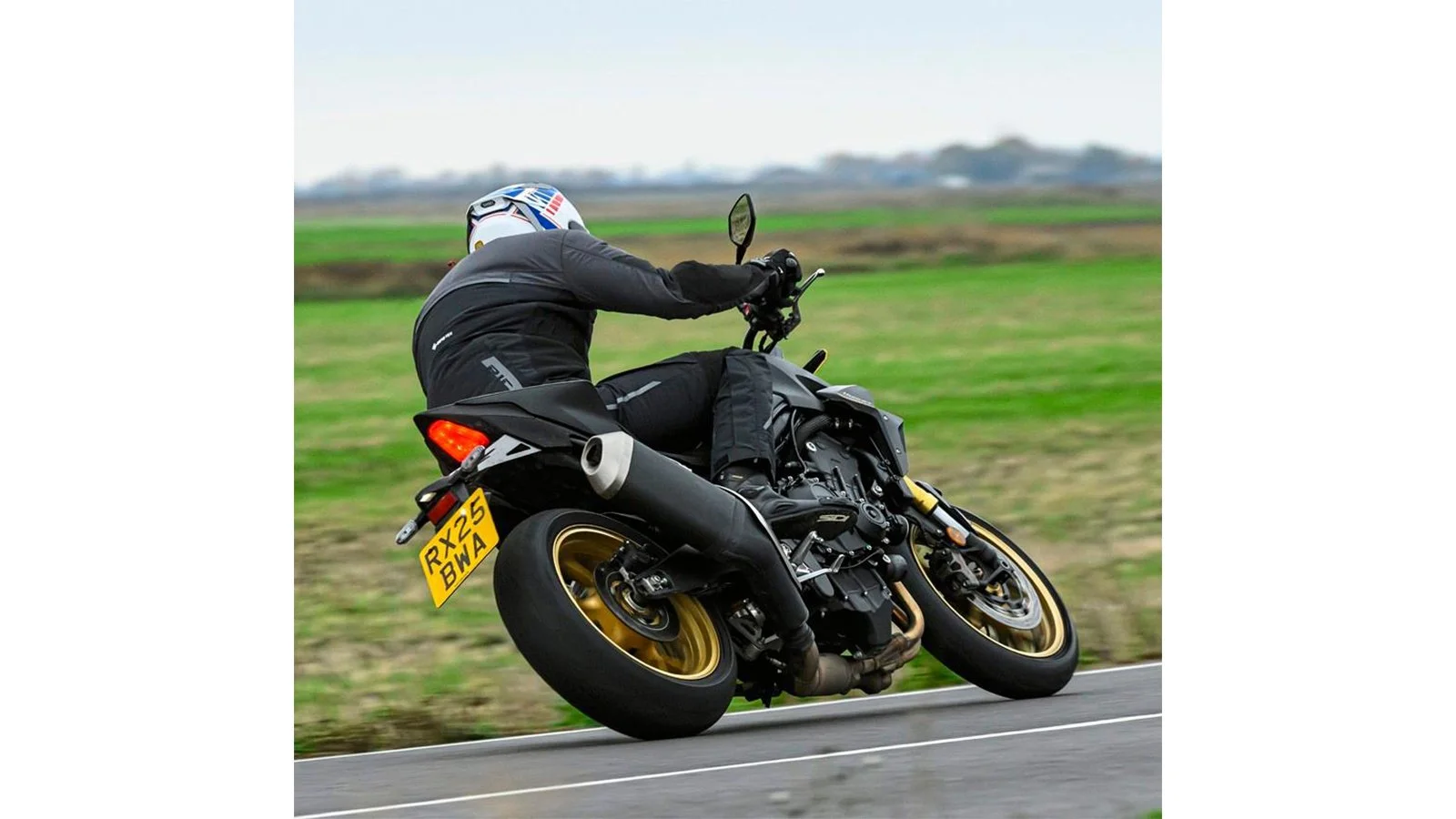
Going the full SP is an extra grand very well spent
WHAT WORKS WHAT DOESN’T
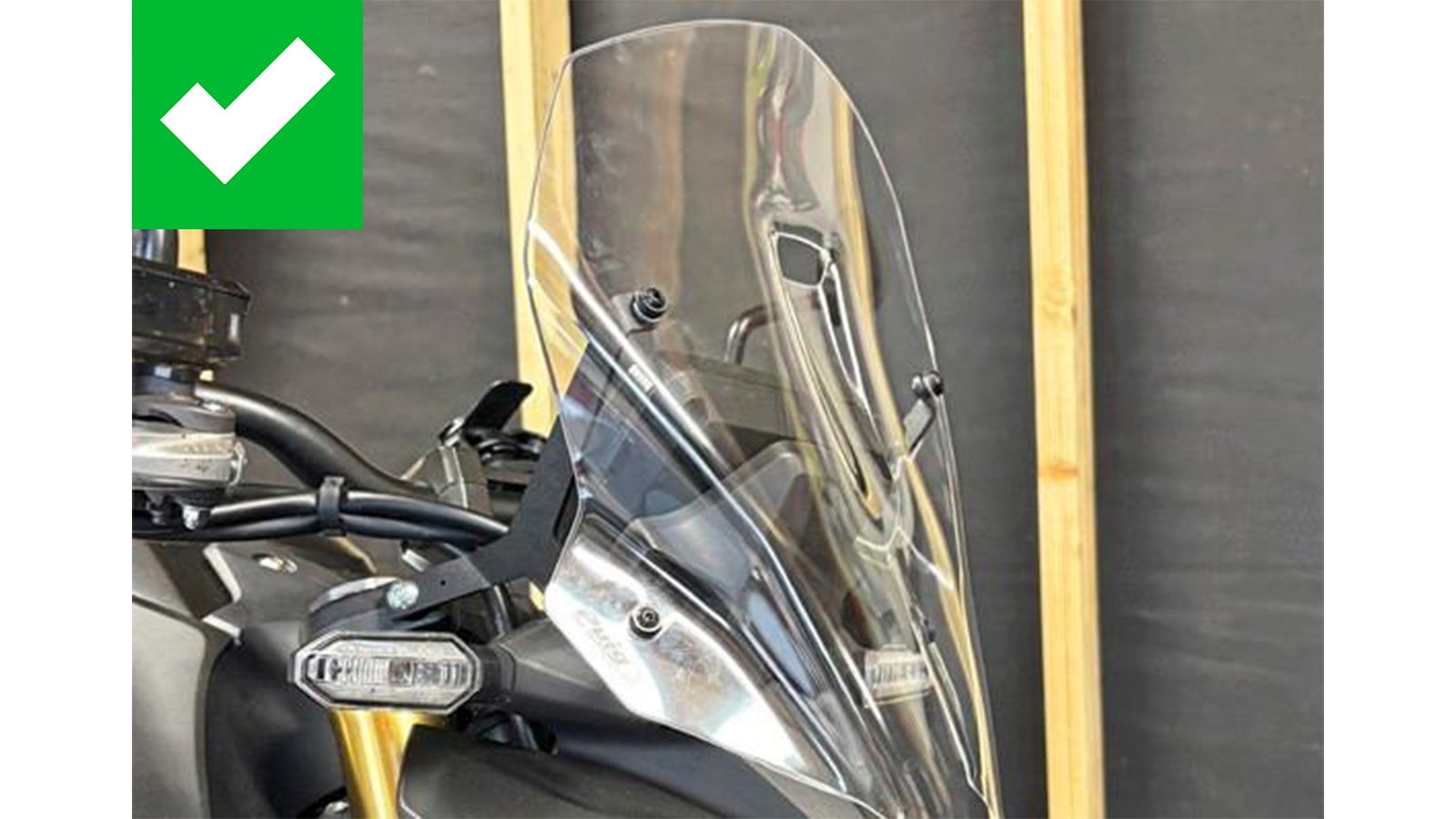
Effective touring screen
The headlamp fairing is good, but this Puig touring screen makes a marked difference at higher speeds, allows sustained cruising and keeps you warmer. Fitting required 5mm-longer bolts than supplied, though.
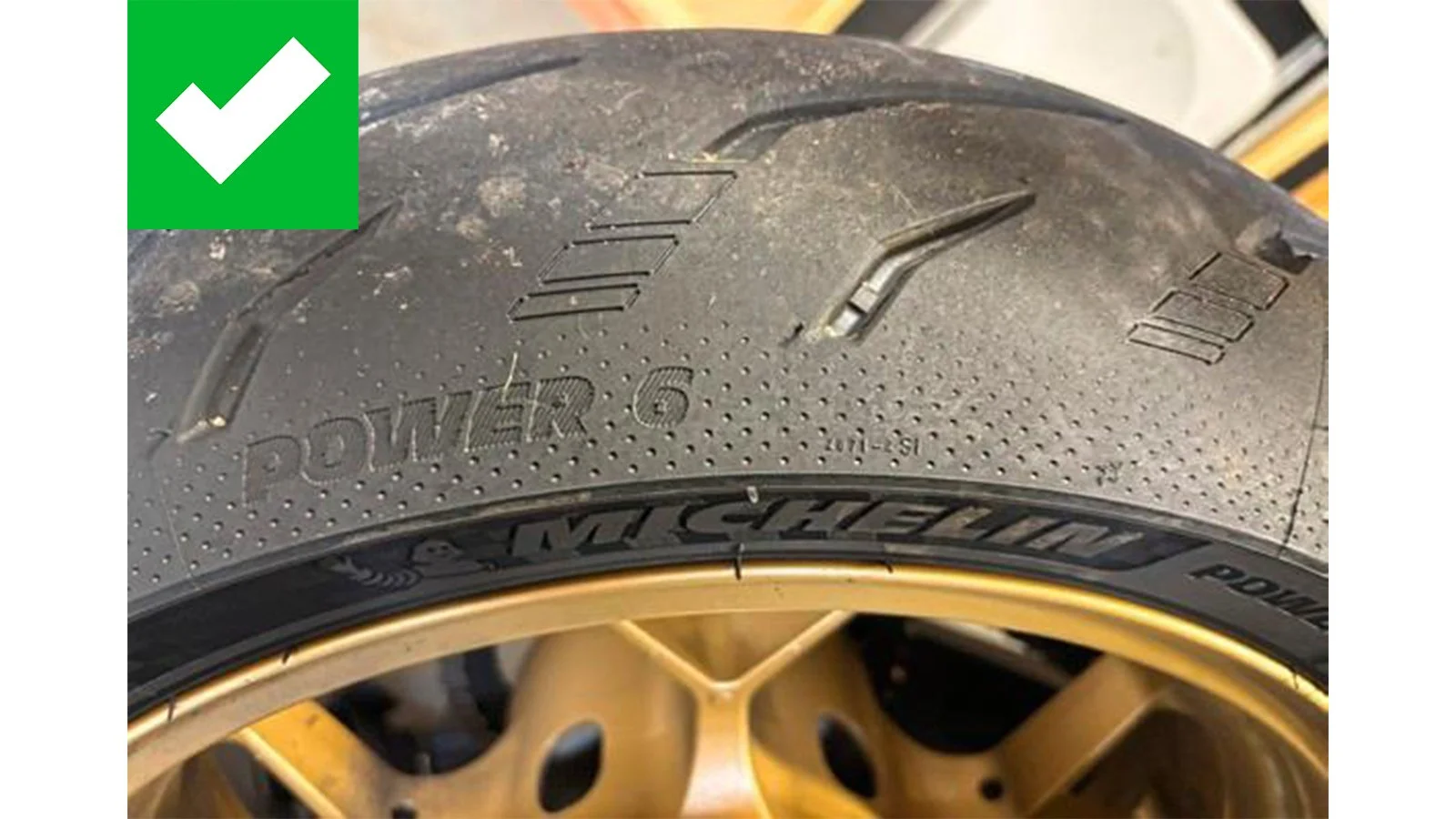
Better Michelin Power 6s
Michelin’s Power 6 is a sporty road tyre that provides more grip, better dampweather performance and sharper steering than OE. They may be too sporty for some, but they suit the Hornet well.
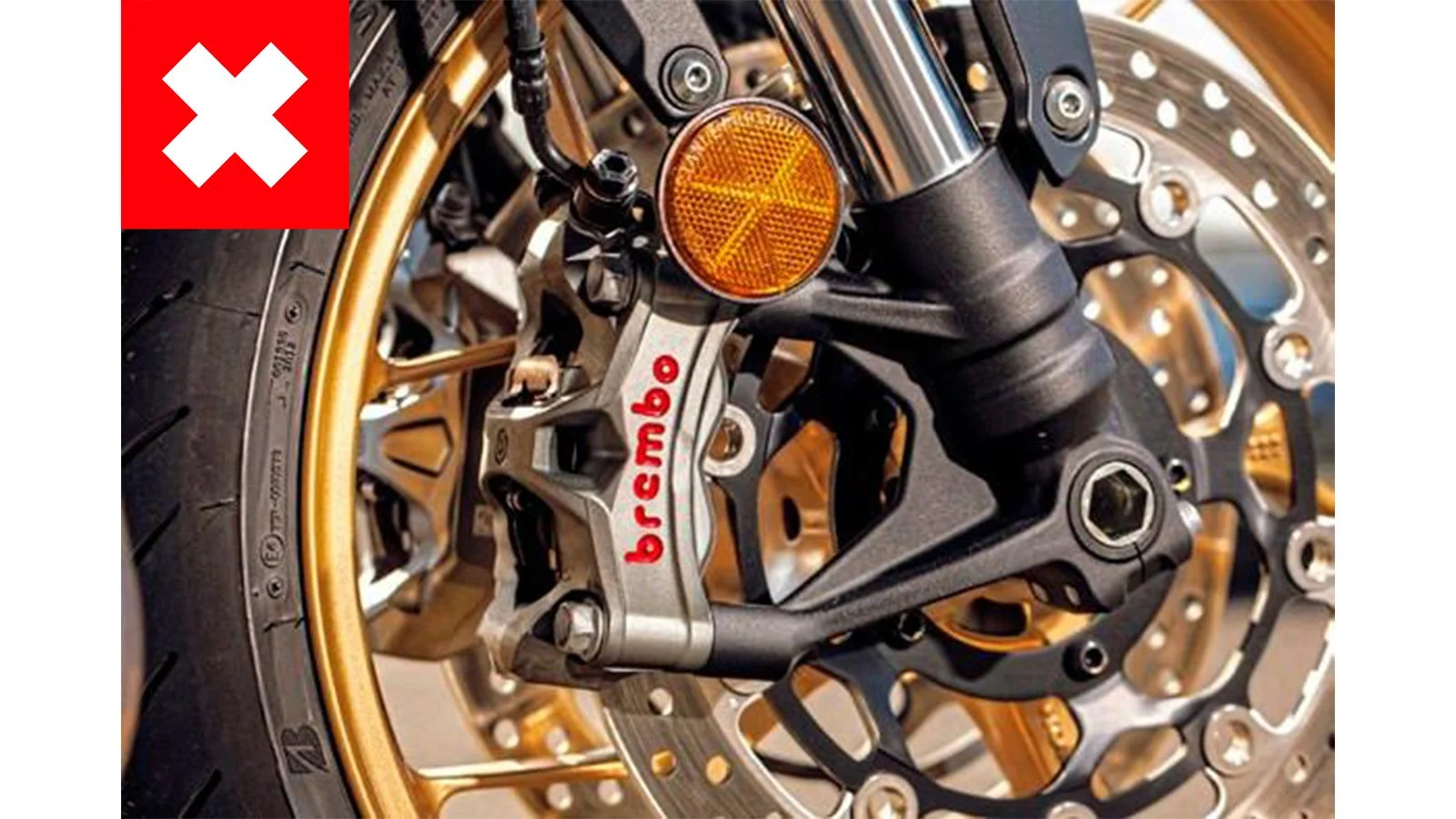
Brembos seem for looks
They work no better than the Nissins on the stock Hornet, and at the point where you feel you can take advantage of the extra power, the Honda’s nannying ABS kicks in. They do look good, though.
COSTS SO FAR
Servicing, 600-mile service £260
Fuel, 335 litres @ £1.34/litre £449
Michelin Power 6 tyres £350
Puig touring screen £130
Pyramid belly pan and protector £228
Cost per mile 42.9p
THE FACTS
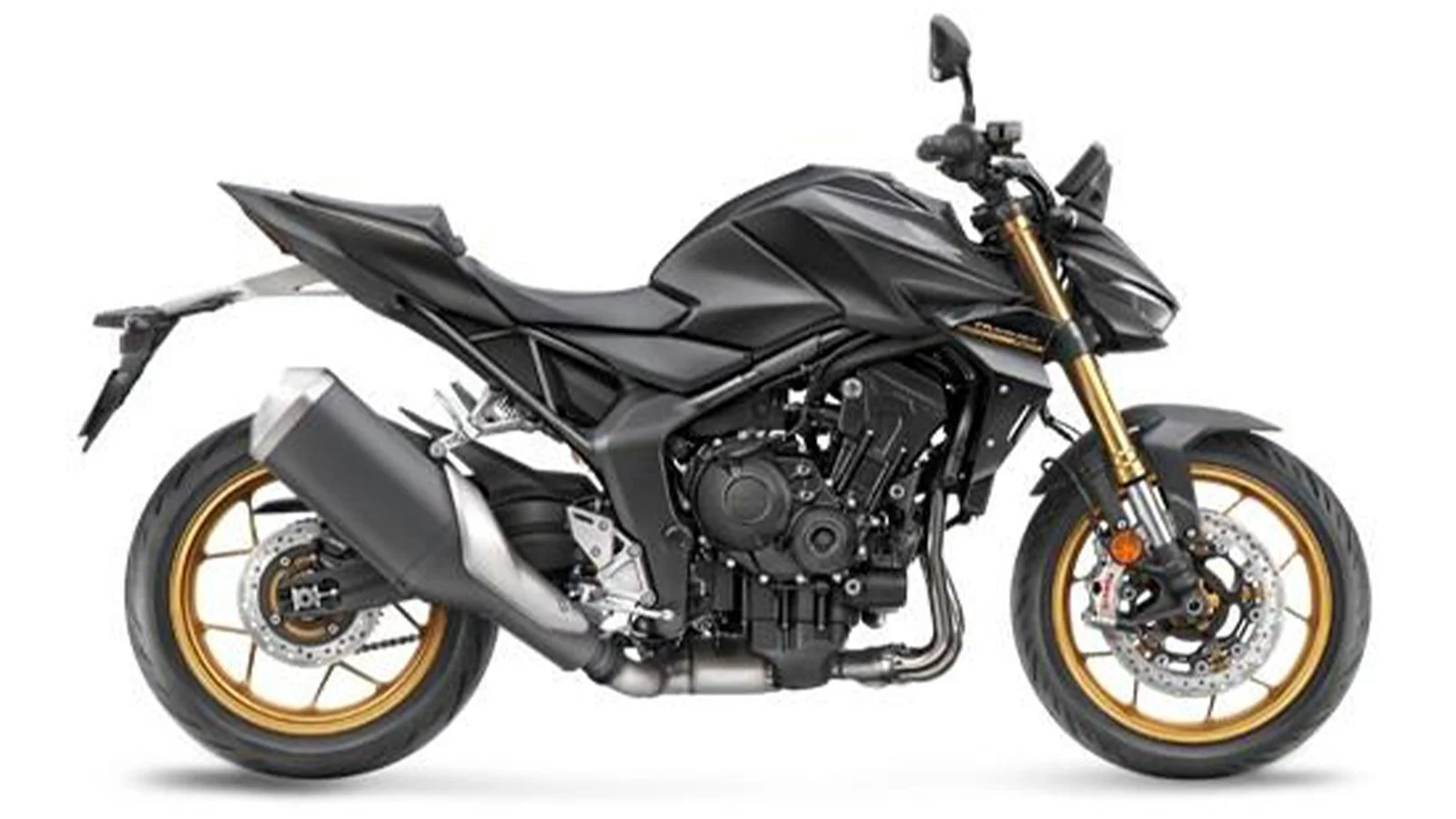
£10,999
155bhp
212kg
MILES THIS MONTH NA
FUEL CONSUMPTION 44.8 MPG
Head into stores to grab your latest issue, or why not subscribe to RiDE Magazine?
A great route to ride... CAMBS AND GO

Best for Sunsets and cornfields
Length 73 miles Route Buckden, via Kimbolton, Abbots Ripton, Somersham, Chatteris, Manea, Ely
Roads B661, B660, B1090, B1050, B1098, B1100, A1101, A10
Love it because It is real challenge that makes the most of Constable Country. You’ll encounter every type of road, every type of bend.
Take a picture of Ely Cathedral as the sun sets over it.
Stop for a cuppa at Grafham Water visitor centre and stretch your legs and go for walk — especially of you have the other half with you.
‘Comfy, adjustable to climate, and practical’
6000-MILE TEST
Stylish, rugged and brilliant for all seasons, Dainese’s Hekla Pro jacket and trousers are top kit for touring and adventuring, says RiDE contributor Jim Moore

Pictures Adam Shorrock, Jason Critchell
DAINESE HEKLA ABSOLUTESHELL PRO 20K
JACKET £799.95 TROUSERS £449.95

THE CLAIM
“Premium AA-rated all-season touring jacket and trousers with waterproof, breathable membrane and magnetic connection system.
“Designed for long trips on- and off-road. Extremely comfortable and functional due to many large and completely waterproof pockets, all functions can be accessed and used with one hand.
“Constructed from QuickDry fabric, Ripstop weaved fabric, and an Absoluteshell Pro 20K laminated membrane. Maximum protection and safety are guaranteed through anti-cut and anti-abrasion areas, and Pro-Armor Level 2 protectors on shoulders and elbows. Designed to accommodate type G back and chest protectors.”
THE REALITY
I’ve had this Dainese Hekla combo for three years now, and in that time I’ve subjected them to the brutality of midwinter Scottish touring, scorching Mediterranean heat, everyday commuting, and muddy off-roading. The fact they’re still going strong and in regular use is testament to their quality and practicality.
If kit is uncomfortable, I won’t wear it. Simple as that. Comfort is at the heart of the Hekla’s proposition. Dainese claim as much – and they’re right. There’s myriad adjustability to attain the perfect fit: Velcro-adjustable waist, neck and cuffs; zip and Velcro fasteners at the ankle; poppers to expand or contract the diameter of the arms; plus further refinement of fit in the jacket waist via adjustable straps.
A big part of the Hekla combo’s high-end appeal is Dainese’s use of the Absoluteshell Pro 20K laminated membrane which, the firm claim, gives both items excellent water-repellent qualities. Which they have… to a point. The trousers failed last autumn during a trip back from Wales in biblical rain – water got in through the crotch, eventually leaving most of my bottom half wet. The jacket’s proven better at keeping out rain, but I suspect a long ride in sustained foul weather would call its properties into question.
WATERPROOF POCKETS
The jacket’s front right pocket is fully waterproof, as is its inside counterpart. The left side jacket outer and both leg pockets on the trousers are showerproof. Further storage is to be had in both front and rear net carriers, the latter perfect for storing lightweight waterproofs.

Waterlogged pockets can make touring miserable. No such issues with the Hekla
ALL-SEASON BREATHABLE
Two long vents in the front of the jacket run the length of each inner arm, with a vent on the front of each leg. A handy tag links to both zips on the rear vents, making opening and closing them – even on the move – possible. It’s comfy even in 30°C heat.

Opened to the max, the vents are highly effective – even in 30°C heat
REMOVABLE INNER FLEECE
One of the best features of the Hekla is the jacket’s removable inner fleece. It can attach to the outer, but is much more comfortable worn as its own garment with the main jacket over the top. It zips up to the neck, keeping even the fiercest chills at bay.

Inner fleece: one of Jim’s favourite parts of the suit
THE WEAR AND TEAR
Despite hard use – everything from lengthy midwinter rides, relentless rain, continental touring in 30°C heat, as well as use on- and off-road – the only thing to have failed has been the plastic zip tags on two outer pockets – one on the jacket and one on the trousers. The zips remain intact and still usable though, so it’s only a part fail.
Three years’ worth of dead flies and road detritus are becoming increasingly hard to remove from the outer shell, despite machine washing, so a level of patina is now taking hold. Both still have many miles left in them, though.

Soft neoprene top edge, decent Velcro fastener, doesn’t flap about if left undone. Storm collar is super

Head into stores to grab your latest issue, or why not subscribe to RiDE Magazine?
Right now you can get 3 issues for only £3!
What we’ve learned after 350 miles
LONG-TERM TEST BIKES
We’ve just picked up our Suzuki DR-Z4S and packed three off-road trips and a commute into the past week. This is what we think so far…

Pictures Adam Shorrock, Suzuki
IT’S BEEN THE best part of a year between Suzuki unveiling the DR-Z4S and it becoming available to buy, and much of that has been filled with conjecture, speculation and keyboard experts casting their wisdom.
You see, the DR-Z4S is the bike that replaces the iconic (if you’re a dirt-loving trail rider) DR-Z400S. Introduced in 2000, the original DR-Z was known for its value, simplicity and toughness. Euro3 killed it off in the UK in 2009, but it’s still a top seller in the United States.
The new bike is far more sophisticated to get it through the latest regs and claims better road and off-road ability. But is it enough 25 years later?
1 You instantly feel at home

Adventure bike riders will find much they are familiar with. It has a proper dash (see right), the same switchgear as a GSX-S, and similar mirrors. Even the tapered bars have antivibe weights like a naked bike.
It’s easy to ride, too. The fuelling is sweet and predictable, the motor pulls cleanly from low rpm, and the clutch is one-finger light with a predictable bite point. Combined with great natural balance and plush suspension, it’ll flatter novice trail riders.
2 Running gear is class-leading

KYB upside-down forks have 280mm of travel and are plush
There is real depth to its abilities. The key is its KYB suspension – it is fully adjustable and has more travel than any rival. Even on standard settings, it hoovers up bumps at any speed, staying composed and helping you find grip with no fade and no crashing into a bump stop. The same goes for the brakes – loads of feel and enough power for everything you need. It’s a world away from the likes of a Honda CRF300L, and obvious where part of the £2k price difference between the two goes.
3 It’s the perfect trail-riding motor

Smooth, economical and responsive. Nice one, Suzuki
I’ve undertaken three trail-riding trips and have been hugely impressed with the motor. One problem with small-capacity trail bikes is their inability to use the power of the motor to alter a bike’s attitude or pop the front wheel over obstacles. Not the case here – for its capacity, it abounds with torque. It is very willing to lift the front wheel over holes, has the grunt to tackle every climb, and feels like it has all the stab you’d ever need for brisk trail riding. On the lanes, that 37bhp is definitely enough…
4 It’s good on the road

It’s fine on tarmac, but would be five per cent better with another gear
The tarmac is not its forte, but it’ll do it. The tyres have acceptable grip in the salt and slime, and the bike steers and brakes predictably. You do notice the lack of sixth gear at speed, but the DR-Z doesn’t feel too strained at 70mph and can eat an hour on a motorway without getting bullied into the slow lane, losing speed up hills, or feeling out of its depth – and it does 68mpg while doing it. But the seat, despite being wider than an enduro bike, still feels a bit hard after 50 miles of constant sitting.
5 It makes a case for being worth the cash
At £7999, it needs to offer more than its cheaper rivals can deliver – and it does. More speed, more composure, more comfort, and a high level of ability.
I see it more as a machine to tempt potential £10k KTM 690 Enduro R owners, rather than a bike that fights with the lower end of the market.
What I am excited about is that there is more to come – a few tweaks should expose more of its potential. This is a good start.
WHAT WORKS WHAT DOESN’T

The dash is simple but effective
Enduro bikes have tiny LCD dashes that don’t say much, and adventure bikes have fragile info-packed TFTs. While this also has an LCD dash, it tells you everything, can be toggled using the left switchgear, and looks tough and jet-wash-hardy.

OE tyres aren’t terrible
I had low expectations for the OE IRC Trail Winner tyres, but they’re fine on the road and work surprisingly well on the sandy forest tracks that I do most of my riding on. Obviously, they struggle in deep mud and clay, but they’re not junk.

There is a lack of protection
For the £7999, I want a bigger bash plate that protects the frame, a set of handguards – ideally that also protect the levers in a fall – and frame protectors where clothing or boots rub. All are missing and make the DR-Z vulnerable as stock.
THE FACTS
£7999
37bhp
151kg
MILES THIS MONTH 348
MPG THIS MONTH 62.5
COSTS SO FAR
Fuel, 25.3 litres @ 1.41/litre £35.67
Cost per mile £0.10
Head into stores to grab your latest issue, or why not subscribe to RiDE Magazine?
Right now you can get 3 issues for only £3!
A great route to ride... Take your Pickering
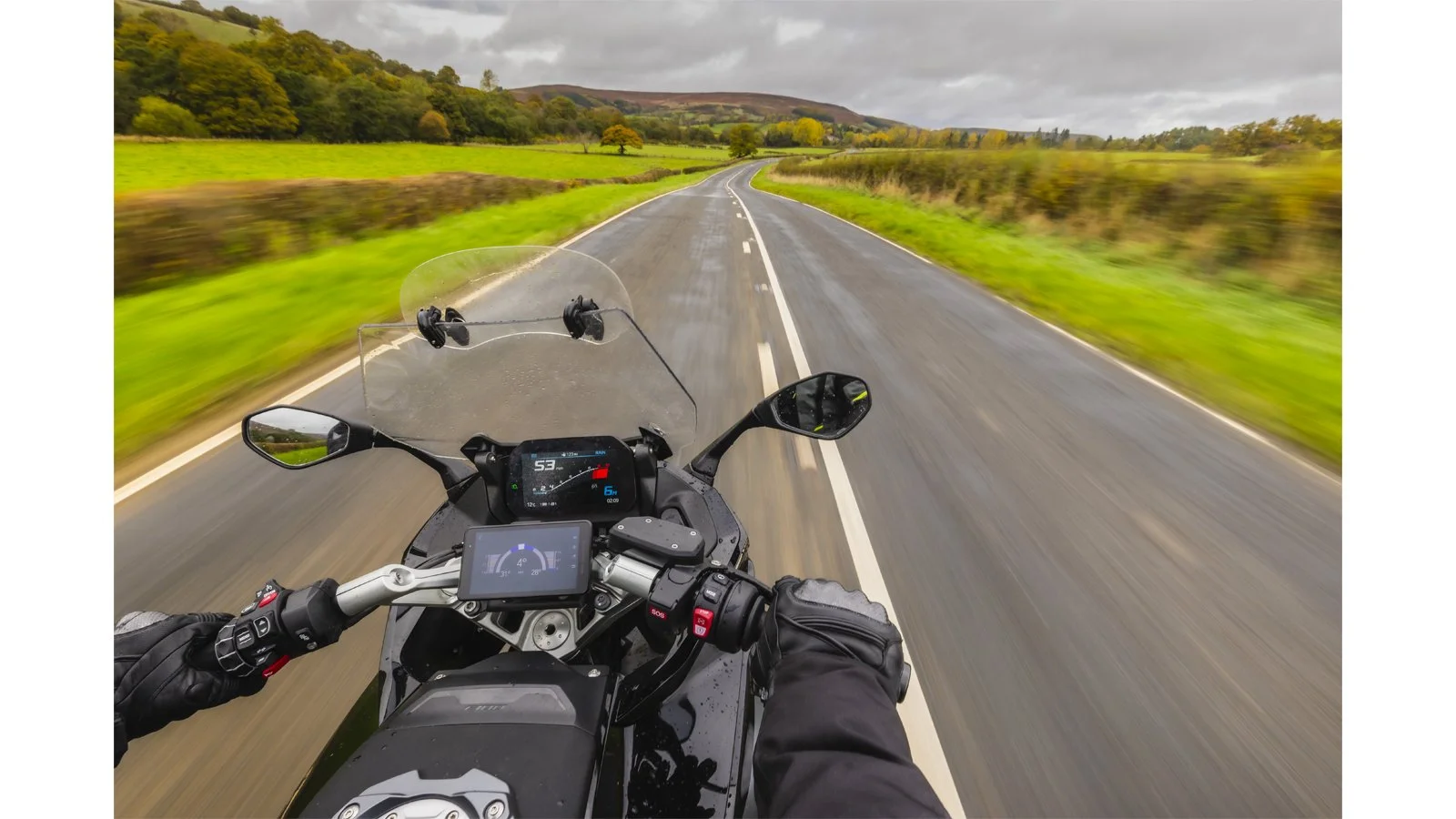
Best for Big skies across open moorland and big views of the North Yorks Moors
Length 55 miles
Route Pickering, Kirbymoorside, Hutton-le-Hole, Castleton, Danby, Whitby, Sleights, Saltergate, Pickering again
Love it because It’s a North Yorks Moors classic, with amazing views and a cracking ride across the moors
Take a picture The Hole of Horcum is pretty cool, but there are plenty of sights in Whitby
Stop for food Eskdale Fisheries in Sleights is an unassuming but does the best fish and chips in North Yorks
The year's best kit
RATED
We’ve been busy testing in the past year. Here is what we’ve found that works
WHAT THE TRIANGLES MEAN
For more than two decades, the RiDE Best Buy and Recommended triangles have stood for performance and value for money.

A RiDE Best Buy award means that a product has been tested and found to excel in its field, while offering exceptional value for money

A RiDE magazine Recommended triangle means a product has done an outstanding job at a higher price or an acceptable job at a much lower price.
DECEMBER 2024
DIY TRACKERS
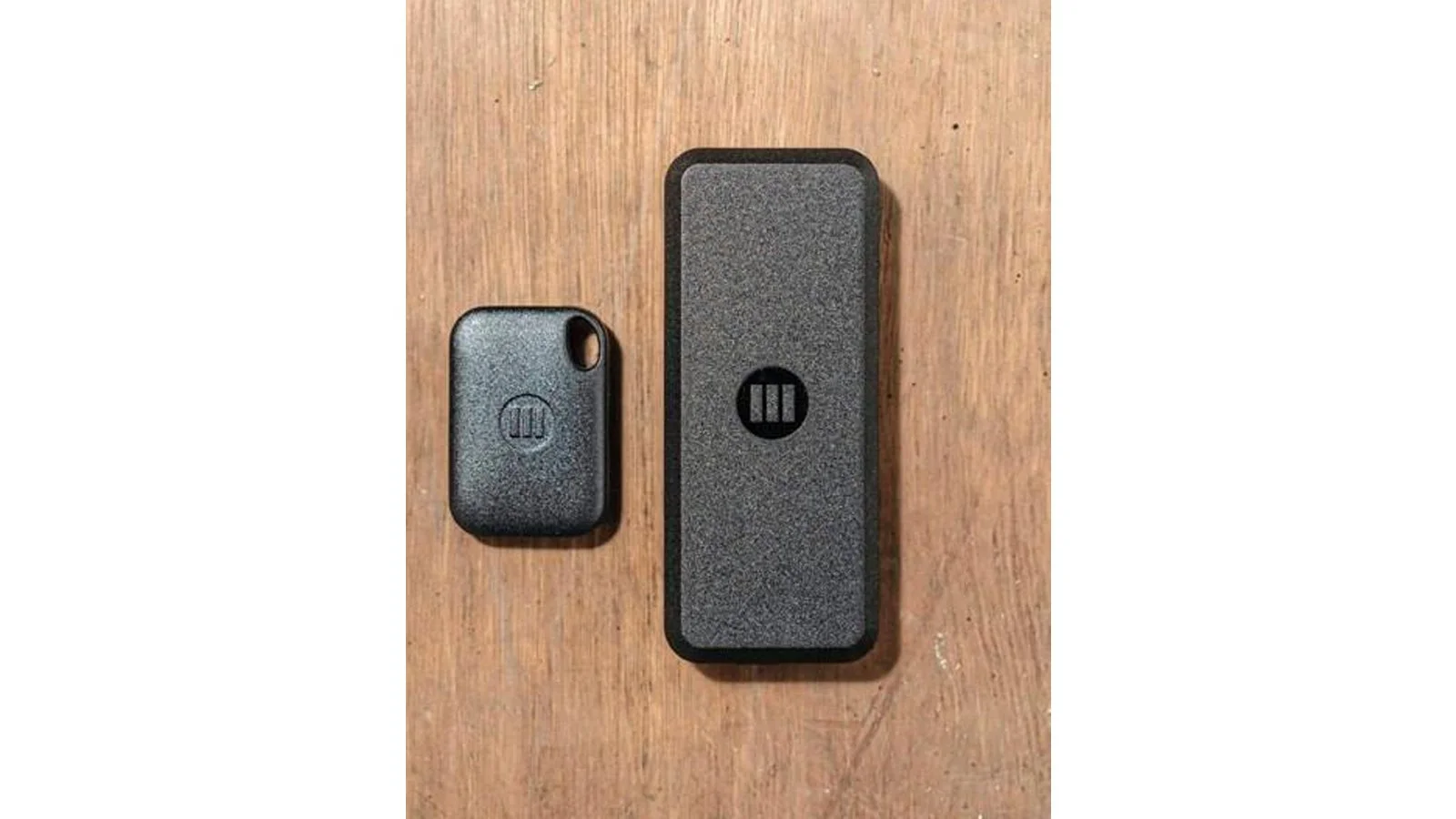
Monimoto 9 £149
Very fast theft response and excellent tracking once triggered. Not cheap, but accurate enough to stand a chance of finding your bike quickly.
RECOMMENDED iTrack FS100 £65
JANUARY 2025
ON-BIKE TOOLKITS
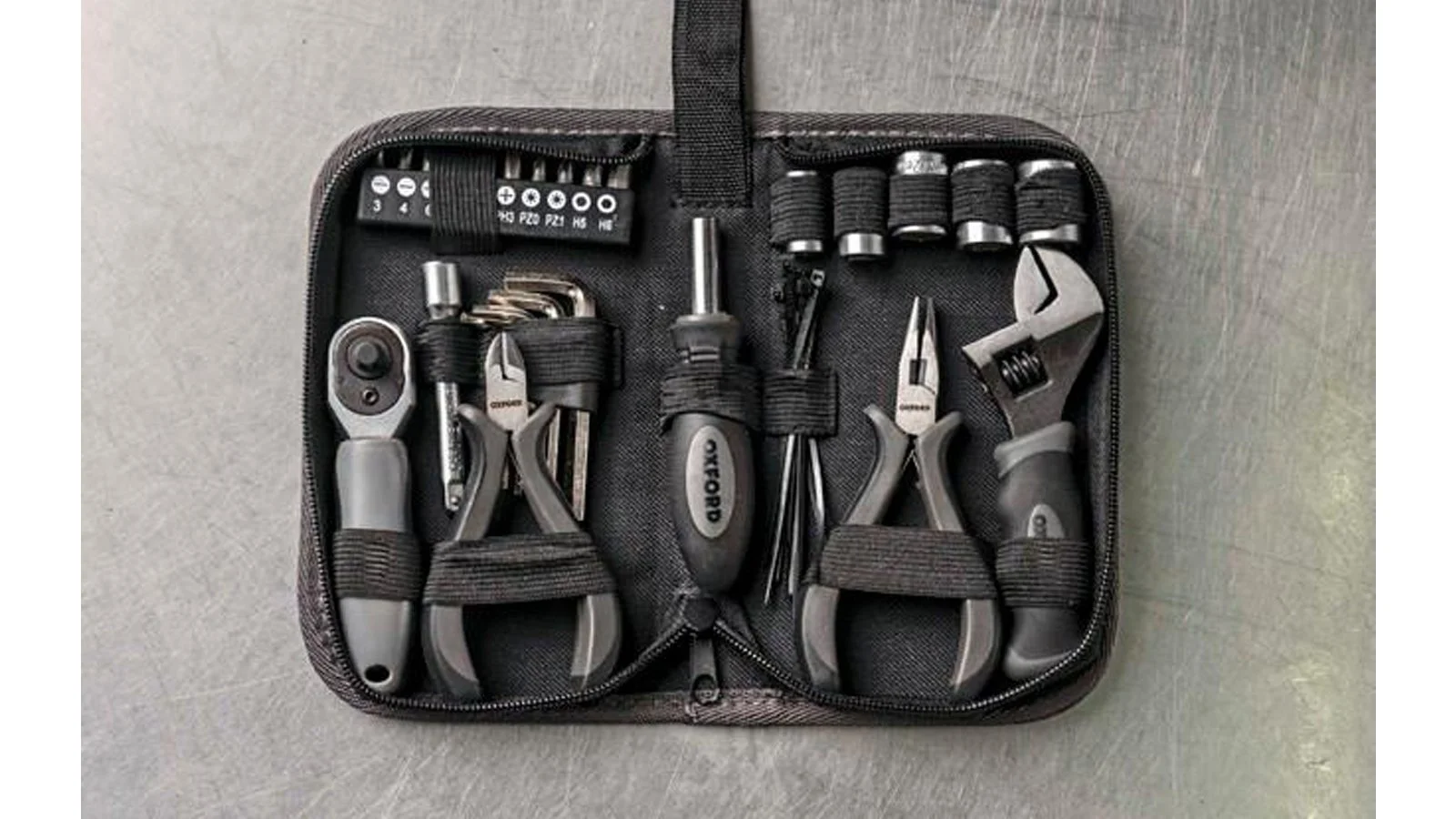
Oxford Tool Kit Pro £39.99
Decent value at full retail – even better if you can find it discounted online. Add some Torx bits and keep it under your seat for reassurance.
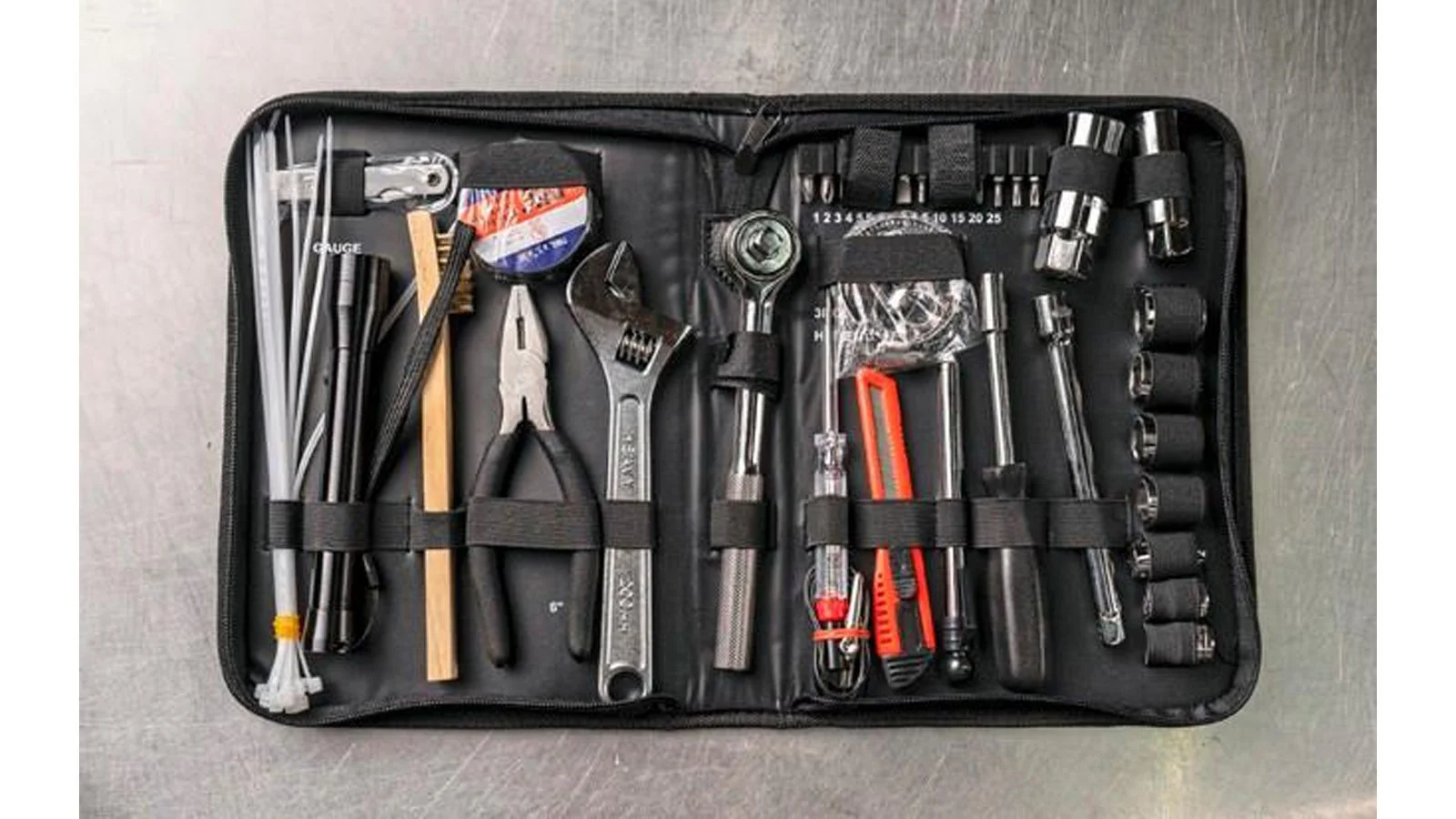
Halfords Motorists Tool Kit £30 (£24 discounted)
May be large and heavy but it’s an incredibly comprehensive travel toolkit that is worth making the room for.
FEBRUARY 2025
BATTERY-POWERED HEATED GLOVES
Keis G901 Extreme £295 (inc batteries)
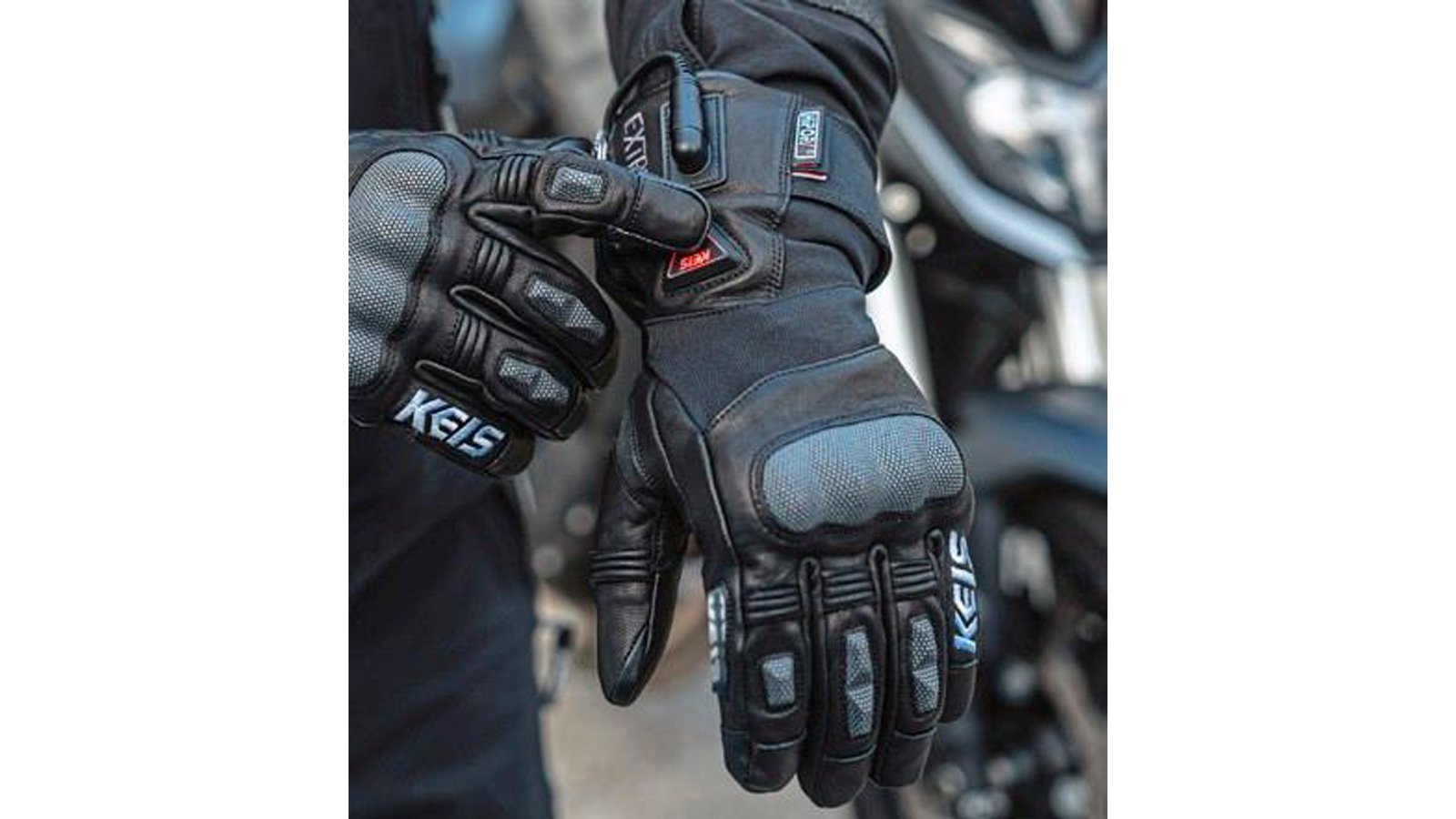
Excellent fit, very good on-bike comfort and feel warm at any speed, but not waterproof in our testing. Best for cold, dry rides.
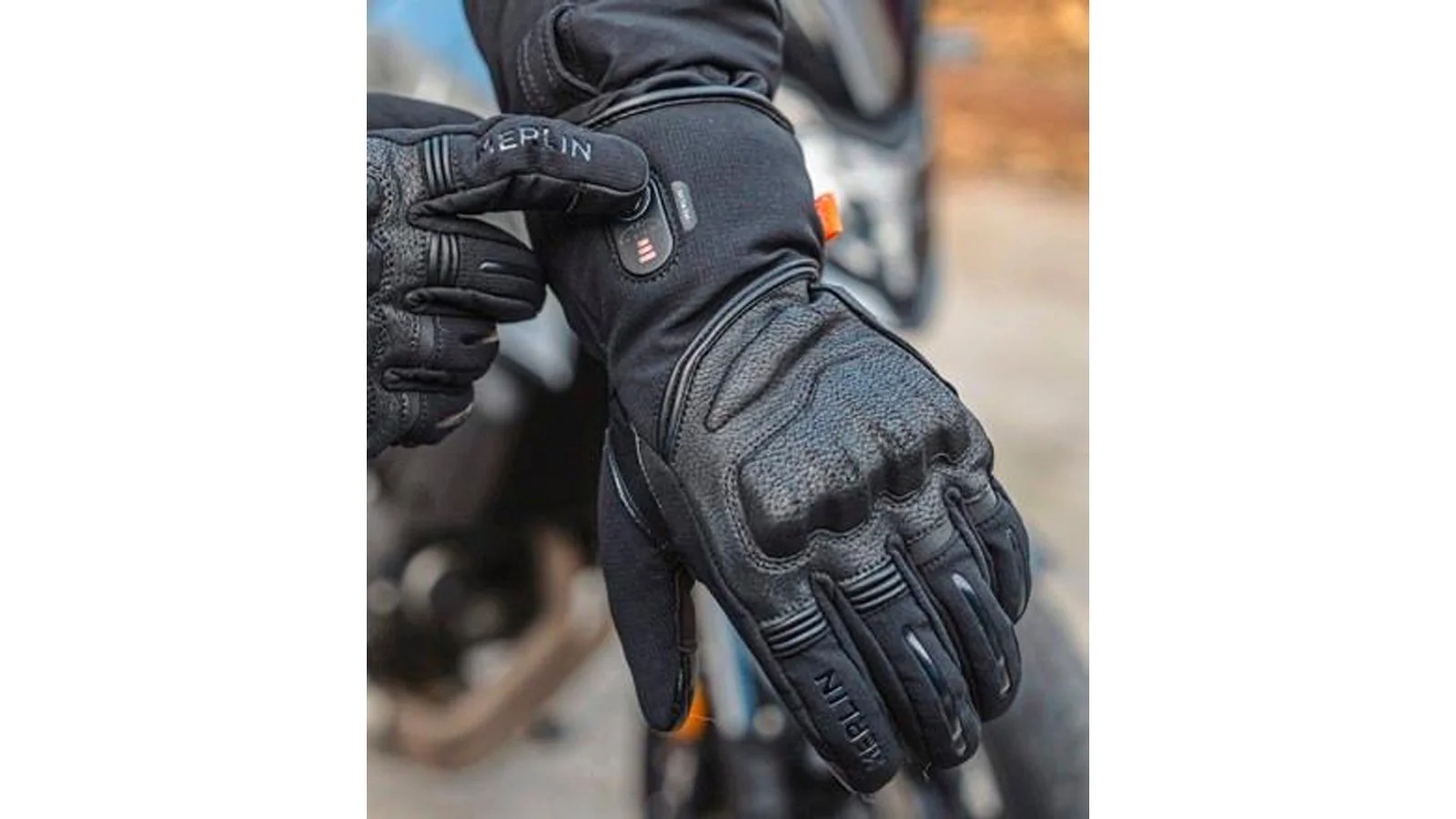
Merlin Curborough £229.99
Sporty gloves that are comfortable and fit very well. Keep water out but need greater heating power. Best for warmer, wet rides.
MARCH 2025
SUB £500 TEXTILE SUITS
Rebelhorn Hiker IV £429.90
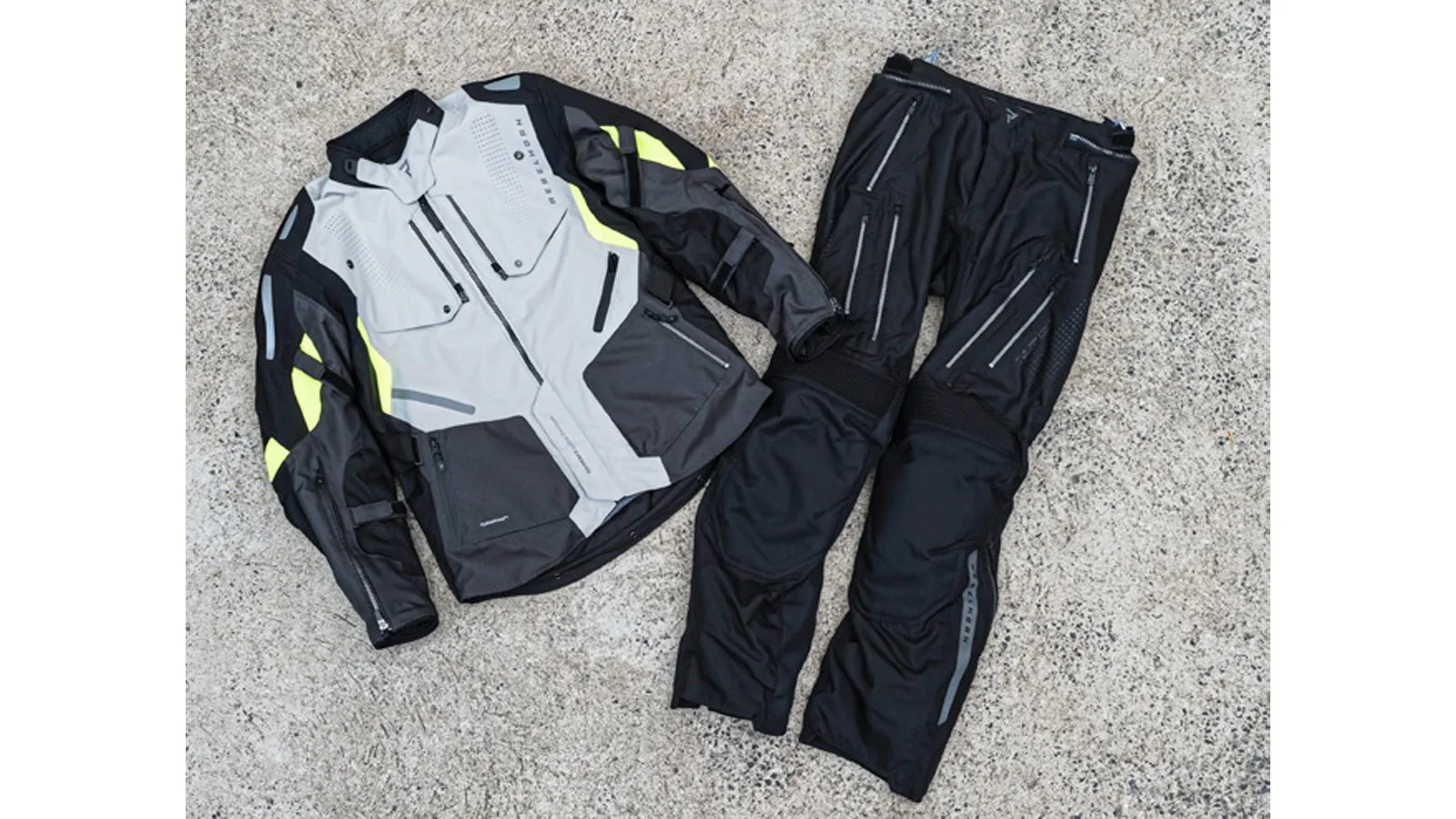
A great performance in most conditions, only limited by having no thermal lining. Great fit, comfortable, flexible, and excellent venting for warmer rides.
Oxford Calgary 2.0 £409.98
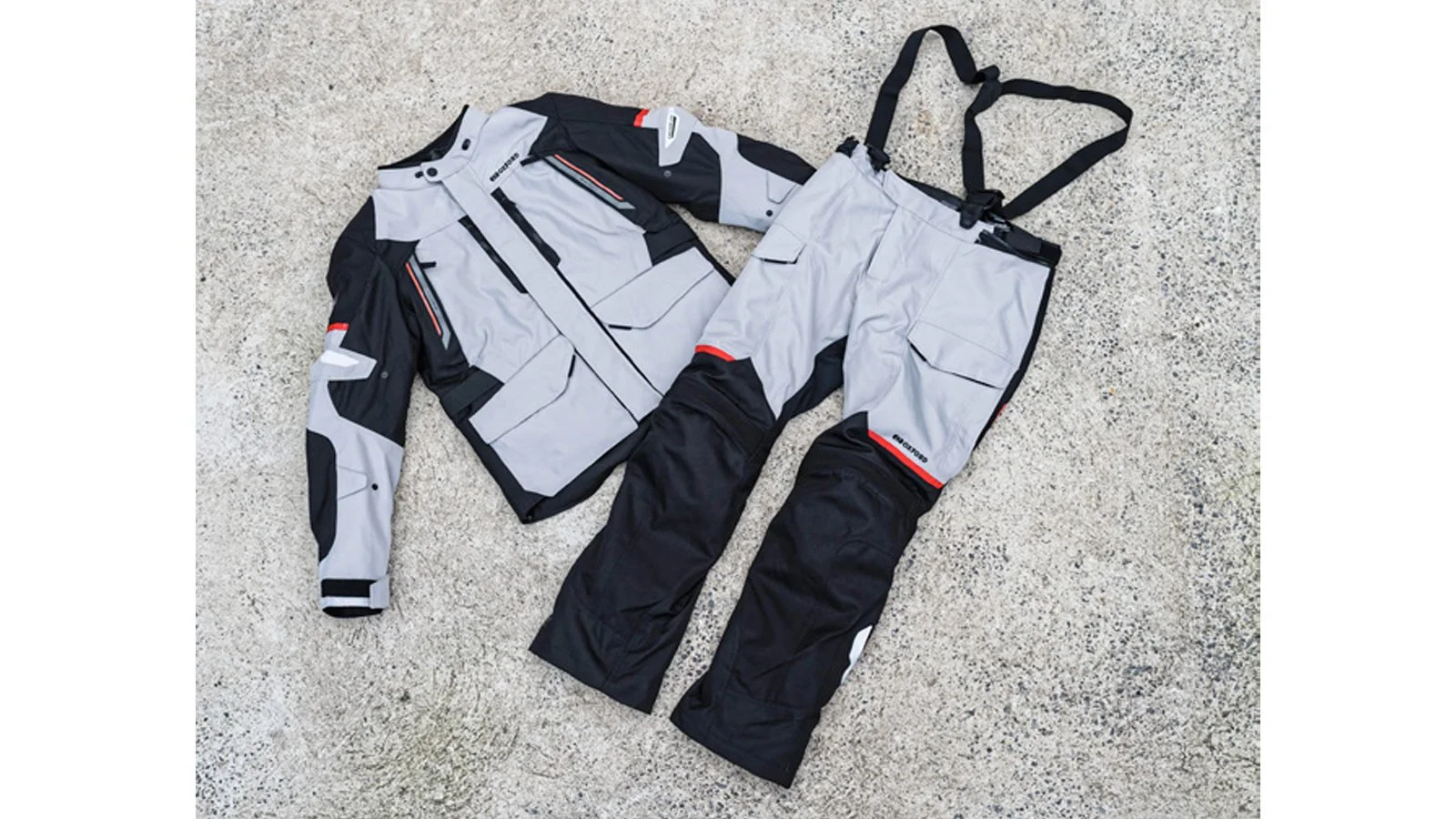
Just what you would expect from Oxford; warm, dry, comfortable, a good fit. The brand’s familiar quality. Vents offer useful airflow for warmer rides.
APRIL 2025
GROUND ANCHORS
Artago 61 £104.99
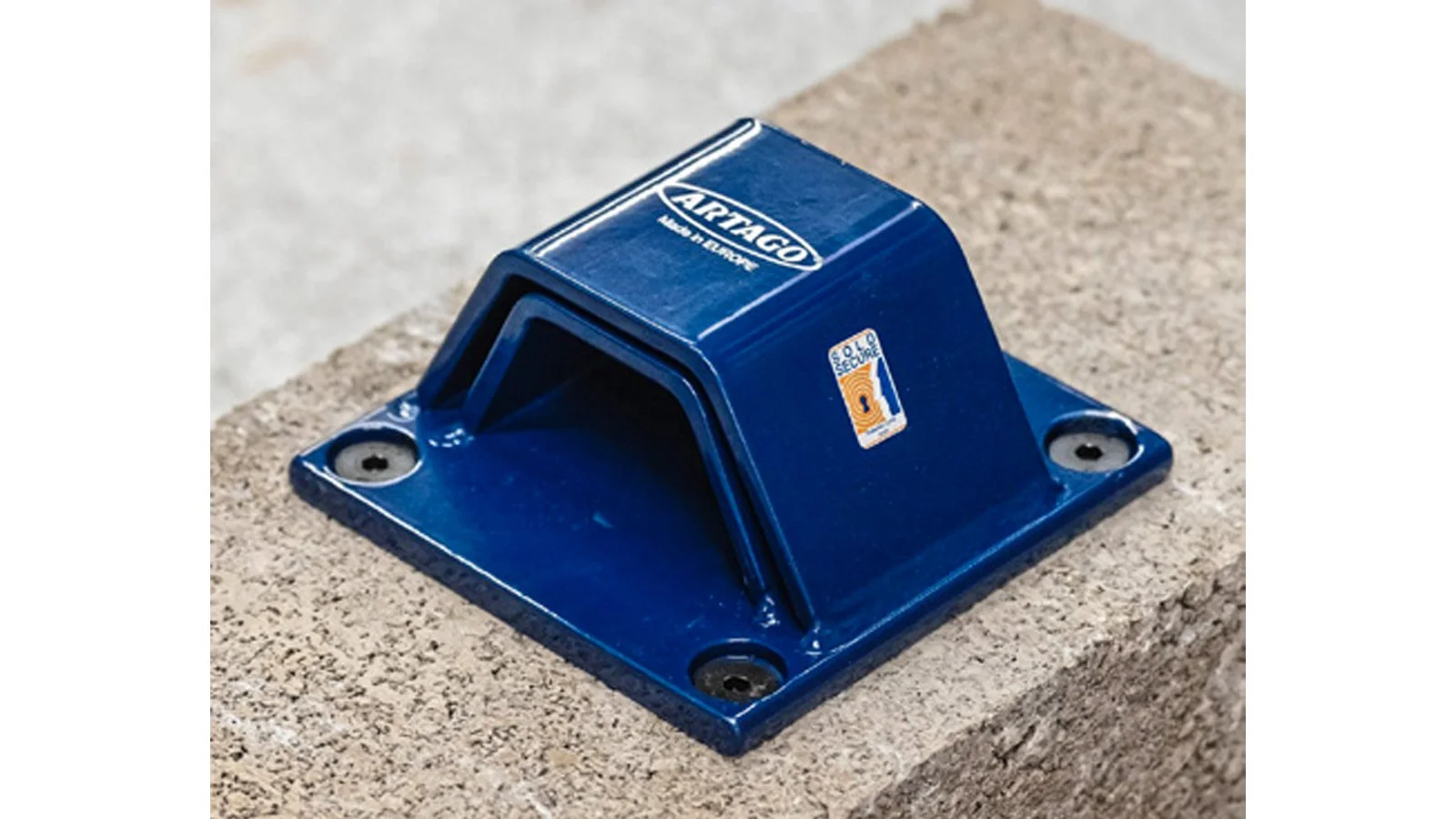
A very solid piece of kit, accepting up to a 20mm chain and resisting attack by hand and power tools for the greatest time.
RECOMMENDED
Oxford Beast £99.99
MAY 2025
CHAIN LUBES
Zing Chain Lube £4.99
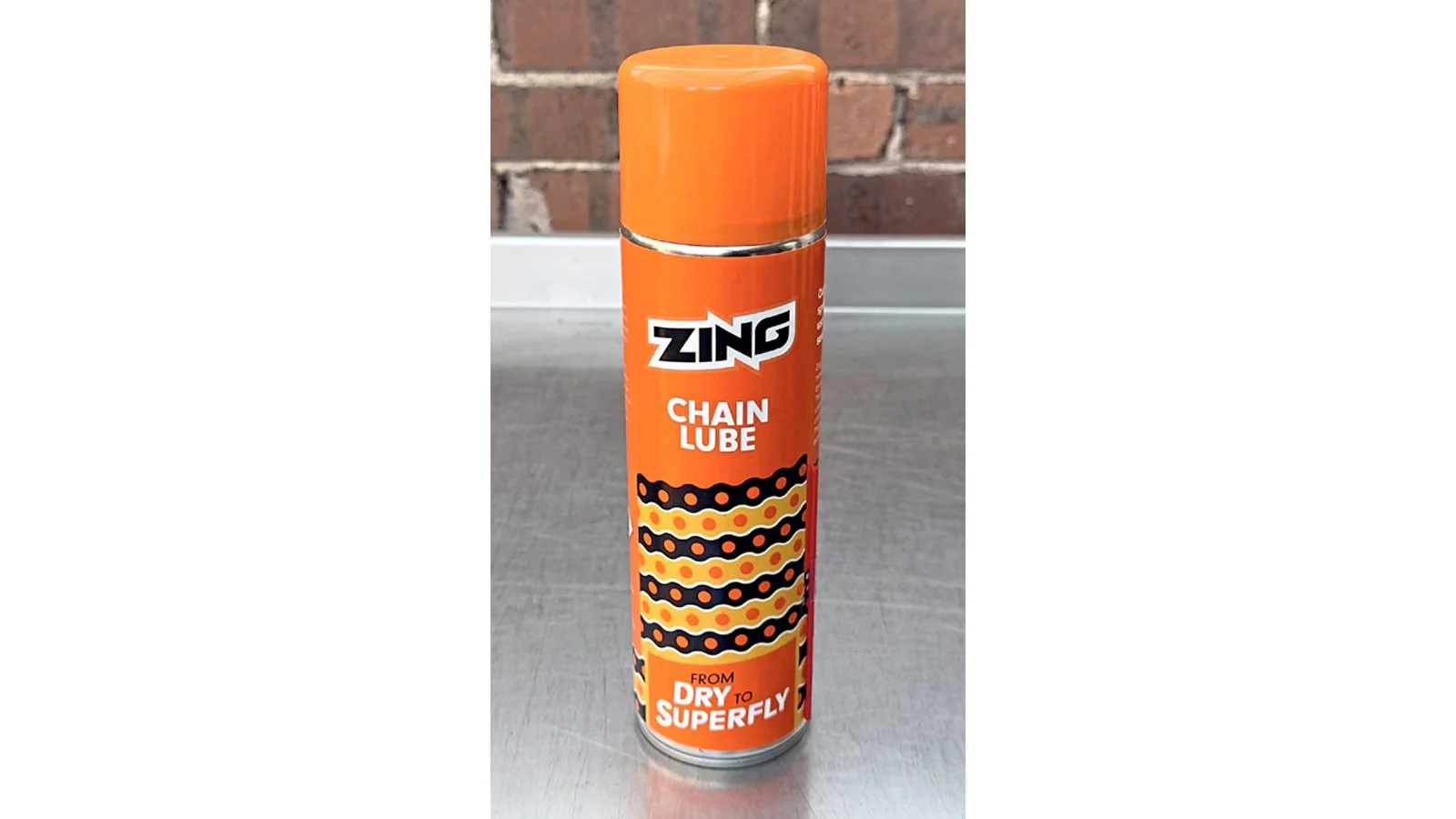
Consistency and incredibly low price mean you can clean and reapply often and easily. A great option for day to day, year-round use.
RECOMMENDED
S100 Chain Lube White 2.0 £19.99
JUNE 2025
LIGHTWEIGHT ADVENTURE LUGGAGE
Kriega OS-Base £508
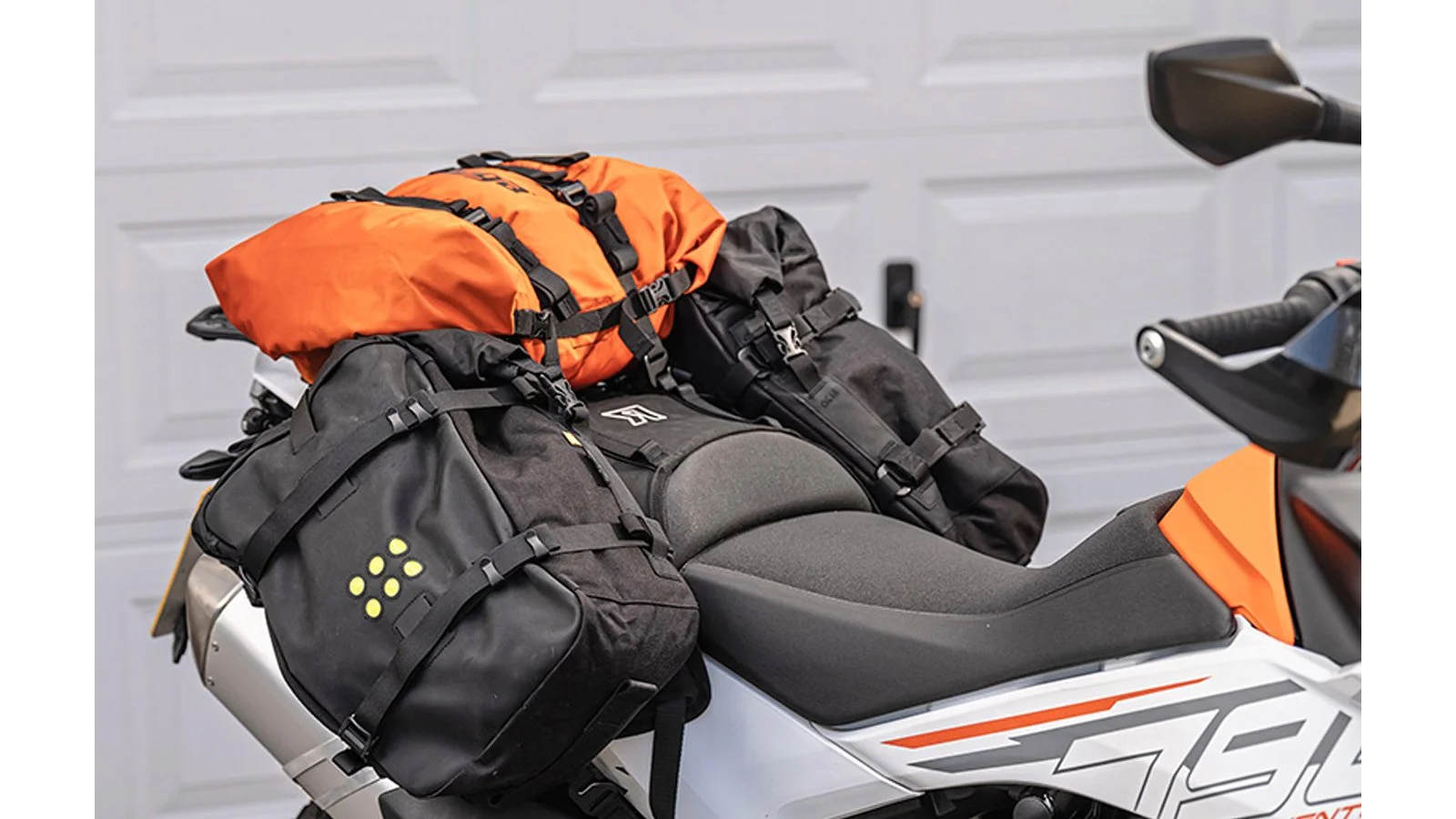
Not cheap, but the legendary Kriega quality and flexibility are present. Choose exactly the bags you need for your trip and away you go.
RECOMMENDED
Enduristan Blizzard 2 £530
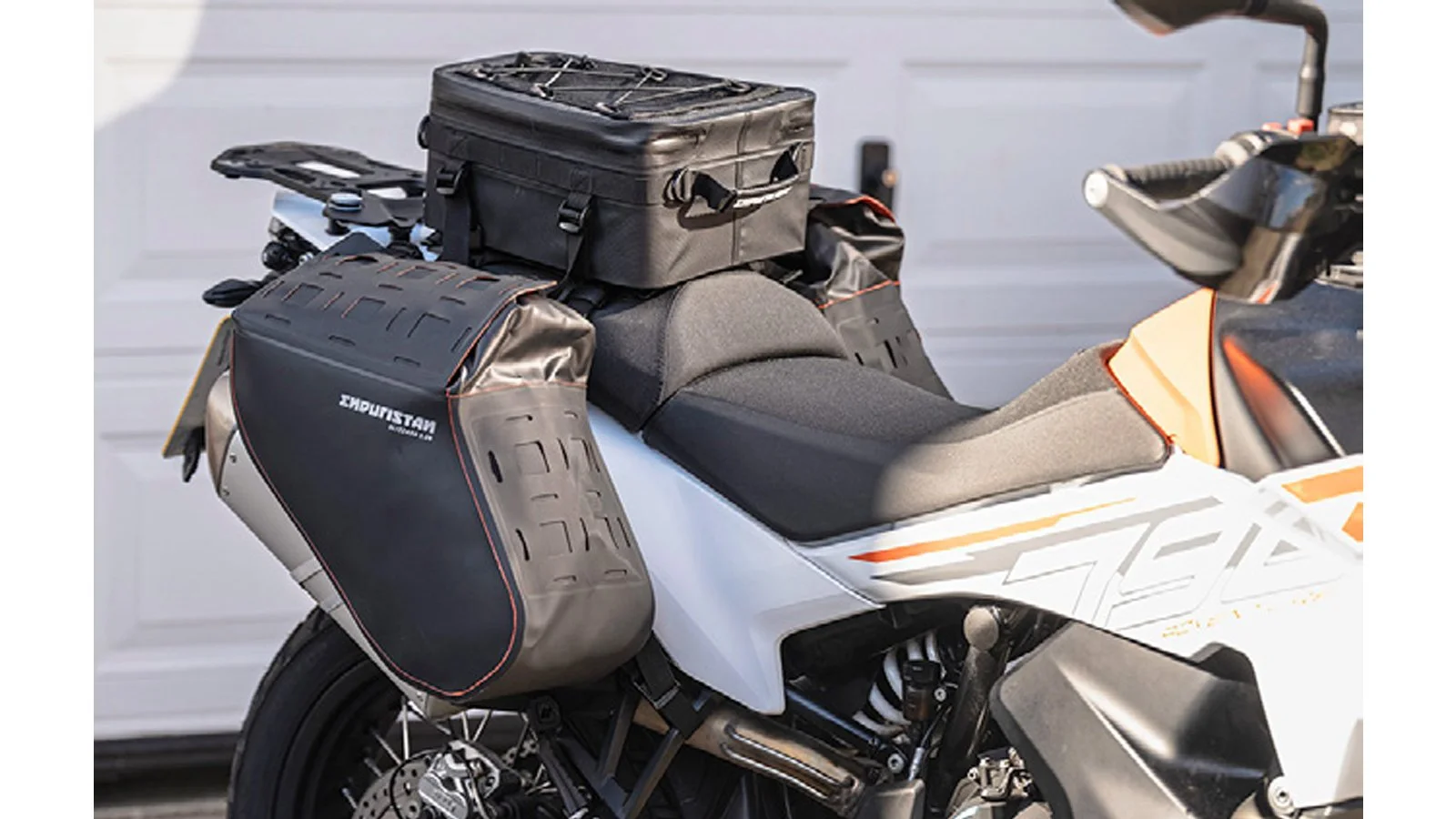
Less flexible but still with expansion options, the Enduristan saddle bags are very stable. Pair them with a flexible bag for greater storage.
JULY 2025
WATERPROOF MESH JACKETS
Oxford Dakar D2D Air £169.99
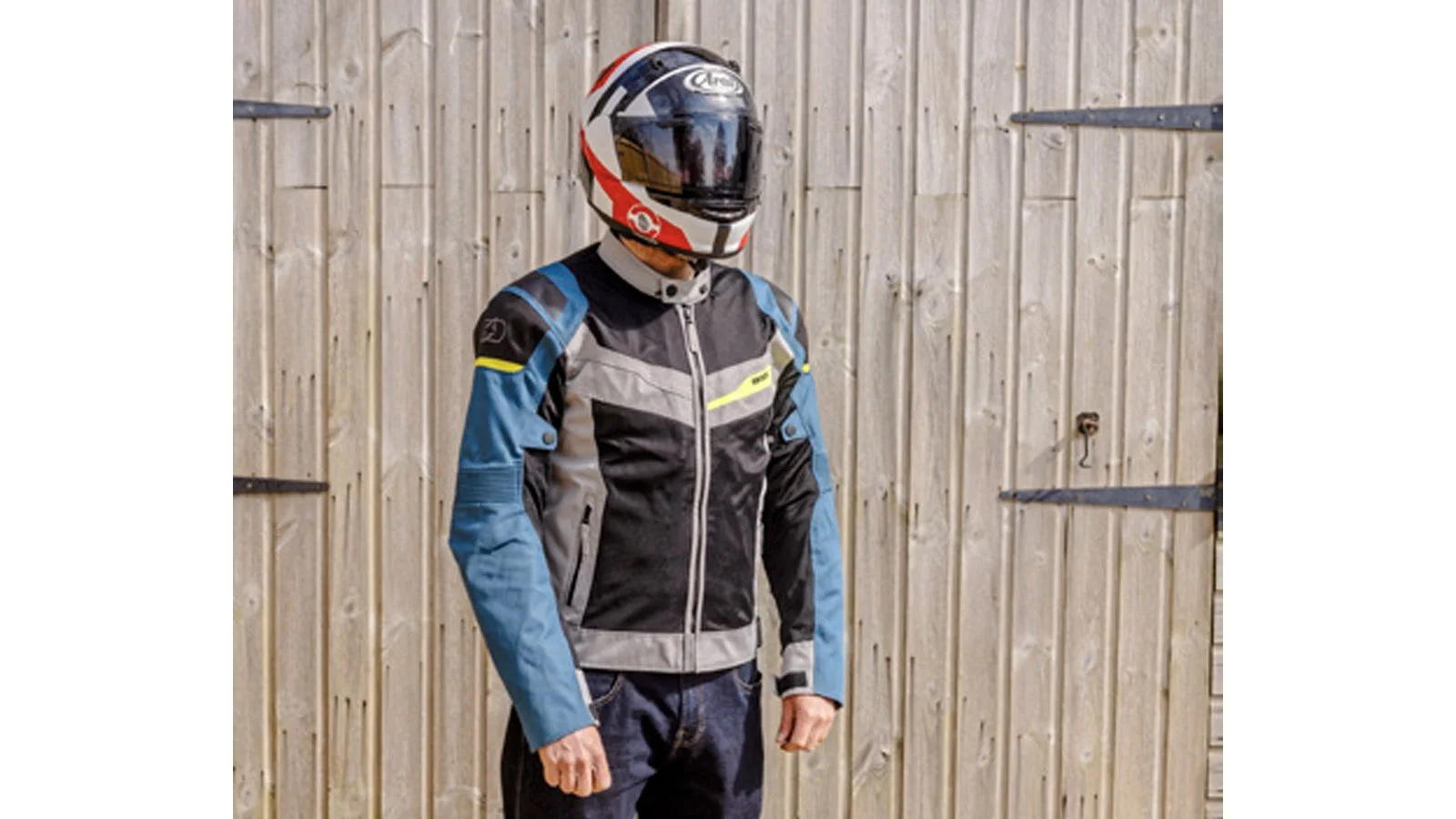
The ideal accompaniment for an everyday or touring trip. High safety rating, good fit and decent waterproofing, it’s a genuine alternative to conventional textiles.
Furygan WB0 8 Vented+ £209.90
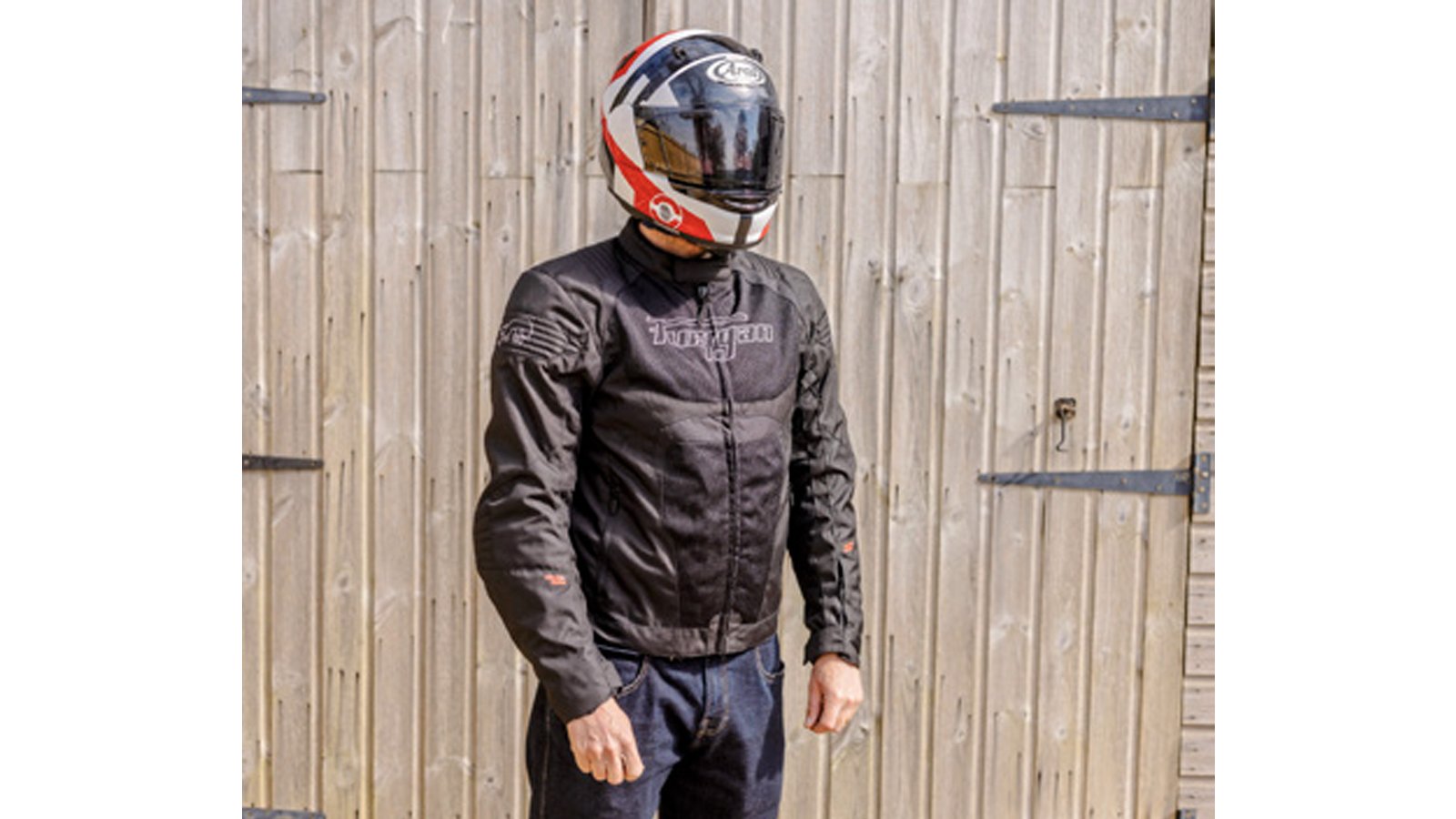
Full of well-designed features, waterproof when required and with a lovely fit, the Furygan ticks all the right boxes. If you want a sporty look, it’s a great option.
Merlin Shenstone II Cotec Air £299.99
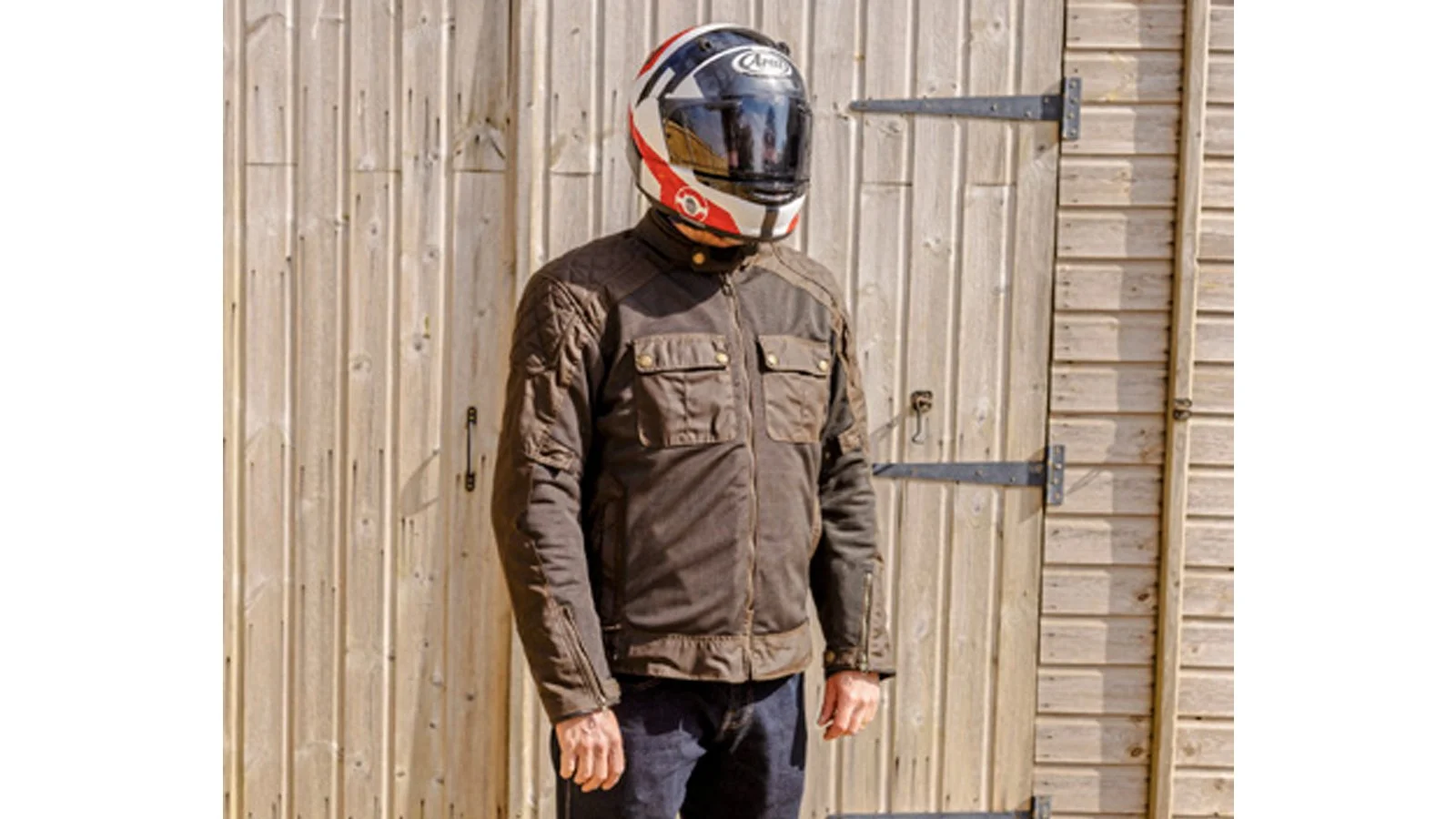
If you own a retro bike and generally ride in the summer only, this is all the jacket you’d need. It’s worth the – admittedly high - price tag.
AUGUST 2025
PEAKED FLIP-FRONT HELMETS
Nexx X.Lifecountry £539.99
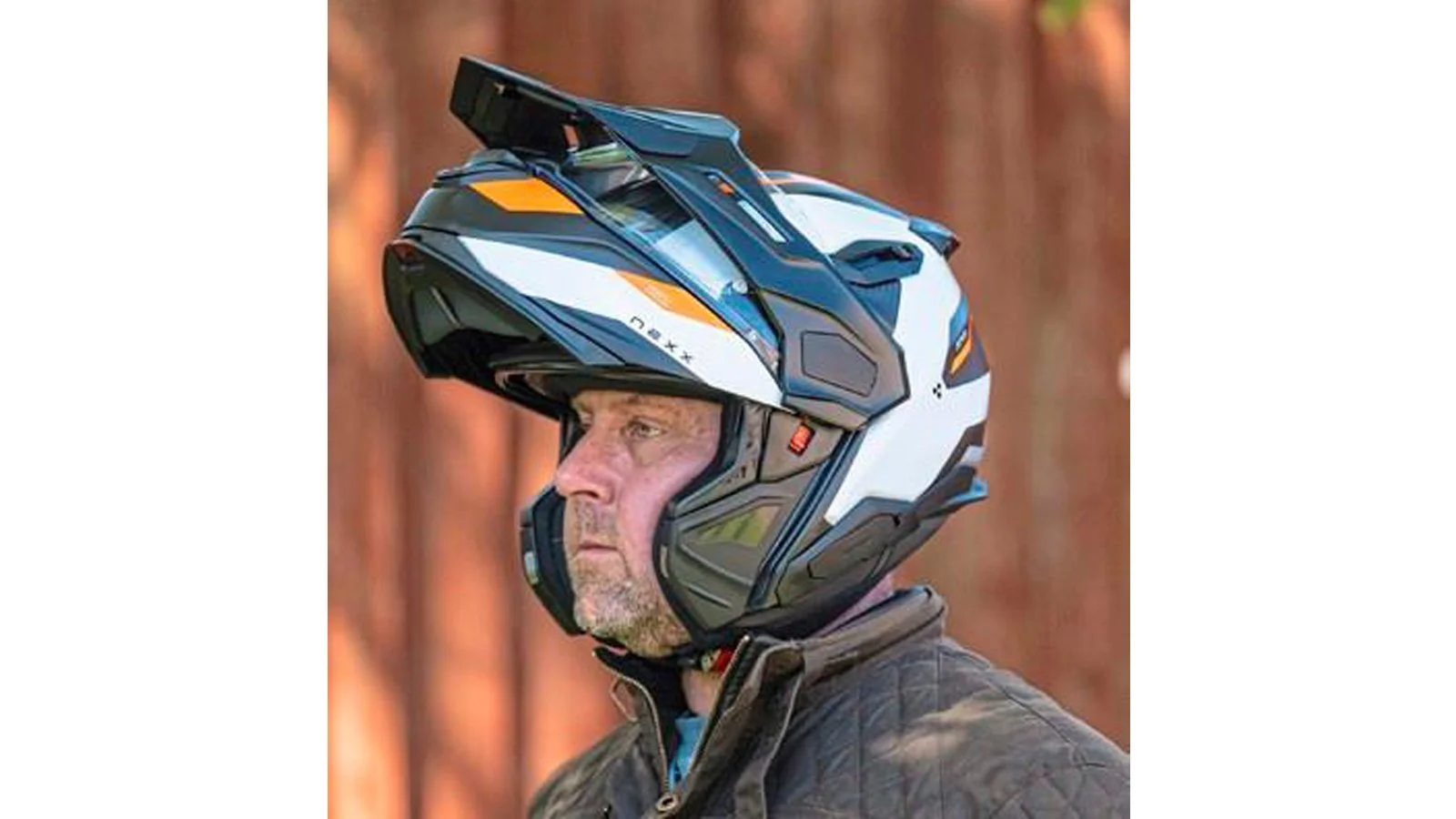
A great helmet that is comfortable straight out of the box. Despite being the heaviest, it wears it well and offers excellent vision with low noise.
Schuberth E2 £589.99
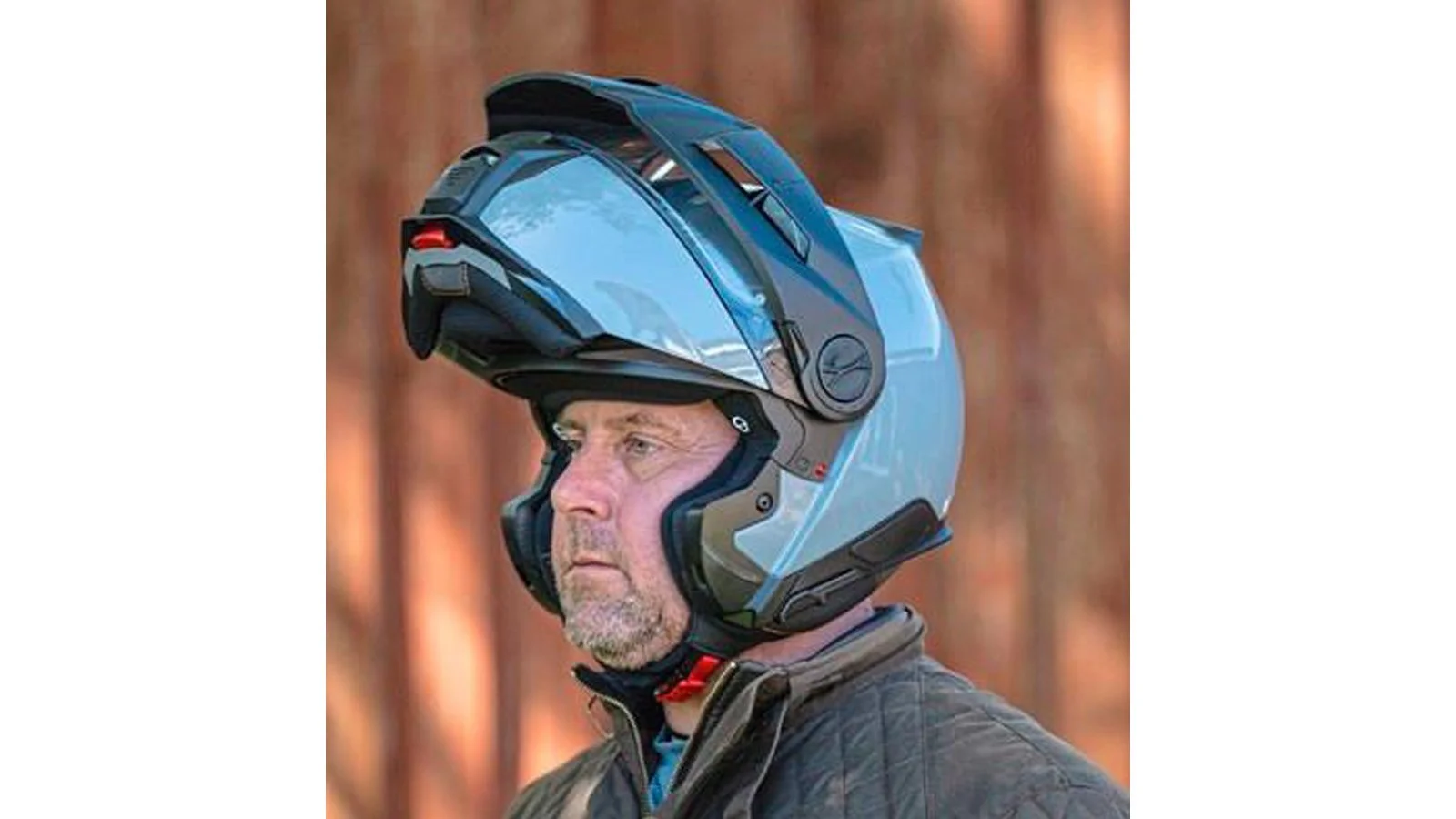
Excellent quality and features, and while the fit is very good the comfort can be tweaked through adjustable inserts to achieve day-long security.
HJC i80 £219.99
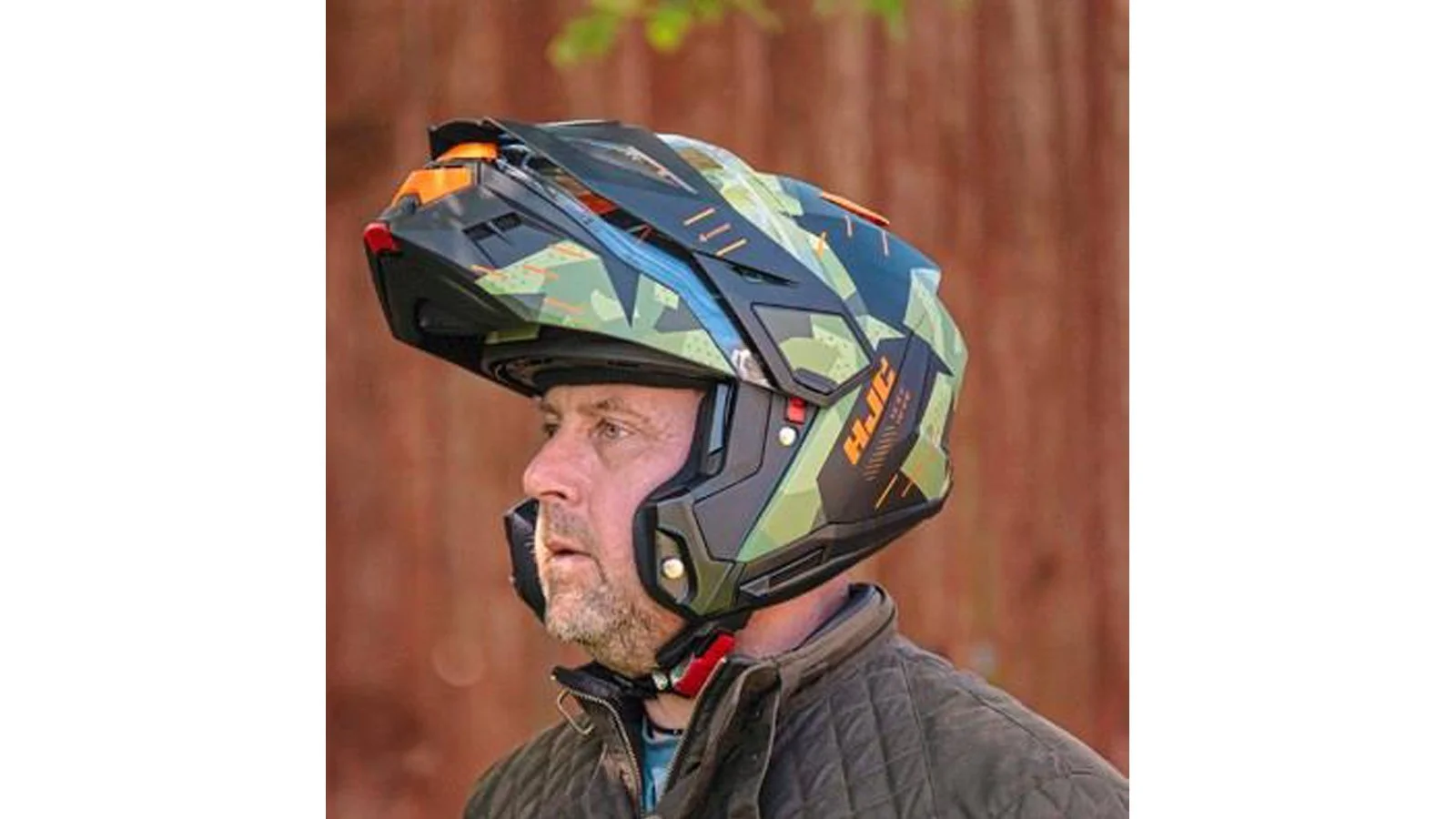
A very good proposition. Great value, huge vision and a top vent that genuinely keeps your head cool. Here as it is £300 less than the other two, but still good.
SEPTEMBER 2025
BIKE BOOTS YOU CAN WALK IN
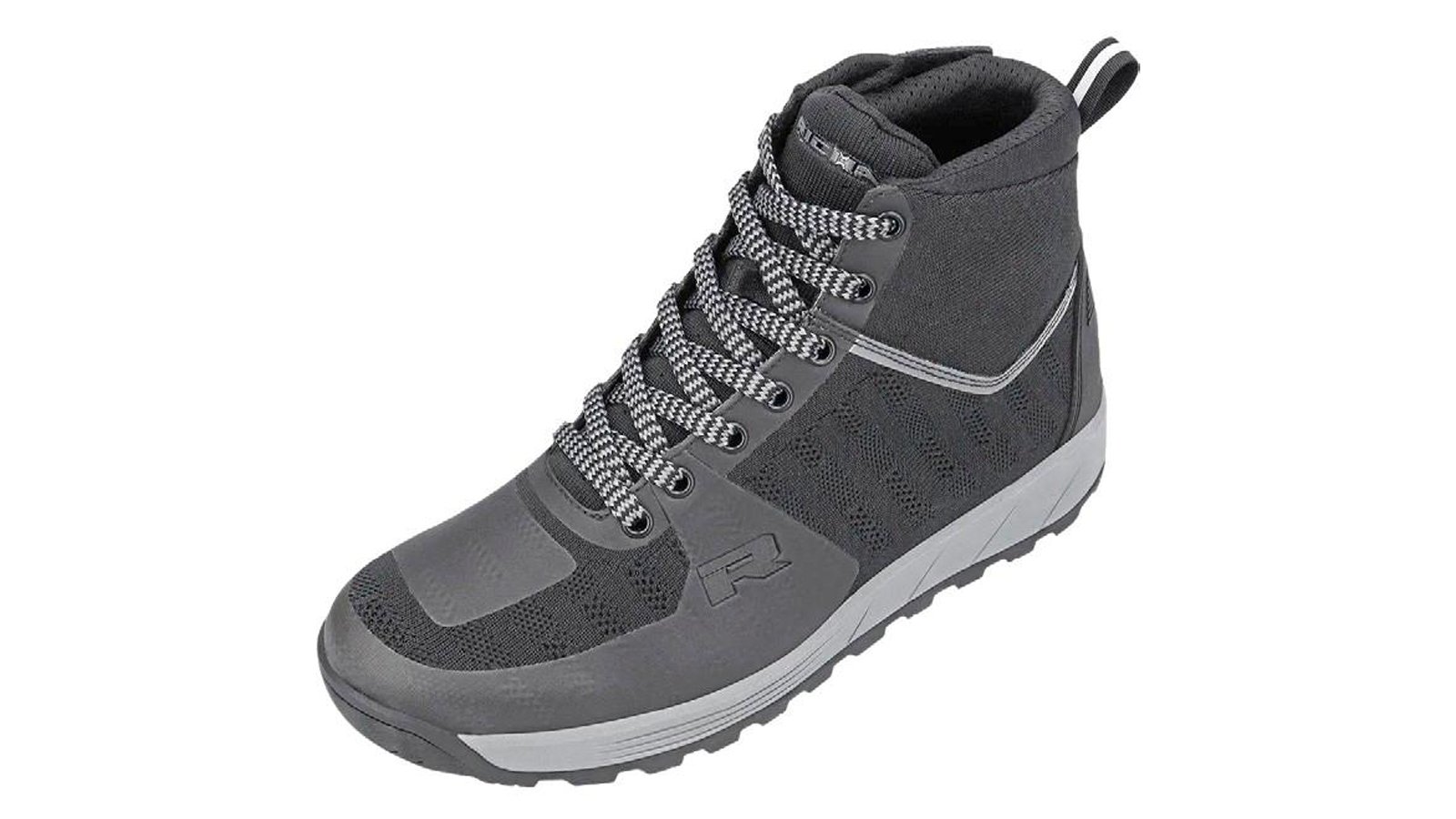
Richa Andorra WP £189.99
A well-considered boot, the Andorra WPs feel very protective and comfortable, and delivered on their promise of waterproofing.
Sidi Nucleus GTX £199.99
OCTOBER 2025
LIGHTWEIGHT ALLWEATHER GLOVES

Oxford Omega 1.0 Dry2Dry £59.99
Not the most stylish glove here, but 100 per cent waterproof, comfortable, and the cheapest – meaning they’re a winning combination of price and performance.
RST Fulcrum CE £69.99
NOVEMBER 2025
30-LITRE RUCKSACKS
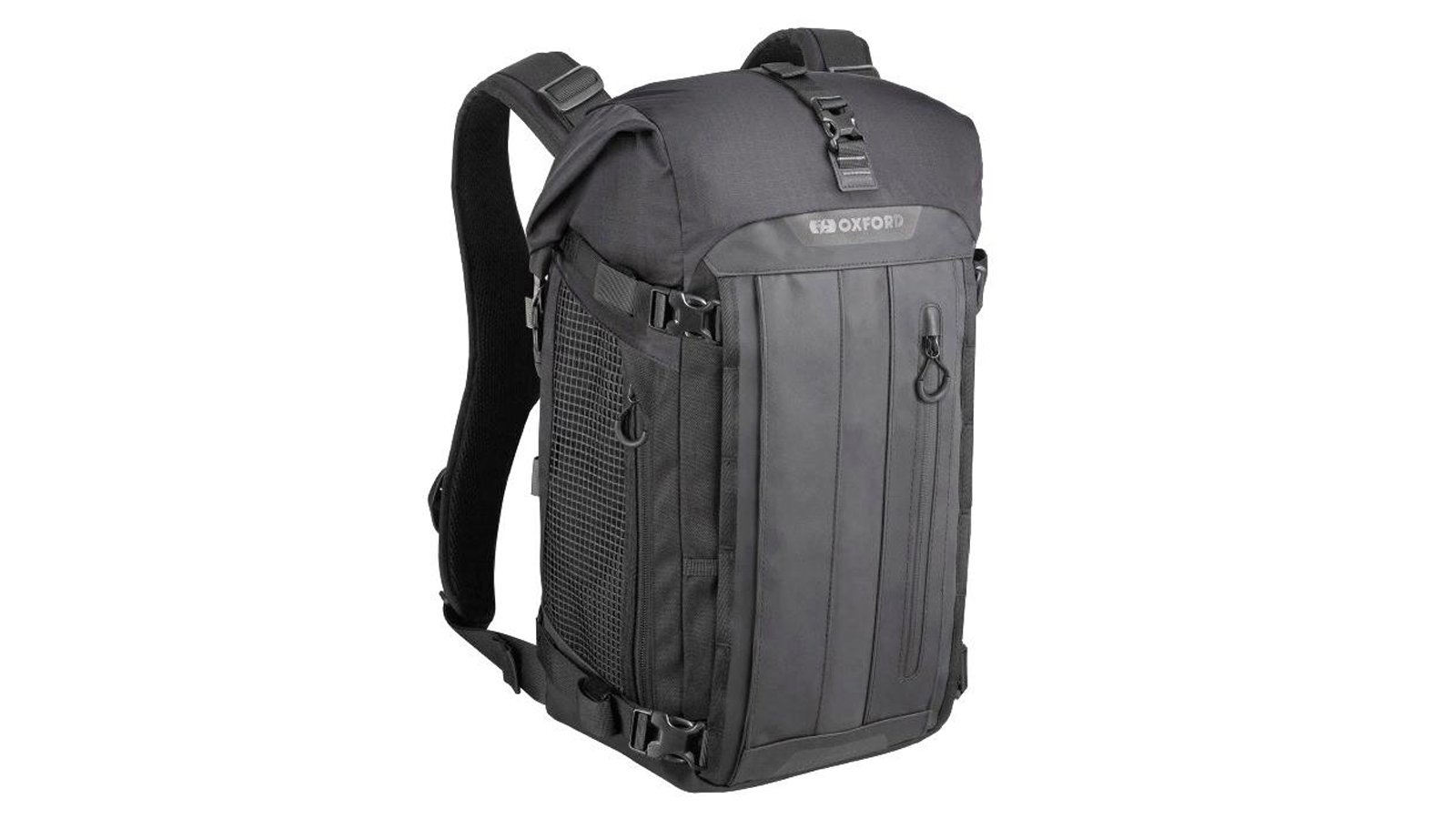
Oxford Atlas B-30 £169.99
A great multi-purpose rucksack, its versatility sets it aside from its competition and quality construction means it delivers where it counts.
Klim Arsenal 30 Backpack £200
DECEMBER 2025
DO-ANYTHING SPORTY BOOTS

Sidi Performer Gore-Tex £279.99
Stylish, lightweight, excellent fit and allday comfy, and totally waterproof in our tests – a winning combination. Expensive, but worth it.
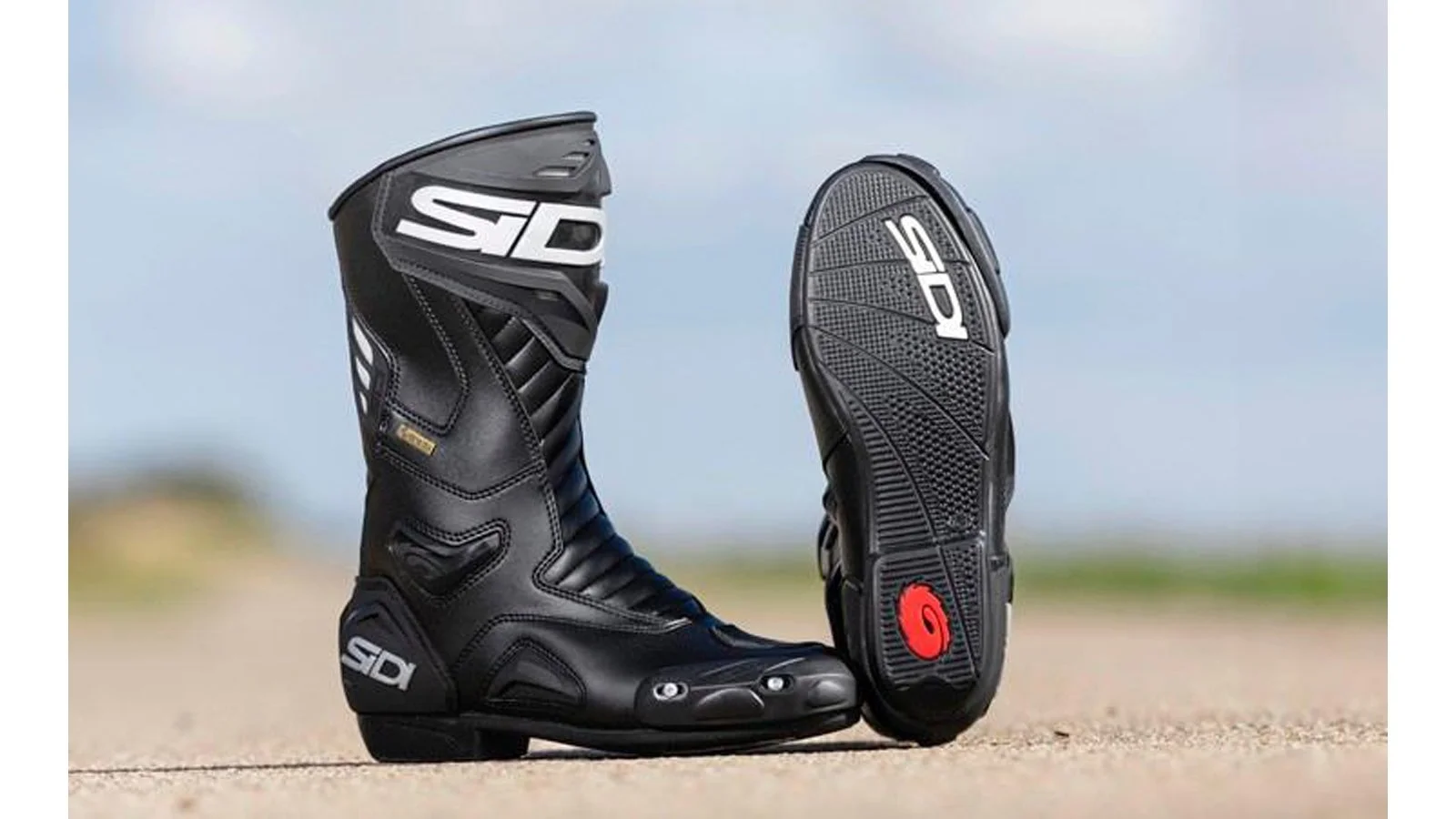
Alpinestars SMX Plus v2 £449.99
Head into stores to grab your latest issue, or why not subscribe to RiDE Magazine and GET YOUR FIRST 6 ISSUES FOR ONLY £19.99
Q: Is the £3499 BSA Bantam 350 a biking bargain?
BIG QUESTIONS ANSWERED
Or does the ride match the low asking price?
Words Jon Urry Pictures Adam Shorrock
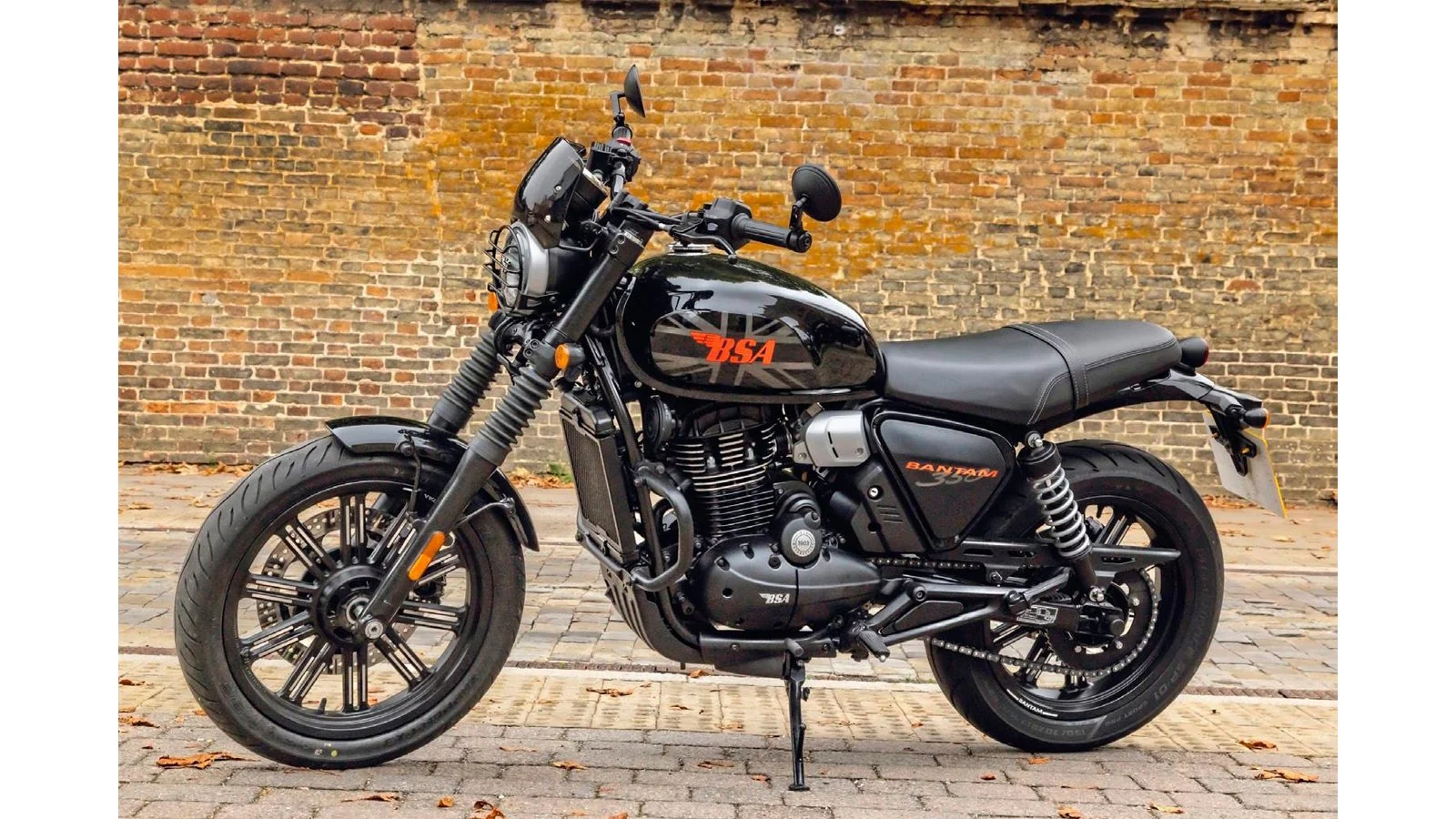
Definite shades of Triumph’s Speed 400 in BSA’s offering
US BRITS ARE keenly buying up small-capacity bikes that put price, ease of use and fun at the forefront of their design. After Royal Enfield led the way with the likes of the Interceptor 650 and Himalayan 411, machines such as the Honda GB350S and Triumph Speed 400 have picked up the baton and ran with it – topping the UK’s new registration charts. And now there is a new bike hitting the market ready to tempt riders – but this one carries an iconic name from yesteryear.
Following up on their reimagined Gold Star 650, which was released in 2023, BSA have introduced a Bantam 350 into their model range. A bike generally credited for getting post-war Britain moving again in the 1940s (BSA claim it’s still the UK’s bestselling bike of all time), the Bantam name carries with it a lot of prestige.
Built in India rather than the UK, does the new BSA Bantam 350 do its heritage justice and offer the same simple charms to a fresh generation of buyers as its forefather? Time to find out…
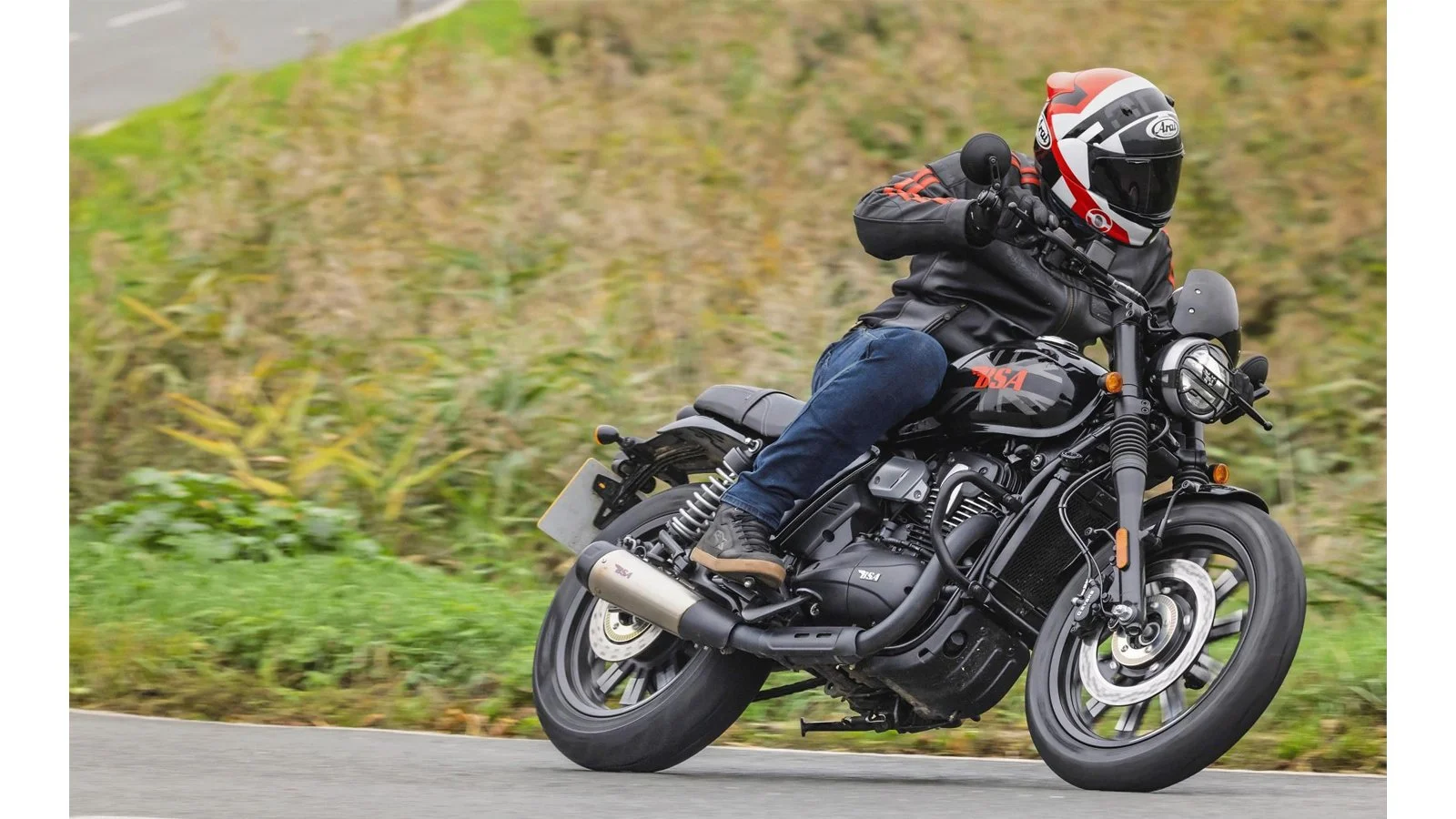
OPTIONS
The Bantam 350 comes in Avalon Grey, Firecracker Red, Victor Yellow, Oxford Blue and Barrel Black paint options, and you can choose an analogue or digital dash.
THE BRITISH LINK
Classic Legends (part of Mahindra) bought BSA in 2016 and brought the new Gold Star to market in 2022, 49 years after the last bikes from the Norton Villiers Triumph ownership period were sold. In 2021, BSA was awarded a £4.6 million UK Government grant to develop zero-emissions motorcycles under a low-carbon automotive initiative. A design facility near Coventry is within minutes of the original BSA factory.
STYLING
Inspired by the 1948 Bantam D1, nods to the past include BSA’s three-gun logo on the engine, a classic round headlight (all lights are LED), teardrop fuel tank and curved rear mudguard. The BSA logo is also etched on the exhaust end can and features on the tank and engine case.
ENGINE
The 334cc liquid-cooled single-cylinder engine features a four-valve head with double overhead cams and complies with Euro5+. Producing a claimed 29bhp with 22lb·ft of torque, it is built in India by BSA’s parent company, Mahindra. The Bantam comes with a three-year, unlimited-mileage warranty.
CHASSIS
The twin downtube spine frame is made from steel and the Bantam runs cast wheels with a 18in front (100/90) and 17in rear (150/70) shod in tubed MRF Zapper FX-3 tyres. Spoked wheels are not an option.
SUSPENSION AND BRAKES
Fairly basic in their design, the Bantam’s telescopic forks have gaiters but are non-adjustable while the twin shocks feature variable spring preload with five settings. The single front brake caliper is a floating two-piston unit built by ByBre; the rear a singlepiston caliper. Dual-channel ABS is standard.
Q: Is it too simple for having fun?
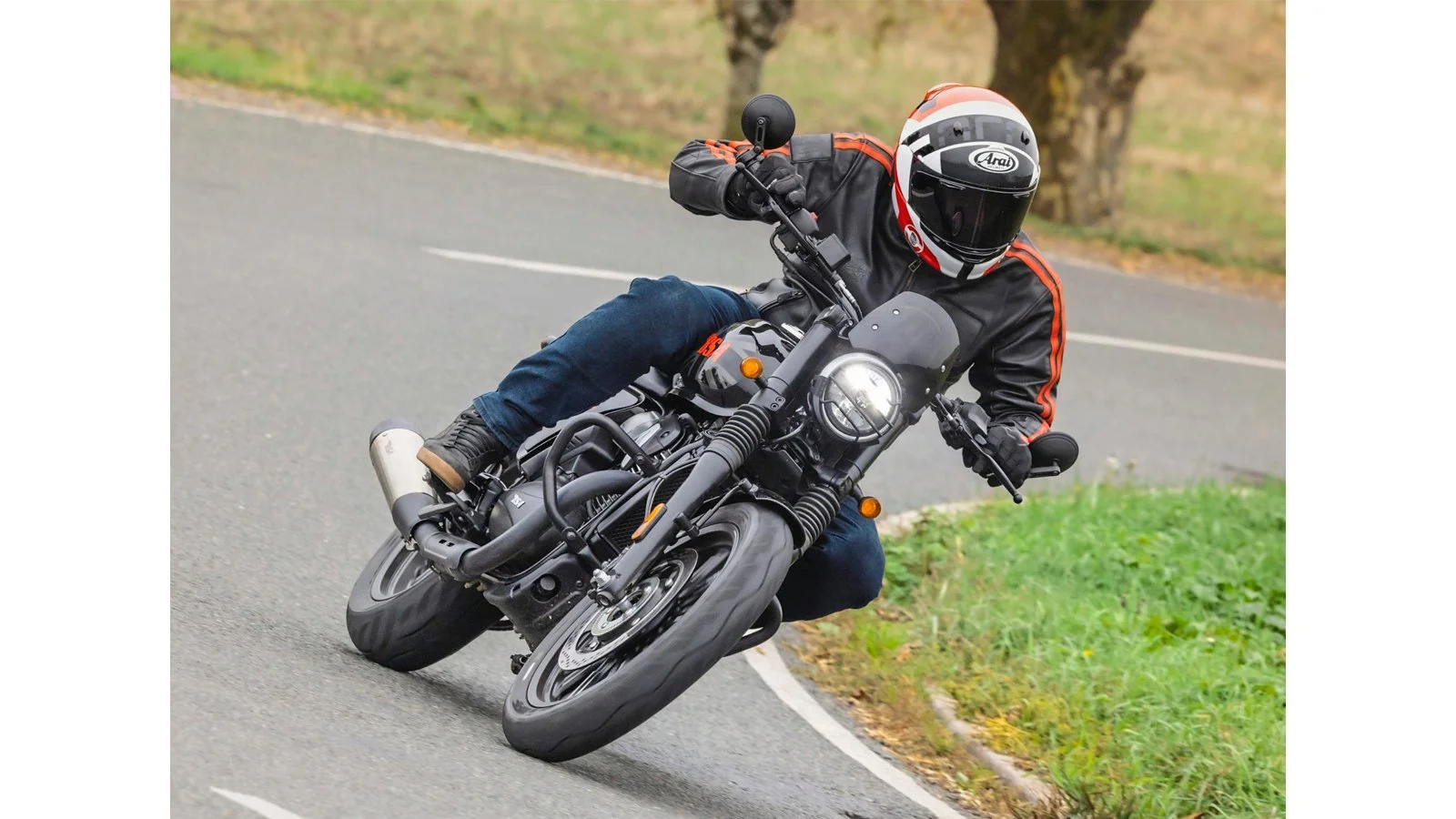
Definitely one to dodge potholes on
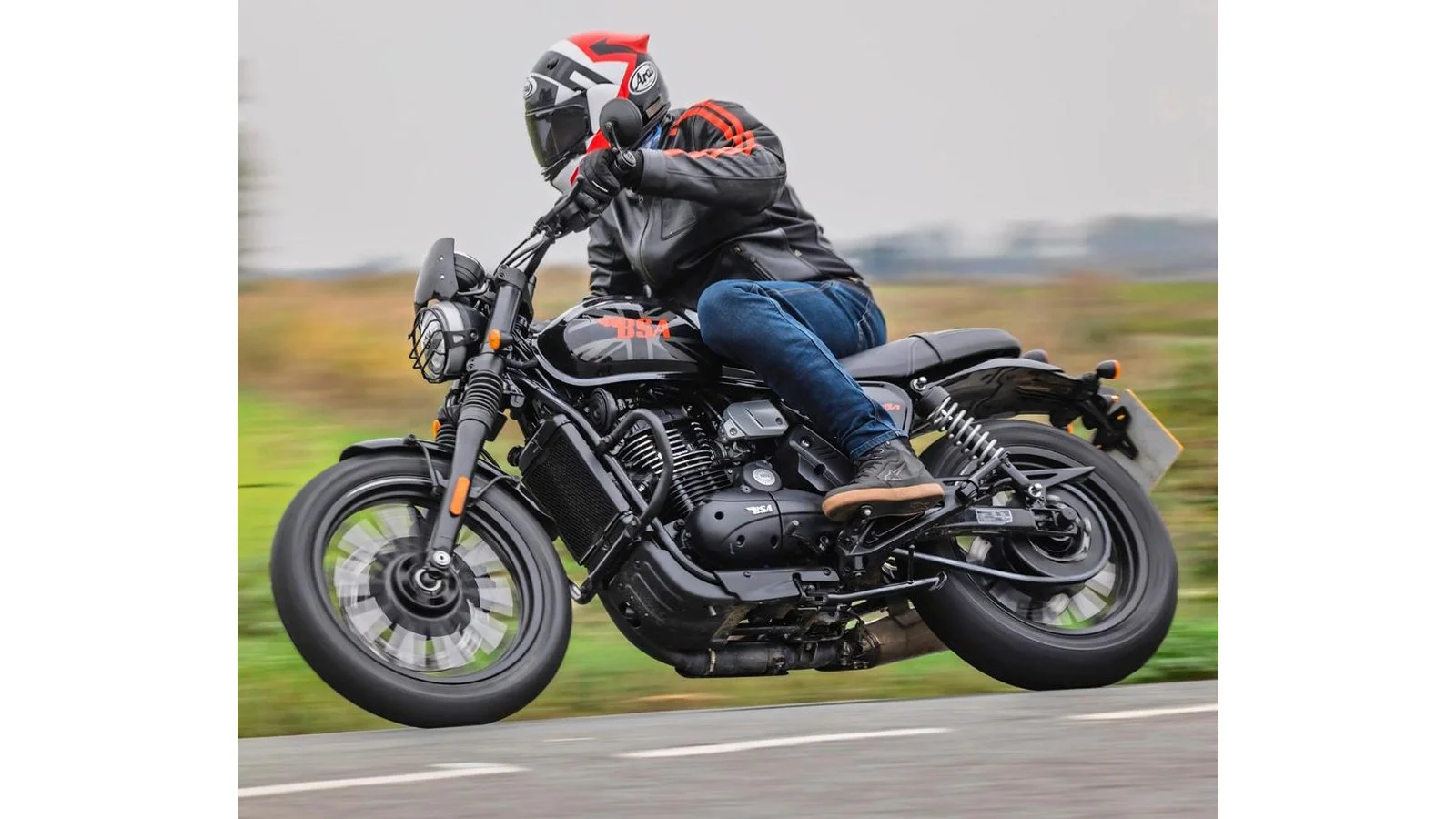
Given the right conditions, the BSA is undeniably fun to ride. On smooth roads the Bantam zips along merrily with a pleasingly gruff exhaust note that makes it sound like it has a larger capacity. On a ride like this the BSA is enjoyable and has a certain charm to it, which is enhanced by the name on the tank.
But should the road get uneven, the fact it’s built to a cost starts to hamper ride quality. Over smooth undulations the suspension damping is acceptable and allows the bike to track the road’s surface, but as soon as you hit a harsh bump the shocks throw in the towel and the kick is transferred through the bike. Harsh and unforgiving, your back takes the brunt of the impact. Unpleasant.
Front-end feel is an acquired taste, too. At slow speed the 18in front wheel is resistant to changes of direction. It’s not terrible, but there is definitely a reluctance to turn. There again, vintage bikes have similar quirks and limitations, so it could be chalked down as character.
Q: Does it have enough grunt?
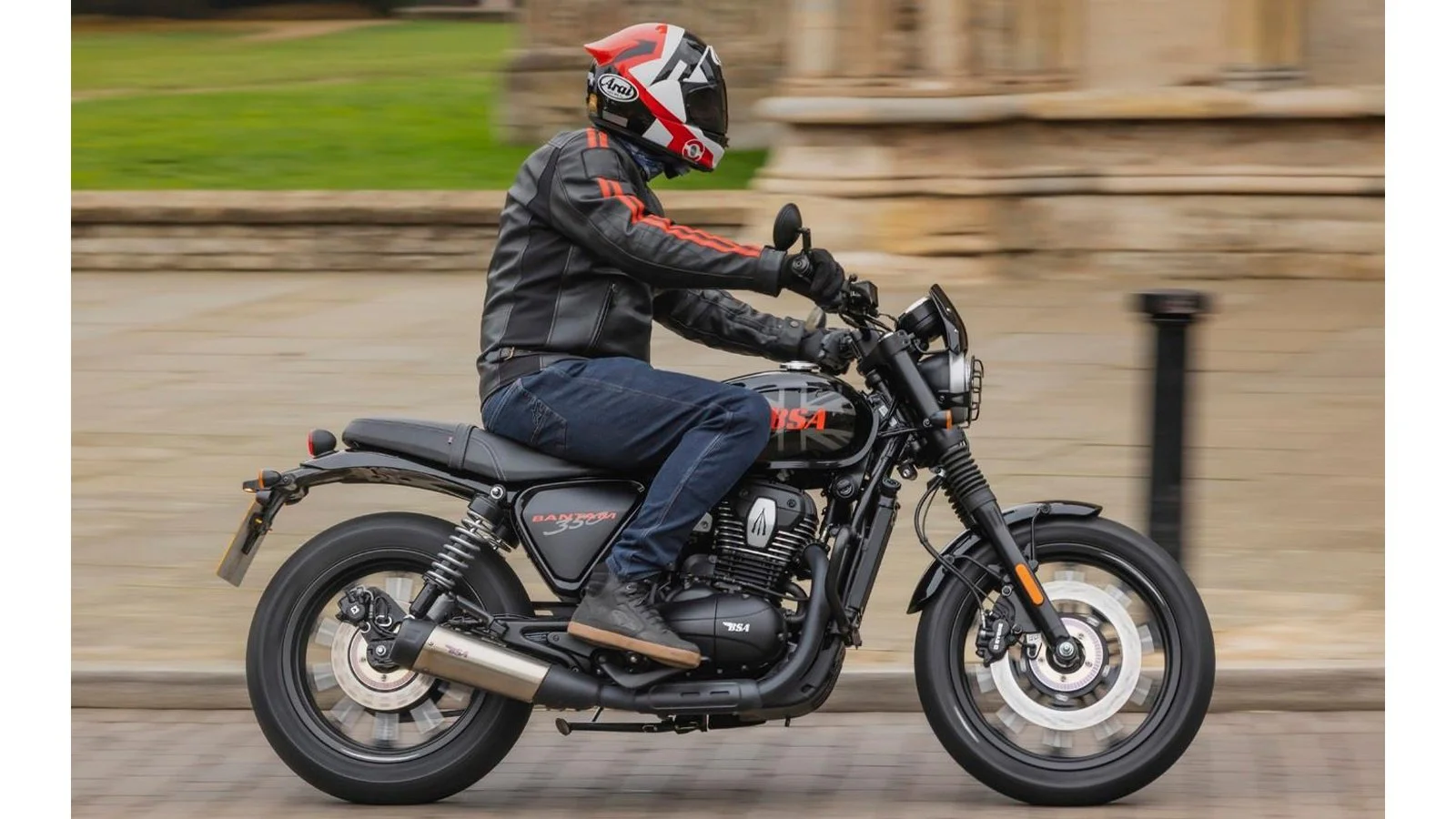
Six-speed gearbox helps make the most of the gentle power
Where rivals including the Honda GB350S and Royal Enfield’s 350cc models use a basic air-cooled 2v SOHC engine, BSA have chosen a more modern liquid-cooled 4v DOHC motor – much like Triumph’s 400 models.
It’s a smart move, because this gives the Bantam enough poke to feel like it can keep up with modern traffic, whereas both the Honda and the Royal Enfields run out of steam at 60mph.
On the road, this extra grunt – and a six-speed gearbox – means overtakes or accelerating into fastmoving traffic requires far less planning, and results in safer manoeuvres.
Sprightly to accelerate and easy-going in town, importantly the engine still looks retro enough to be visually appealing thanks to cooling fins, yet packs performance that ensures you aren’t continually tap-dancing on the gear lever – which is good, because the gearbox is notchy and not as refined in its action compared to the Honda.
The fuelling is acceptable, the clutch light, and while the mirrors blur quickly, the engine itself isn’t unpleasantly vibey.
Q: Does it deliver value for money?
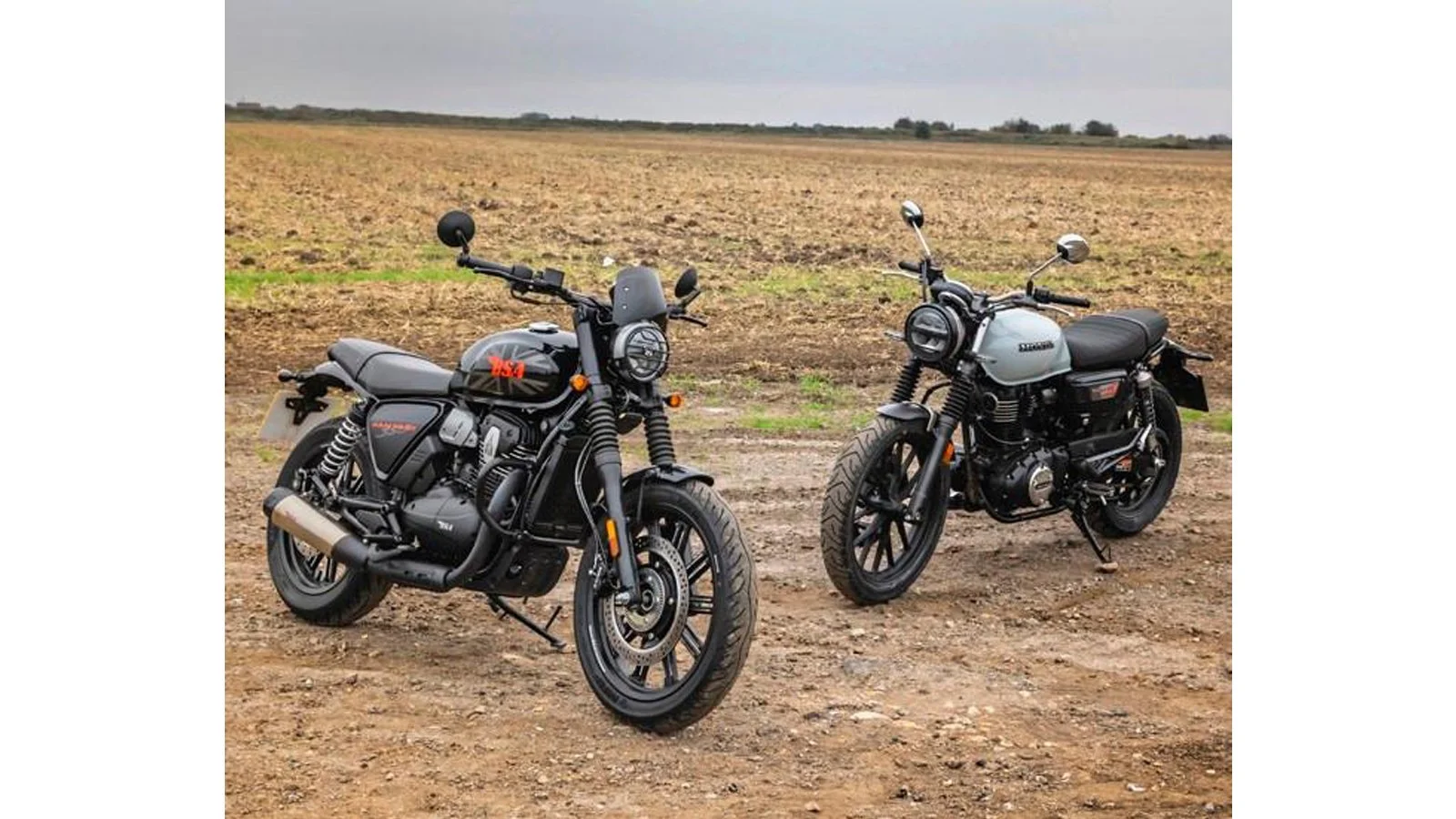
The BSA trumps even the top-selling GB350S’s bang for your buck
It’s undeniably remarkable value for money. After a deposit of less than £1000, you can have the £3499 BSA for £58.99 a month on a three-year PCP deal or £88.99 on HP over three years.
Its closest rival price-wise is Royal Enfield’s 350 range, but the Classic 350 is £4459, HNTR 350 £3899 and Bullet 350 £4629. Honda’s GB350S is £3999 and the Triumph Speed 400 is £5345. If you want a British-named retro, the BSA is the cheapest option.
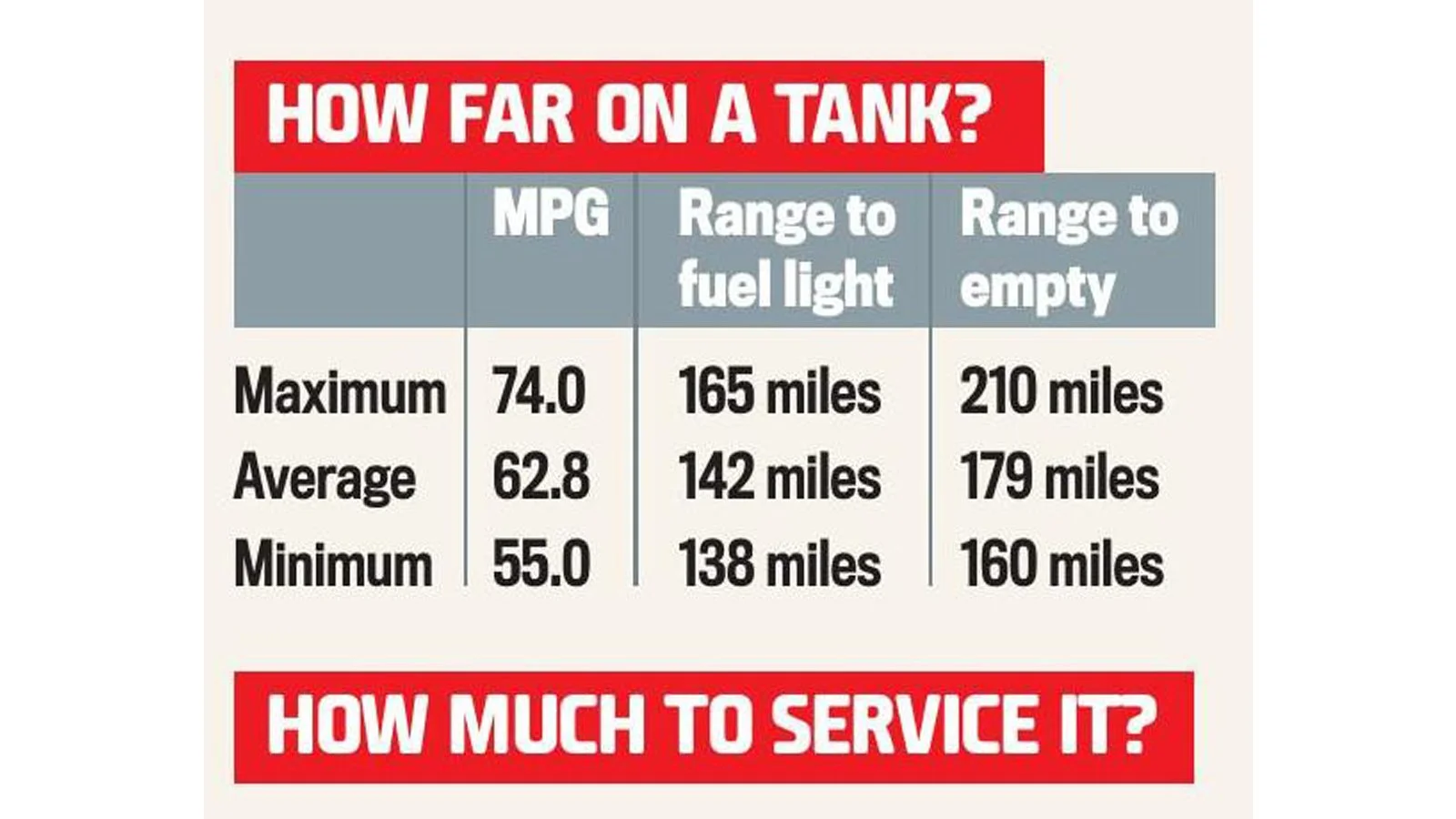
The BSA’s 3500-mile service intervals aren’t too bad and the valve clearance check is every 7500 miles. We recorded economy figures of around 60mpg, which is pleasingly frugal, and insurance should be low.
Q: Does it feel and look like a £3499 bike?
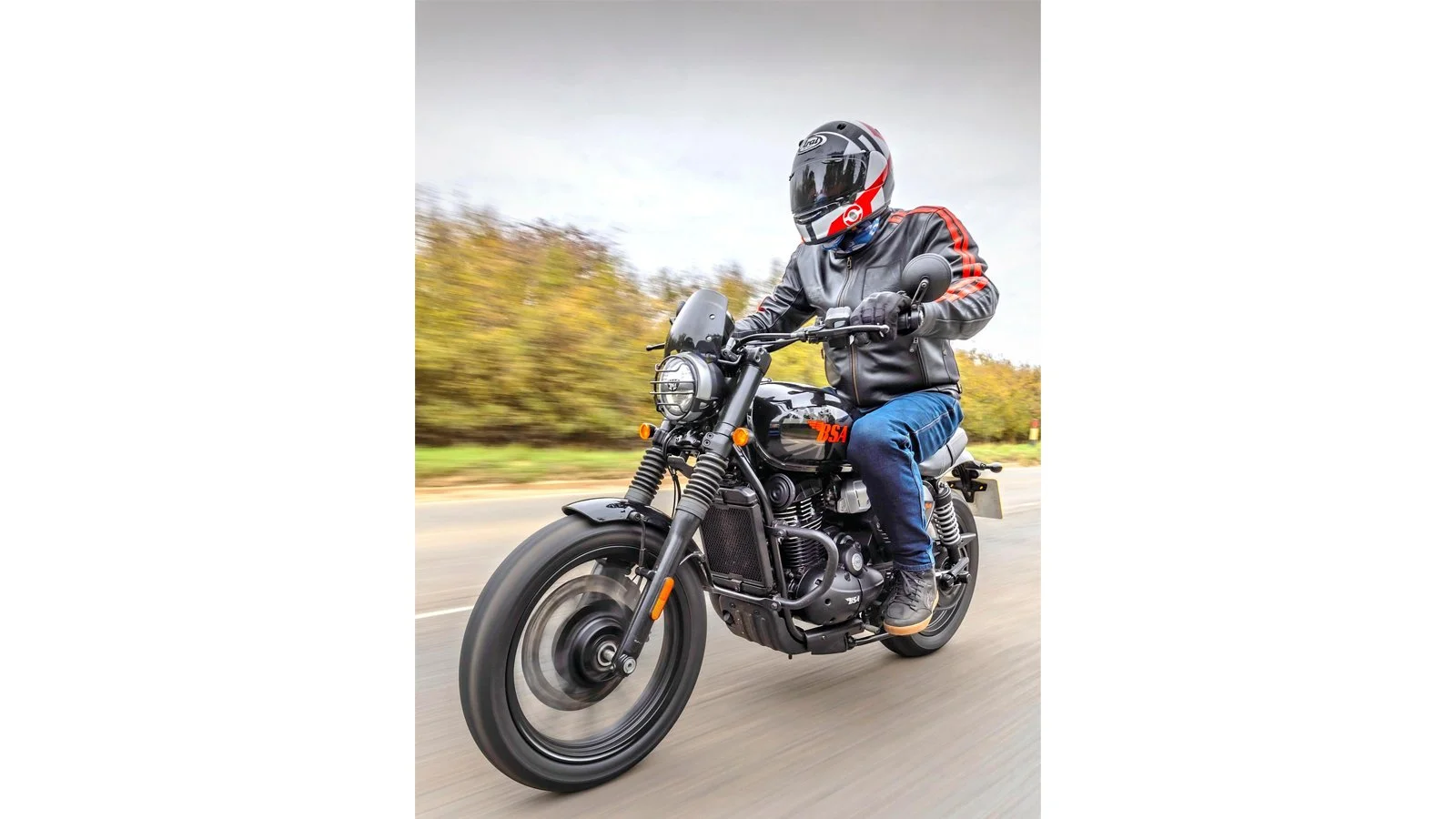
It’s not a premium offering, but neither does it feel low-rent
“‘Good-looking – and the badge draws attention’”
From a distance it’s a good-looking machine – and the badge on the tank draws attention while you’re parked up.
BSA is a brand that seems to still hold affection and has escaped the damaging effect of repeated rebirths under poor management, as other British names have suffered.
Nice details add to the ownership experience, but some areas convey its budget nature, too. It’s the small details that UK buyers may feel disappointed by – for example, the centimetre of thread that pokes out beyond the nut on the front wheel spindle, the separate ignition and steering lock, or the poor finish on some fasteners.
But there again, it costs just £3499 – which is a bargain.
Q: How well made is it?
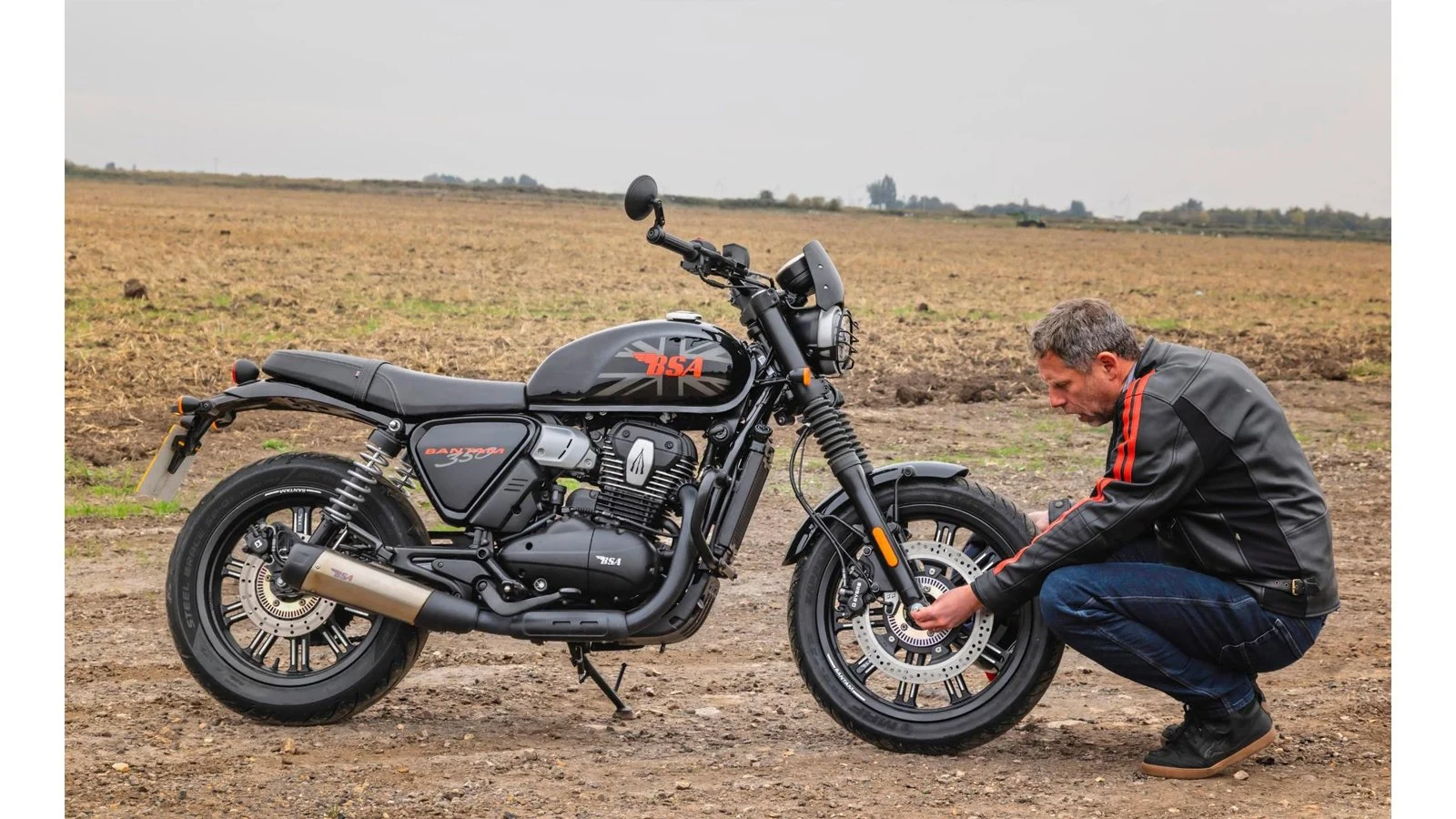
Jon, deeply offended by 10mm of protruding spindle thread
1 Engine
The 334cc single-cylinder engine is built for the Indian market (it is also used in a range of Jawa models) and, as such, is built to last. We wouldn’t expect any mechanical issues even living on its rev limiter, as Mahindra know their stuff, and it appears easy to work on. It has a three-year warranty.
2 Details
A few finer details let the side down. Examples include bolts that are a touch too long, areas where the paint doesn’t seem brilliant, and a slight flimsiness to a few of the plastics. There again, with a price tag so low – it’s £3499, remember – what do you expect?
3 Finish
We wouldn’t be surprised if corrosion starts to show in a few areas unless you regularly apply a protection treatment to the Bantam 350. Indianbuilt motorcycles are generally very sturdily built; however, the finish is never that great.
How much does it weigh?
Fully fuelled and ready to go, the Bantam weighs 192kg, which is 7kg more than the 185kg it is claimed to weigh when 90 per cent fuelled. Our bike had some extras fitted, too. It’s likely their claim is accurate.
Q: What are the best options and add-ons?
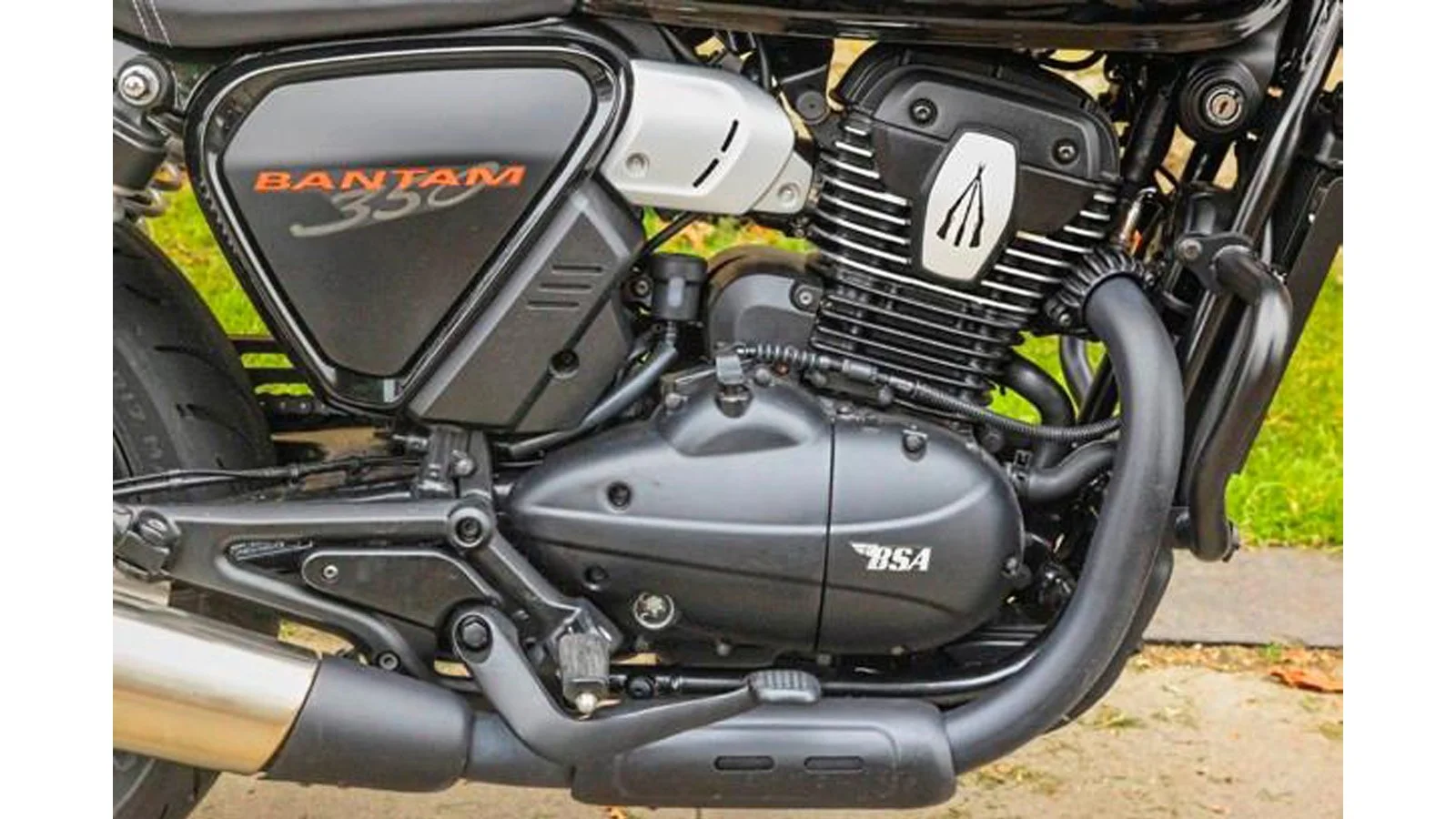
Bar-end mirrors £149
As standard the Bantam comes with ‘Mickey Mouse ear’ mirrors; the accessory bar-end mirrors add a degree of style – although they do catch annoyingly on your hands, which is worth bearing in mind…
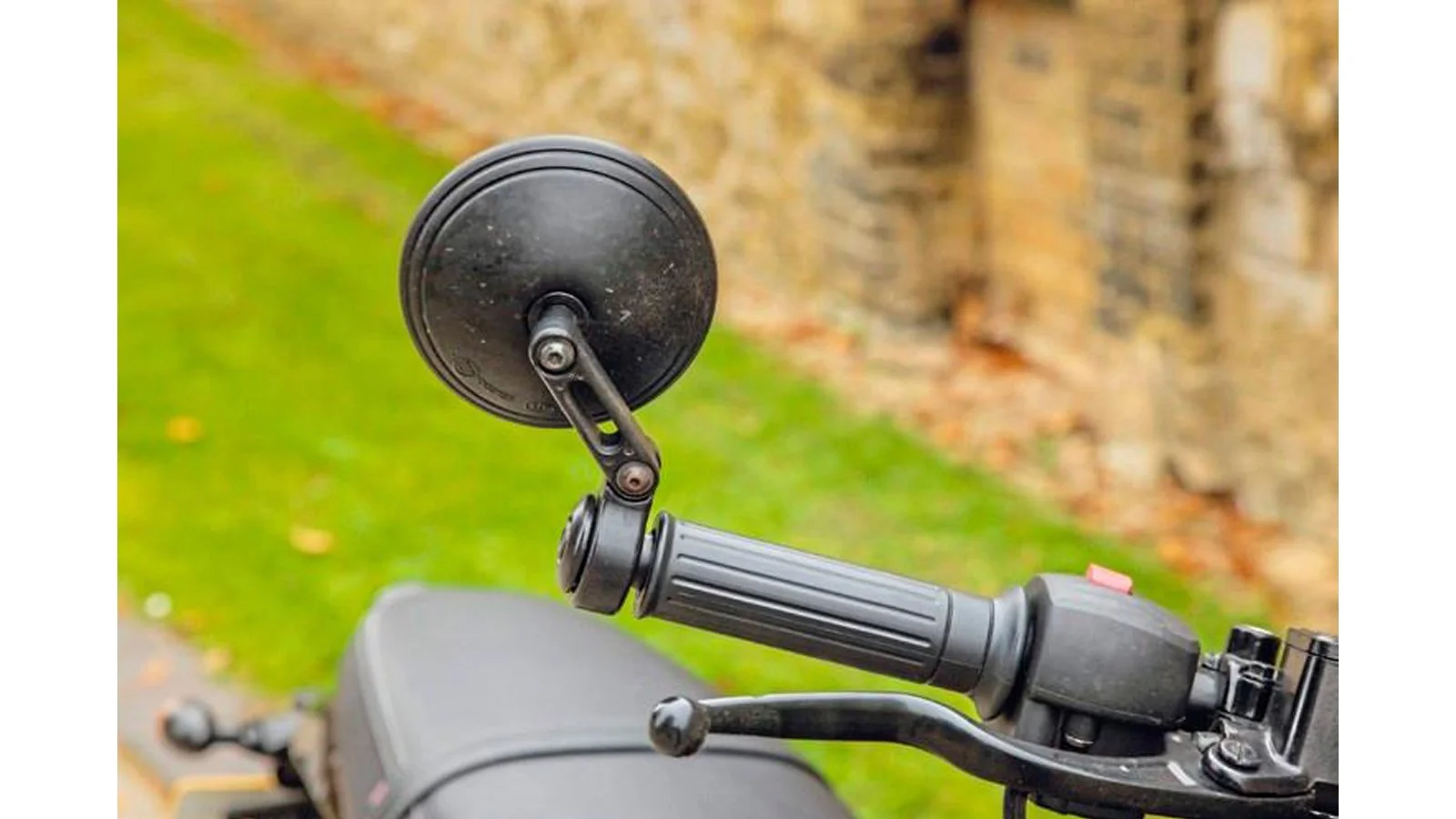
Crash bars £159
While not particularly attractive, they are sturdy and may be a good addition if you’re returning to two wheels, or a newer rider. Quick to remove once you’ve gained confidence.
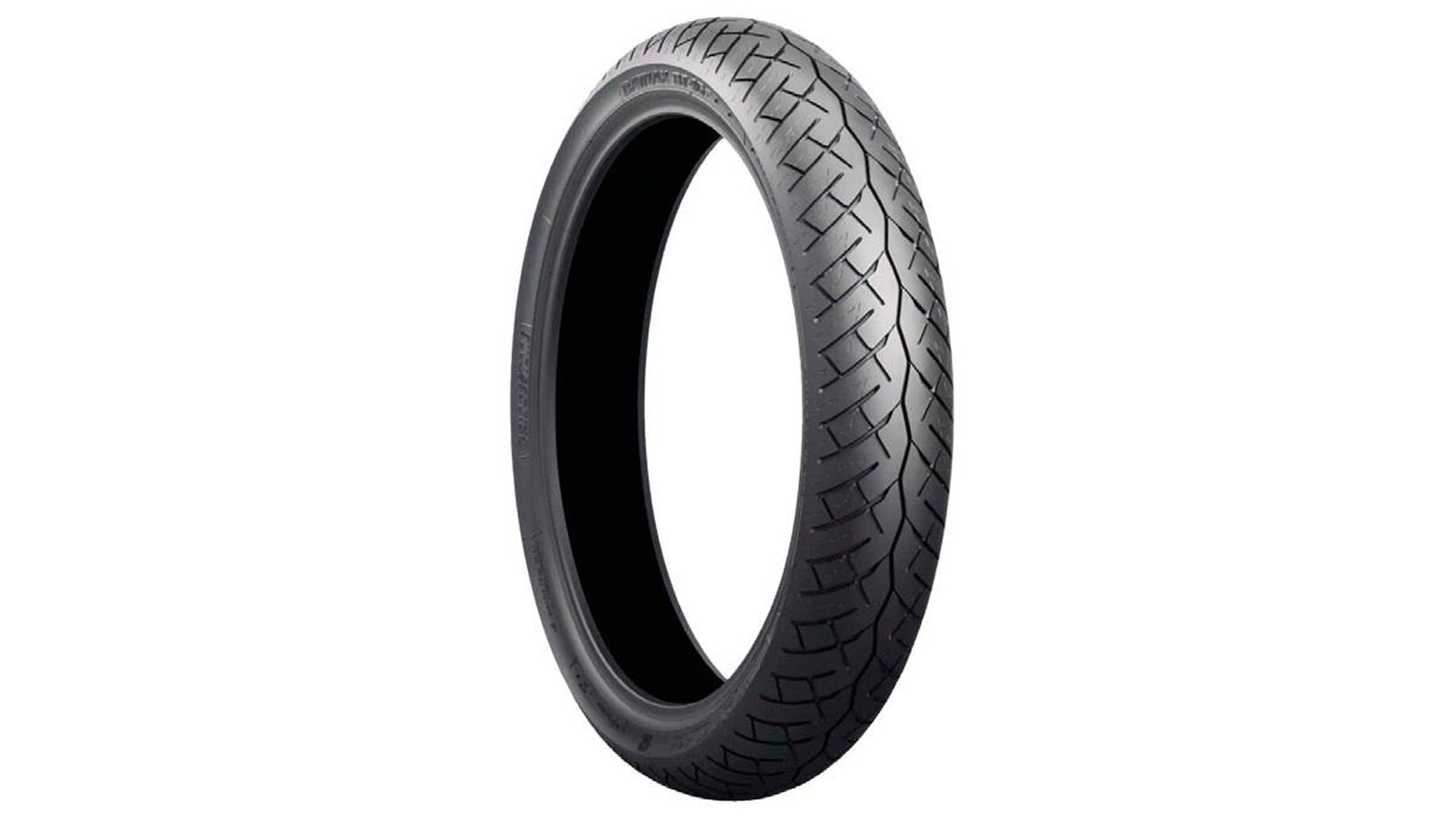
Bridgestone BT46 From £250
The MRF Zapper FX-3 tyres are hard-wearing but not particularly confidence-inspiring. Bridgestone’s BT46 will offer a more confident feel across the board, particularly in the wet.
Q: What will it cost to run?
WHAT ARE MY OPTIONS?
£3499 On-the-road cash price
£58.99 PCP x 36 £965 deposit, 4000 annual miles, £1243 final payment, 9.9% APR
£88.99 HP x 36 £920 deposit, 9.9% APR
HOW MUCH TO INSURE
£295.43 Fully comp, £350 excess
£240.36 TPF&T, £350 excess
2025 model, worth £3499. Based on a 52-year-old male engineer, married, licence held for nine years, eight years’ NCD, no claims or convictions, for social, domestic and pleasure use. Bike is garaged with postcode WA14 1NU and annual mileage 5000 miles. Quote supplied by www.MCNcompare.com in November 2025.
500 miles Replace oil and filter, basic check and lube. £100
3500 miles/annual Replace oil and filter, general inspection and lube. £130
7500 miles Replace oil and filter, change air and fuel filter, valve clearance inspection. £250
Additional Change brake fluid at 11,000 miles and coolant and fork oil at 22,500 miles.
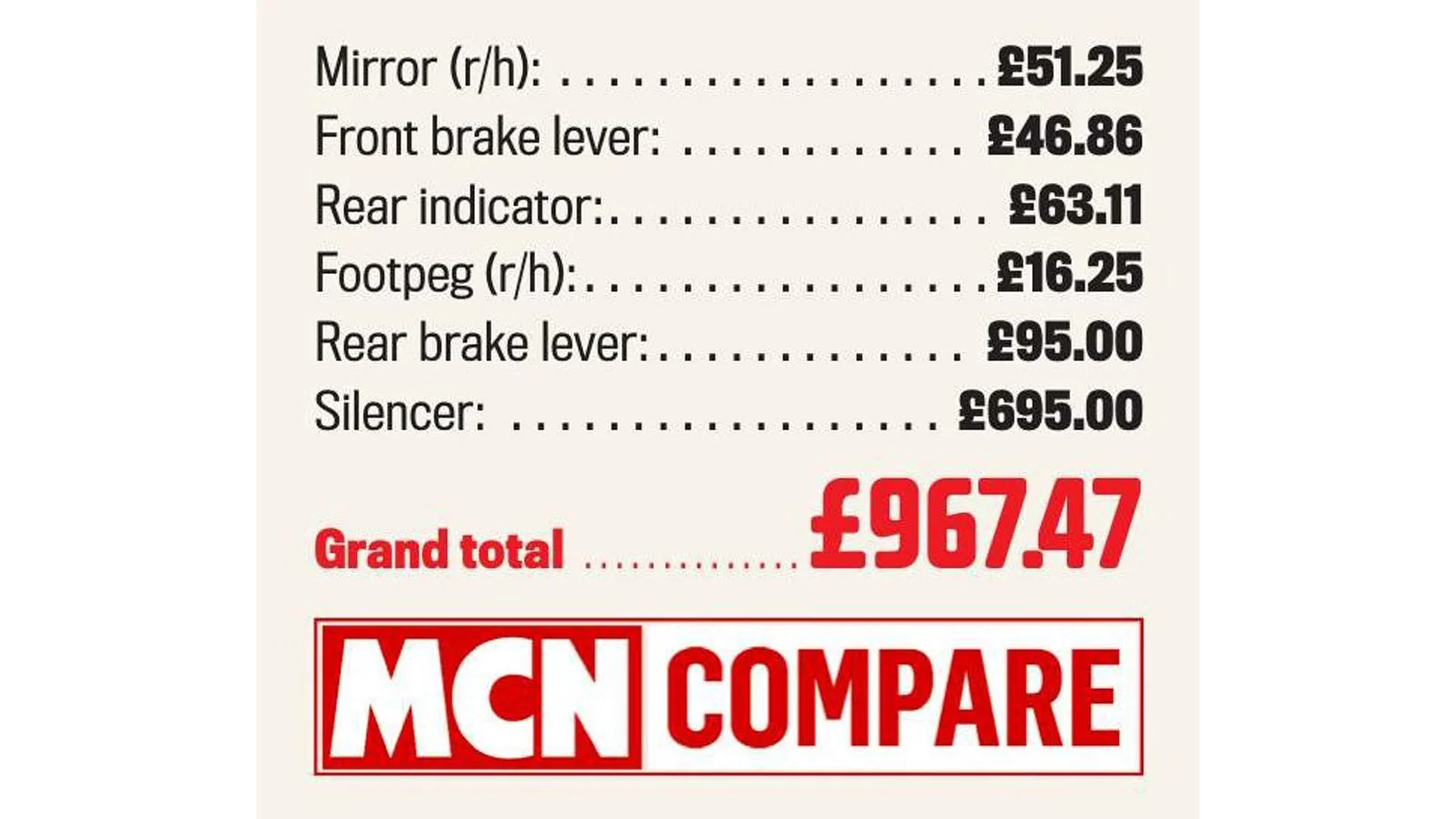
WHAT IF I DROP IT?
Q: How easy is it to work on?
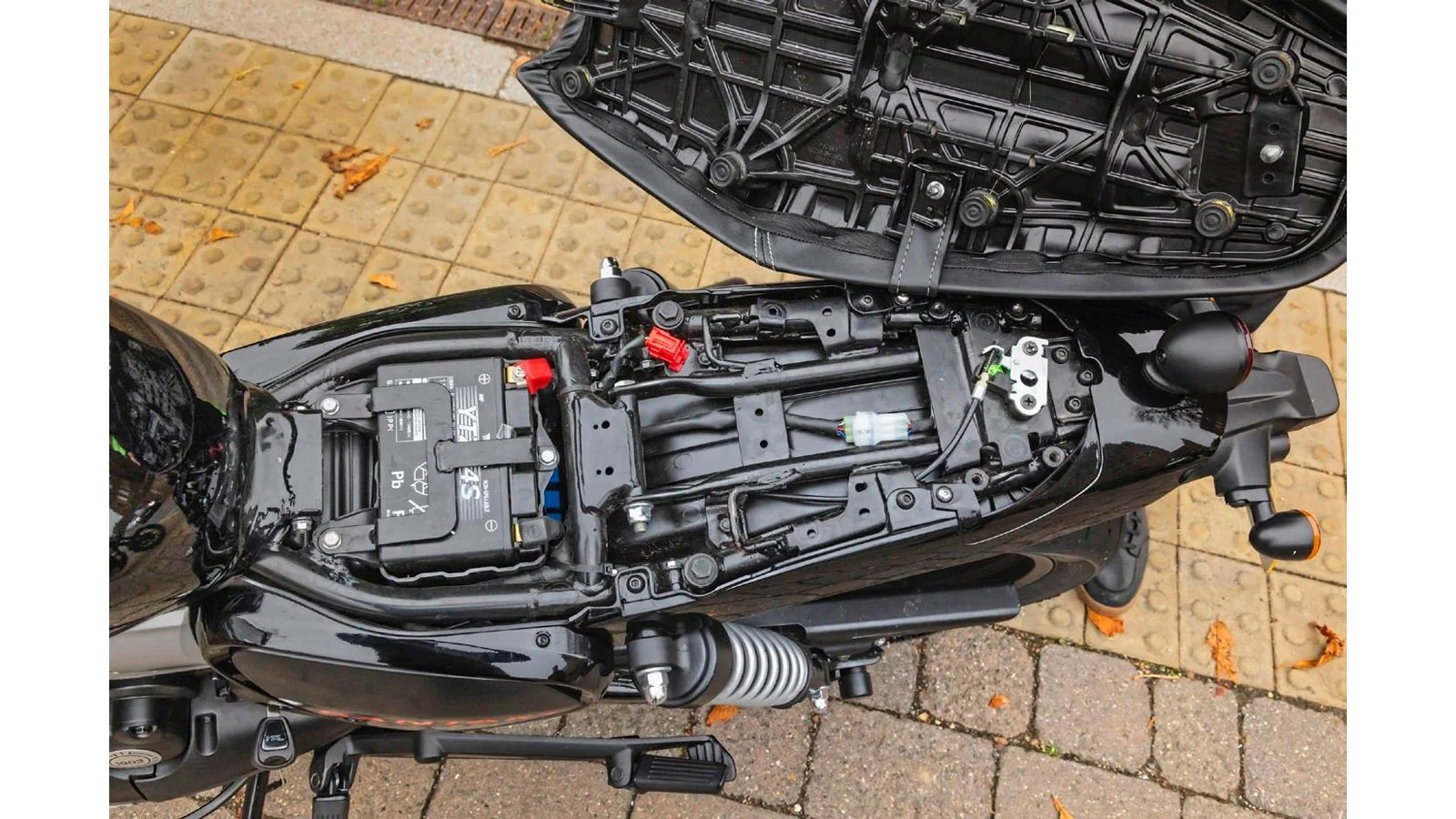
The BSA is pleasingly simple and feels the kind of bike that, valve clearances aside, you may be tempted to work on as everything is very accessible.
A lock on the side pops the saddle off using the ignition key, and beneath is the battery and fuse box, meaning it takes seconds to wire in a 12V socket for heated clothing or a USB charger. That said, there is no underseat storage, which is a shame.
A limited toolkit comes included. Should you wish to adjust the chain you may feel the need to buy a paddock stand as there is no centrestand – either as standard or an optional extra.

Very little bodywork, and relatively simple construction overall
Q: What power does it make?
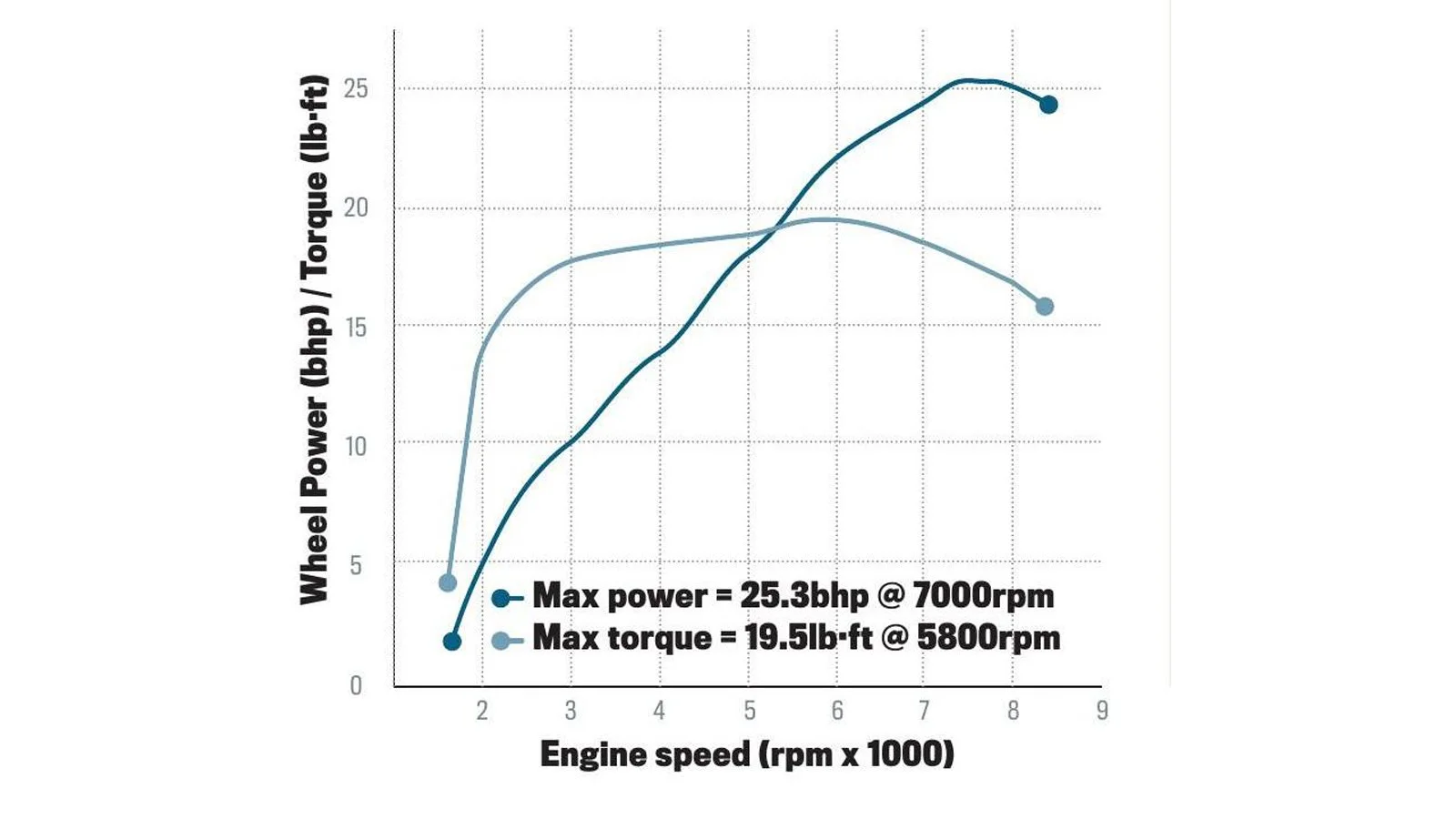
The BSA was never going to cause much of a sensation on the dyno and its genuine power figures of 25bhp with 20lb·ft of torque are roughly what you would expect, considering the claimed values are 29bhp and 22lb·ft.
Usable torque is from 3000-6000rpm and the drop from this point onwards shows little point exists in revving the engine. This motor is designed to live in its midrange and plod along merrily, which suits the Bantam’s character and expected audience perfectly, and explains why the gearing is quite short to help it stay in this range.
Q: Is it a good bike for riding as a pillion?
‘Keep the speed down and it’s enjoyable’, says RiDE’s Caroline
“From a pillion’s perspective, the BSA works well – as long as you stay within a certain window. Stray outside of this area and it quickly becomes tiresome, but that’s to be expected when you consider its engine size and performance.
“On a sunny day and with a rider who is looking to potter about between 50mph and 60mph, the Bantam is a real delight to be on the back of. The seat is well padded and I like the fact the pillion pegs have small heel rests, which is a nice touch. It is a bit of a shame that there is nothing for the pillion to hold onto aside from the rider; however,
I suspect it won’t be long until an aftermarket company makes a pillion grab rail to fit - if there isn’t one out there already. That said, the BSA doesn’t threaten to throw you off the back with its acceleration!
“As the Bantam is very low, it is easy to get on and off (even if you are short in the leg) and the rider reported that the bike’s light weight and low seat height made it easy to support the extra weight of a passenger when stationary. On a bike aimed at older riders, this is important.
“Once moving, the gentle acceleration was reassuring and the suspension seemed quite good, although there is a permanent vibration from the engine or tyres that was mildly annoying at low speed and horrible at motorway speeds. And I was subjected to quite a lot of buffeting at high speed, which was strange. You really don’t want to be on the back of the BSA at 70mph – it’s very unpleasant.
“For me, the BSA is one of those bikes that you throw on a pair of riding jeans and leather jacket and hop on the back to pop to a local pub or the seaside. Its gentle speed means you are never intimidated or worried by its acceleration, and that makes the ride more enjoyable as you can relax and watch the world go by.”
CAROLINE BARRETT
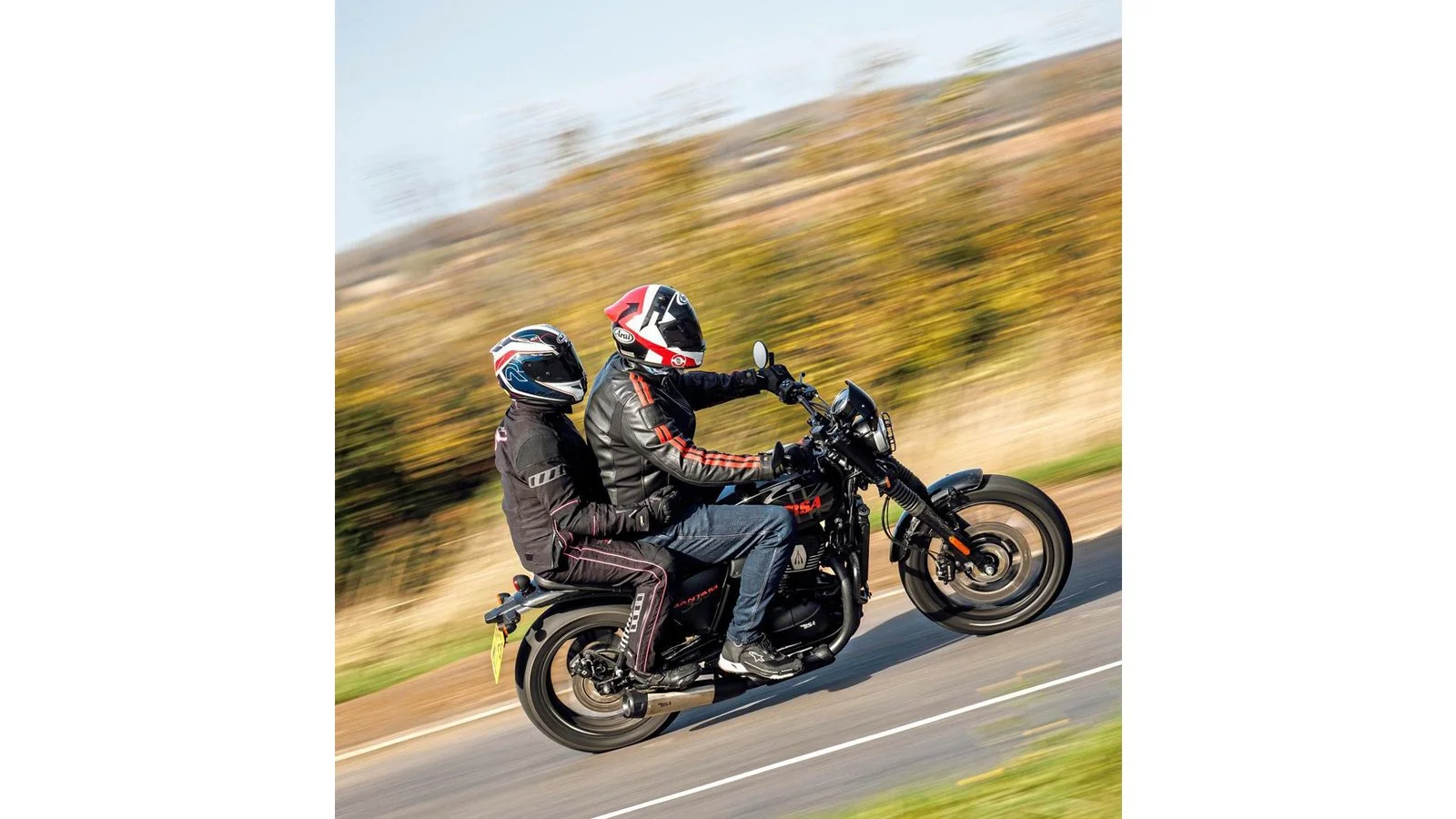
It’s no his ’n’ hers grand tourer, but acceptable for gentle two-person jaunts
THE FACTS
BSA Bantam 350
Engine 334cc DOHC 4v single, l/c
Power 29bhp @ 7700rpm (claimed) 25bhp @ 7600rpm (tested)
Torque 22lb.ft @ 6000rpm (claimed) 20lb·ft @ 5800rpm (tested)
Transmission Six-speed chain
Frame Twin downtube steel spine
Front suspension Telescopic forks, non-adjustable
Rear suspension Twin shocks, adjustable preload
Front brakes 320mm disc, two-piston caliper. ABS
Rear brakes 240mm disc, single-piston caliper. ABS
Front tyre 100/90 – 18
Rear tyre 150/70 ZR17
Wheelbase 1440mm
Rake/trail 29°/NA
Fuel capacity 13 litres
Seat height 800mm
Weight 185kg (claimed, 90 per cent fuelled) 192kg (tested, fully fuelled with extras).
Rider aids ABS
Q: What are its rivals?
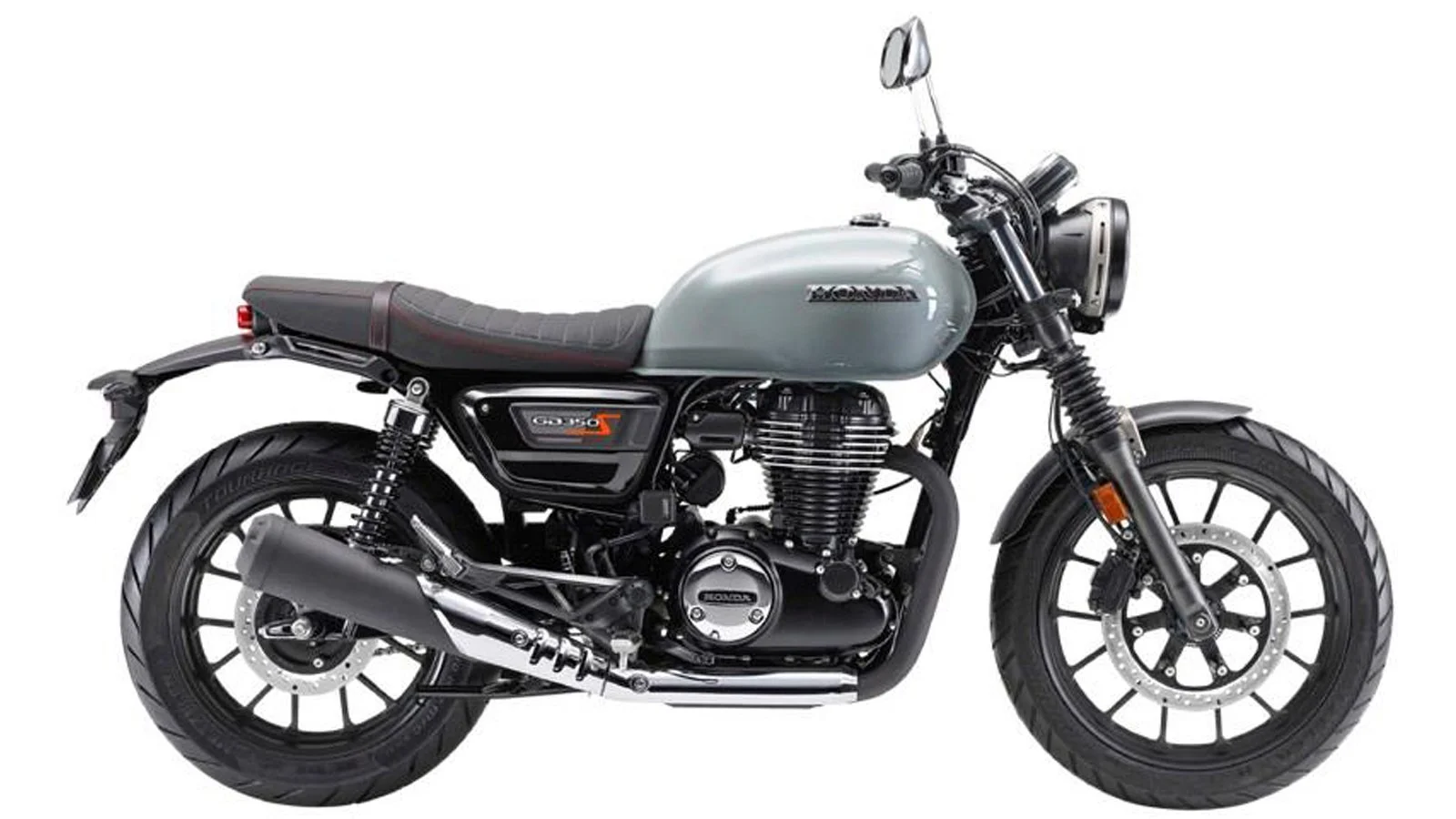
Honda GB350S - £3999
> 21bhp > 21lb·ft > 178kg (claimed)
A huge sales success in the UK during 2025, the GB350S is powered by a 348cc SOHC 2v air-cooled single-cylinder engine that features traction control as standard as well as an assist and slipper clutch. Easy-going and fun to ride, the GB’s retro styling gives it subtle appeal.
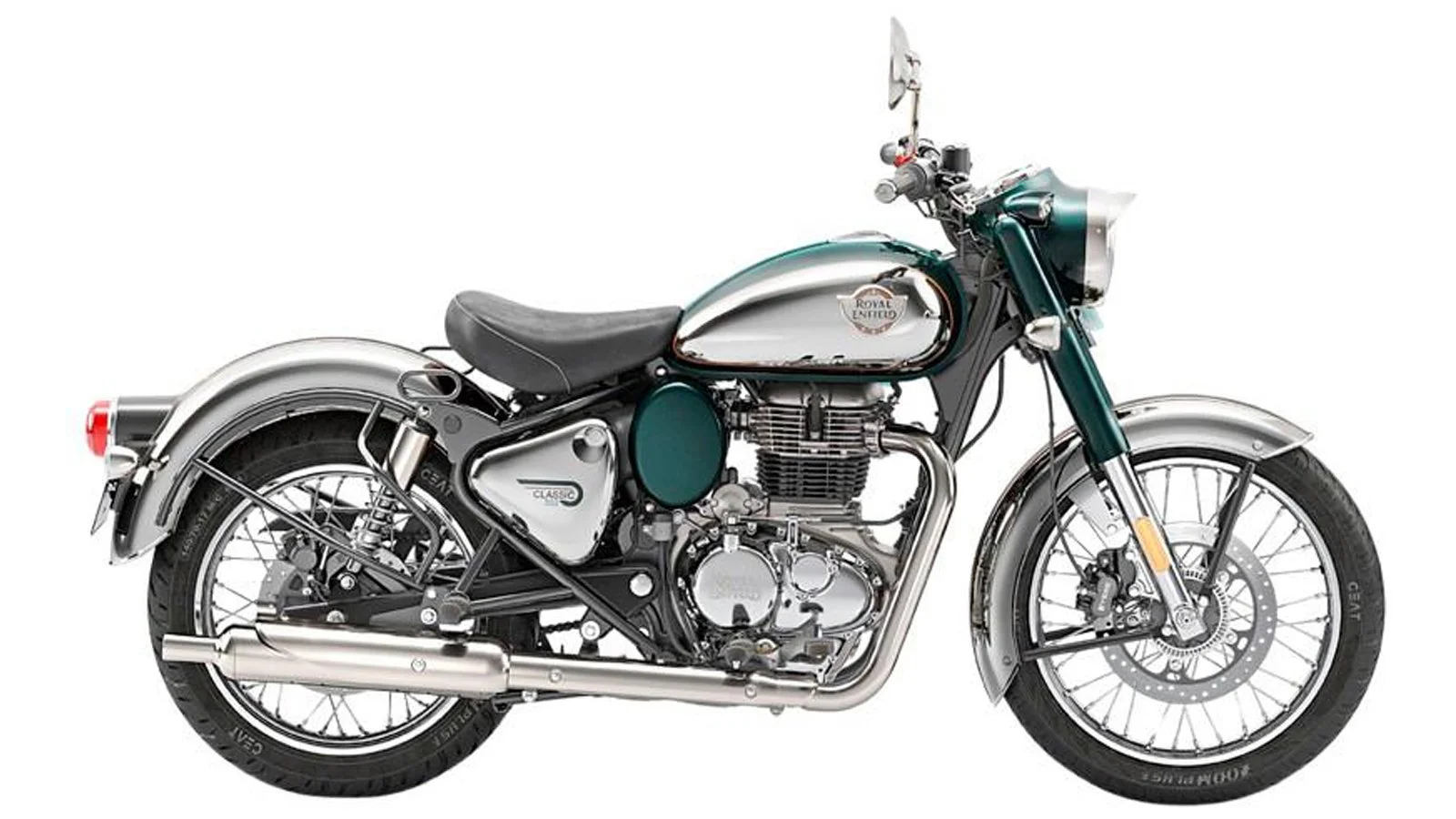
Royal Enfield Classic 350 - From £4459
> 20bhp > 20lb·ft > 195kg (claimed) Royal Enfield’s 349cc SOHC 2v air-cooled single retro harks back to the firm’s rich heritage – and this small-capacity motor is powering their revival. As well as the Classic, there is a Bullet 350, modern-looking HNTR 350 and Meteor 350 cruiser, all based around the same engine platform.
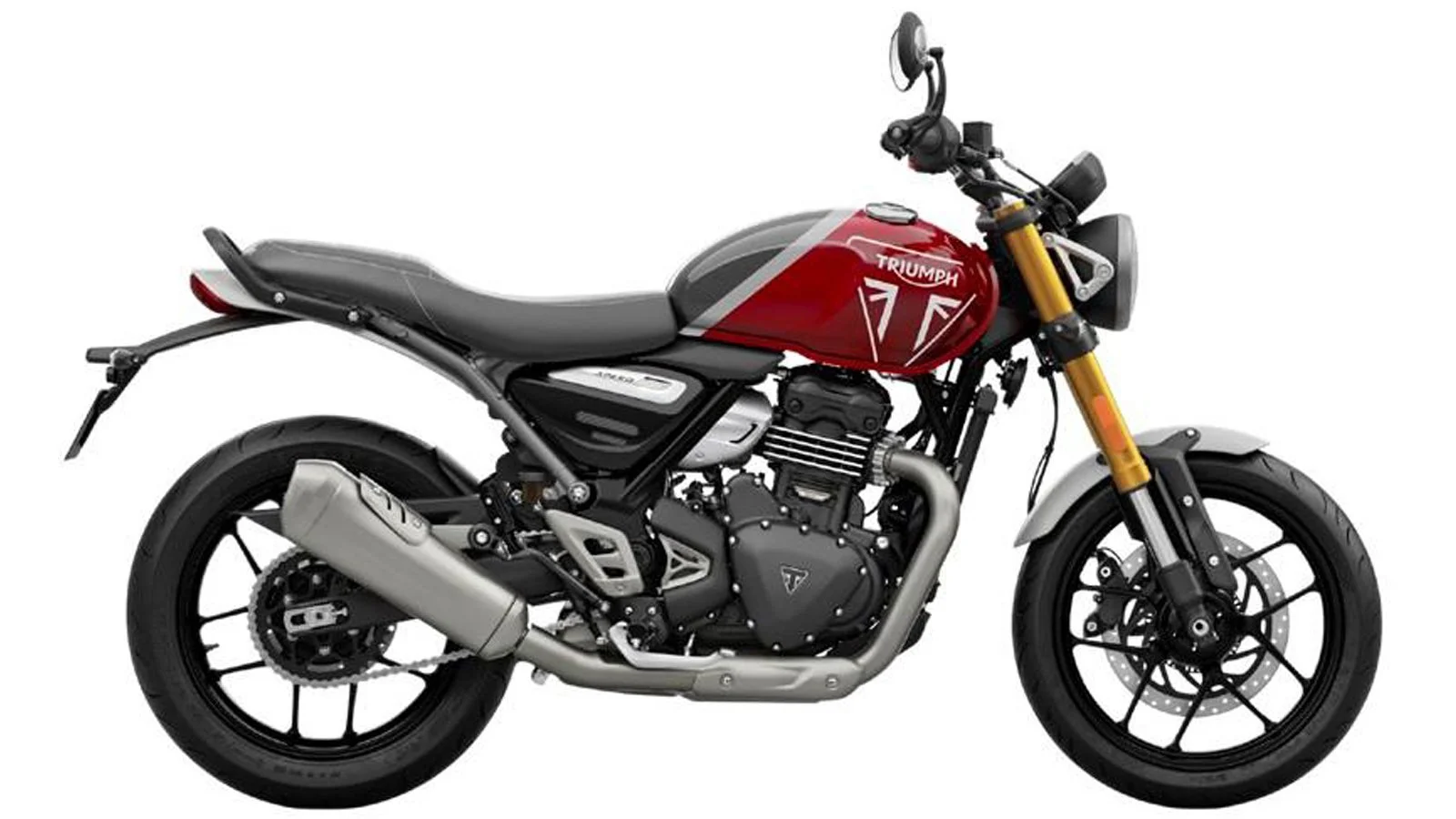
Triumph Speed 400 - £5345
> 40bhp > 28lb·ft > 170kg (claimed)
More a modern naked in its styling and attitude, the Speed 400 was the UK’s bestselling bike in 2024. Powered by a liquid-cooled singlecylinder motor, the Speed 400 features traction control and is a more grown-up machine. Like the Bantam it’s built in India, in a collaboration between Triumph and Bajaj.
A: ‘It’s cheap and fun – and it has the right name on the tank’
Its link to the past is tenuous, but it’s a great bike in its own right
There is a lot to really like about the BSA Bantam 350, and if you are after a relaxed machine for pottering about on, it delivers in terms of value for money and performance.
It’s the kind of bike that riders can stick in their garage and know that it will start on the button when the sun is out and the mood takes them to go for a ride. And at £3499, you don’t feel like you’re wasting money if you don’t use it as your daily runaround.
But is it true to BSA’s heritage? The Bantam was always a cheap and cheerful form of transport, and on that front this reimagined machine is true to its forefathers. But there is no getting away from the fact it is an Indian-built bike that has basically had a few BSA logos stuck on it, and a rear mudguard and exhaust added, to make a ‘British classic’. When you look at the Jawa 42 FJ and the BSA next to one another, this fact is very apparent and does take the shine off it slightly.
Yes, Triumph’s Speed 400 models are built by Bajaj in India and Royal Enfield’s models are built in India, but they aren’t repurposed models – they are a Triumph and a Royal Enfield only.
Will this bother potential BSA owners? I suspect not, because the fact BSA is on the tank, you get a three-year warranty and the bike costs just £3499 is incredibly hard to ignore.
NEXT MONTH... KTM 390 Adventure R: is it the machine to bring KTM back from the brink?
Head into stores to grab your latest issue, or why not subscribe to RiDE Magazine and GET YOUR FIRST 6 ISSUES FOR ONLY £19.99
Is India the next motorcycling powerhouse?
RiDE INVESTIGATES
China’s motorcycle industry has been making headlines but India is taking a quieter route to dominance, says our industry expert
Words Ben Purvis Pictures Bauer Archive
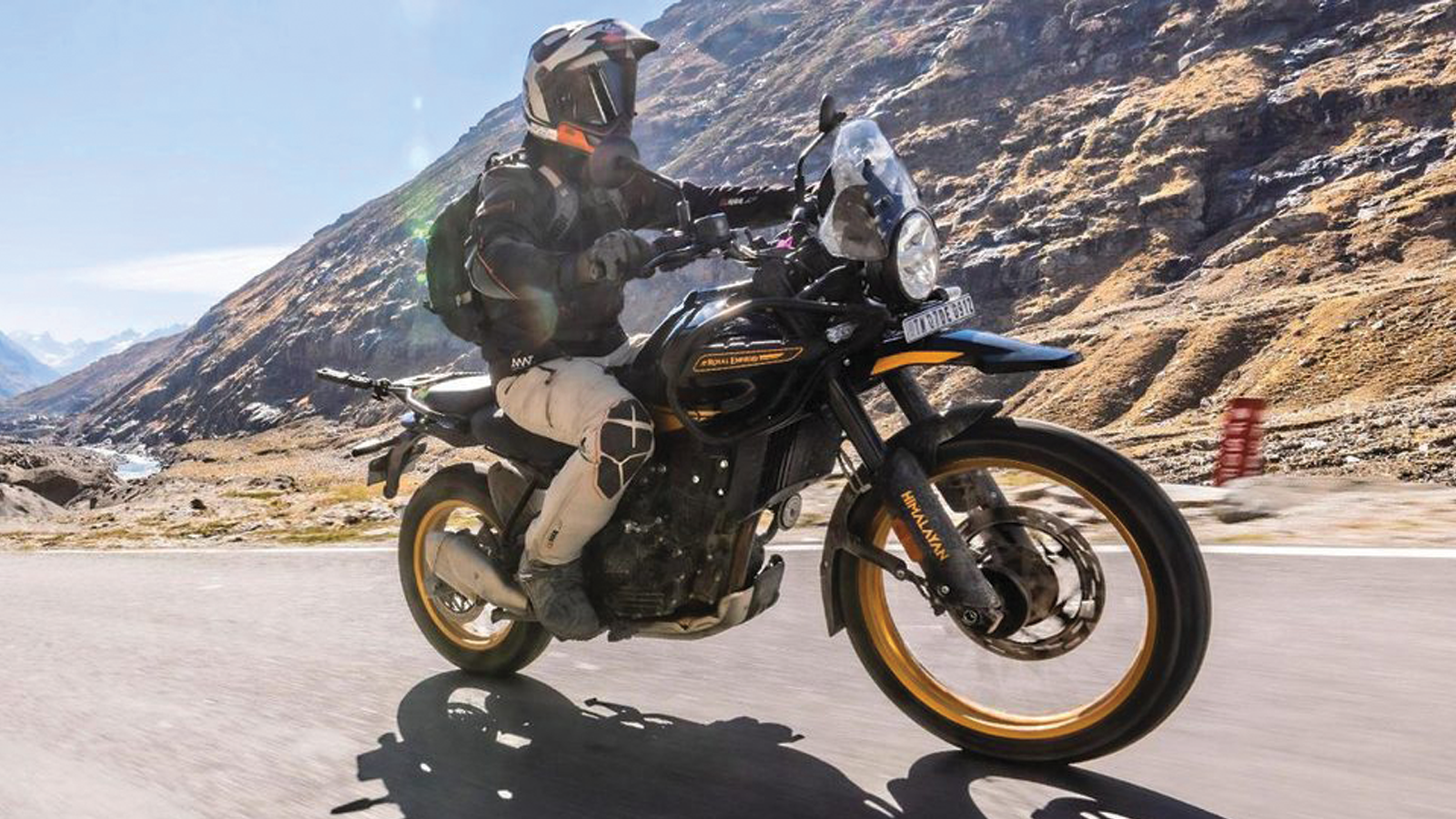
Royal Enfield sold one million bikes last year
IT’S EASY TO look at the leaps being made by the Chinese motorcycle industry and conclude that it will emulate the success that saw Japan rise to dominance in the 1970s. But the real threat to the two-wheeled establishment may come from India’s vast bikemaking industry.
The contrast between the approaches of Chinese and Indian manufacturers is distinct. China is rushing into direct competition with the established brands, with the likes of CFMoto, QJMotor, Voge and Kove launching increasingly convincing and technologically advanced alternatives. It’s an approach that, like the Japanese motorcycling revolution 50 years ago, asks customers to abandon brand loyalties and take a risk on a relative unknown with higher levels of equipment at a lower price.
By contrast, India’s motorcycle companies have grown quietly in their home market before embarking on a path towards global expansion based on buying or partnering with brands that already have a strong following and familiar name. Bajaj isn’t India’s biggest bike brand, but its expansion most clearly illustrates the strategy. A long-term shareholder in KTM, for which it already manufacturers single-cylinder models up to the 390 range, Bajaj provided an €800 million (£694 million) bailout to KTM following the Austrian company’s woes. That loan is due to be converted into shares, following regulatory approval, giving Bajaj a controlling stake – and they have expressed a desire to shift more KTM production and R&D to India.
“‘Subtle approach may make it dominant force’”

Bajaj have made the 390 Duke for years. Now they control KTM
Bajaj is also Triumph’s Indian partner, manufacturing their 400cc single-cylinder bikes: the Speed 400, Scrambler 400 X and XC; and the India-only Thruxton 400 and Speed T4. Those models have been Triumph’s biggest sales success in their history, so we can expect more to follow.
Furthermore, Bajaj has rights to the dormant Excelsior-Henderson brand, giving it a famous name to use if it wants to build a Harley-Davidson rival.
Speaking of Harley, Hero MotoCorp has a lower international profile than Bajaj but it’s India’s biggest bike maker, having sold 5.9 million bikes last year and with the production capacity to make 9.4 million. Most of those sales are in India, with the focus on its home market, as well as exports to Asia, Africa, Latin America and the Middle East.
But Hero also partners with Harley-Davidson under an agreement that not only lets it sell the US brand’s bikes in India but also to develop its own Harley-branded machines – the first being the single-cylinder X440, with more due in 2026.
Then there’s TVS, which made around 4.7 million bikes last year and claims to be the world’s fourth-largest two-wheeler manufacturer. TVS manufactures BMW’s G310 models, which are also the basis of its own TVS Apache RR310 and RTR310, and it co-developed and manufactures the BMW CE 02 electric scooter.
For 2026, TVS also takes on responsibility for making BMW’s upcoming F450 twin-cylinder model range – and it already looks set to be a sales hit.
TVS also owns Norton, with plans to launch six new models over the next three years and to expand the British brand’s reach to the US, Germany, France and Italy – as well as India.
The idea of using a famous British brand means TVS is following in the footsteps of Royal Enfield, part of India’s Eicher Motors and a company that’s grown rapidly in recent years. While 90 per cent of the one million Royal Enfields made last year were sold in India, the remaining 100,000 exports represent an impressive international reach.
Rival Mahindra is taking the same approach – albeit at a much smaller scale – with its majority ownership of Classic Legends, the parent of the recently revived BSA, Jawa and Yezdi brands.
With challenges from both India and China, the threat to the status quo for both European and Japanese motorcycle companies is very real – but India’s more subtle approach could make it the dominant force in motorcycle manufacturing in the future.
HOW INDIA CAN HELP HARLEY-DAVIDSON

Hero already make the X440 – and more H-Ds are coming
Harley-Davidson is going through a rough time. Sales are plummeting – just over 150,000 bikes were sold in 2024, the lowest since 1998 and well under half the 344,000 sales achieved at their peak in 2006 – and the company has revealed that part of the solution will be a sub-$6000 (£4400) machine called the Sprint that’s joining the range for 2026.
The name harks back to the Aermacchi Harley-Davidson Sprint models of the Sixties and Seventies – foreign-made, singlecylinder machines that filled the same slot in the range – and there’s a strong chance the new bike will be built in partnership with Hero in India.
While Harley has a partnership with QJMotor, making the X350 and X500 twins for Asian markets, Hero’s Indian-built X440 is a closer rival to the likes of the Triumph Speed 400. Hero has also extended its arrangement with Harley to develop more bikes for Indian and export markets.
Head into stores to grab your latest issue, or why not subscribe to RiDE Magazine and GET YOUR FIRST 6 ISSUES FOR ONLY £19.99
Time to sample the full SP
LONG-TERM TEST BIKES
We reckon the Hornet SP is one of the best-value bikes in UK showrooms. But what will it be like with time and miles under it? Let’s find out…
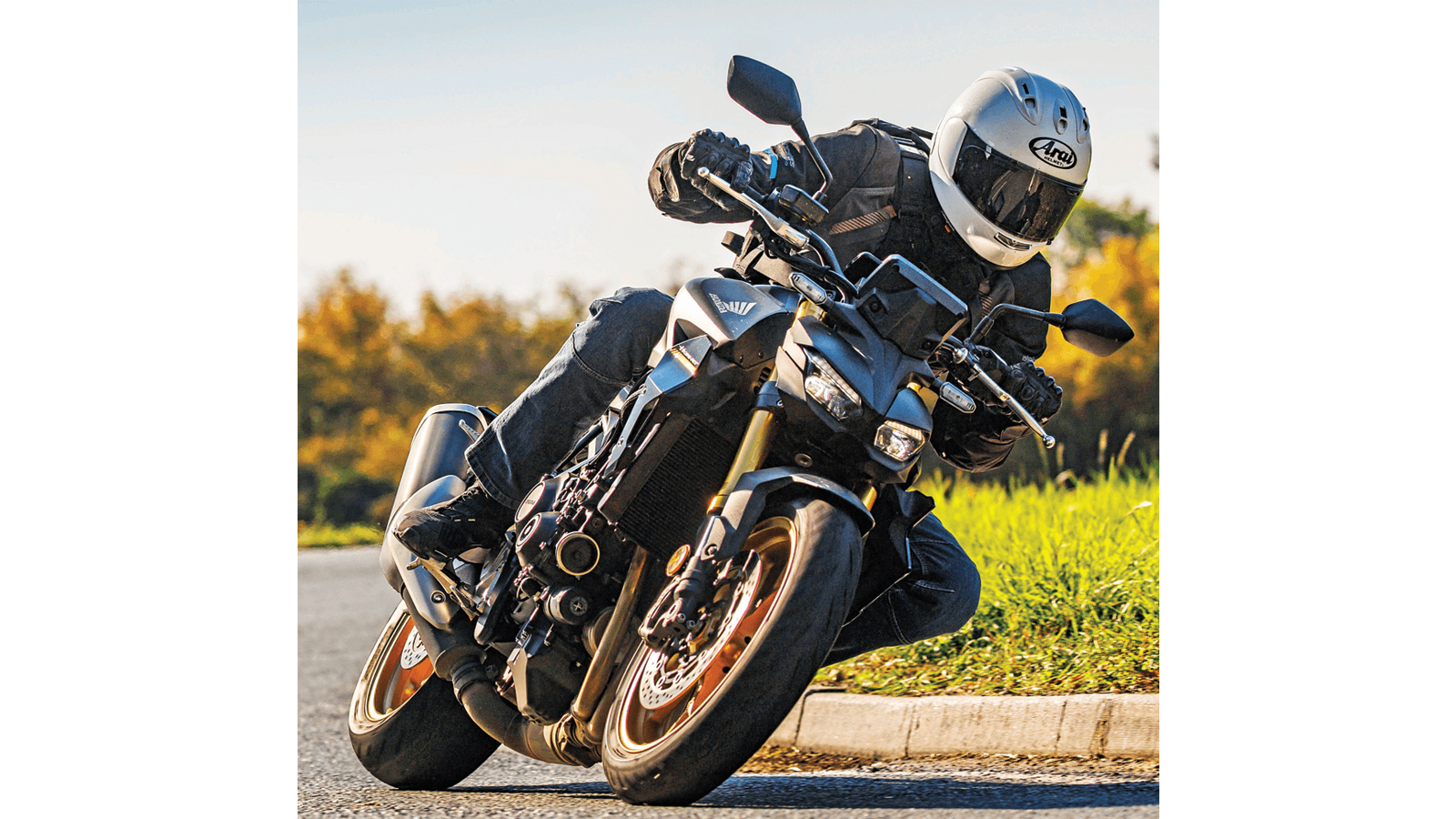
SP’s proving good fun on sunny autumn days Pictures Adam Shorrock
UPDATE 01
2025 HONDA CB1000 HORNET SP - 2785 MILES
LAST MONTH, WE named the Hornet SP as the best-value new bike in UK showrooms, so in the name of journalism (and a love of fast, simple motorcycles) we’ve grabbed one for a few months to see how it stacks up.
Earlier in the year we ran a base-model Hornet and it was an interesting experience. To begin with, I thought it was utterly brilliant. A grand cheaper than the SP, it handled almost as well and had a little bit more bottom-end power.
But time and miles changed my view. The main issue was the rear suspension. A Showa emulsion-style shock similar to a CB750 Hornet’s, it isn’t fully adjustable and is set soft as standard. Initially it felt good, but as the miles wore on and the damping fluid deteriorated, so did the bike’s behaviour. I’m 90kg in my kit and I overwhelmed it.
As the miles wore on, there was more weaving, more mid-corner wobbles, and while I dialled some of it out with extra preload and rebound, it still really didn’t feel appropriate for a 150bhp performance motorcycle. And with only £1000 between the base bike and the SP, any rear shock upgrade would bring the price perilously close to the SP.
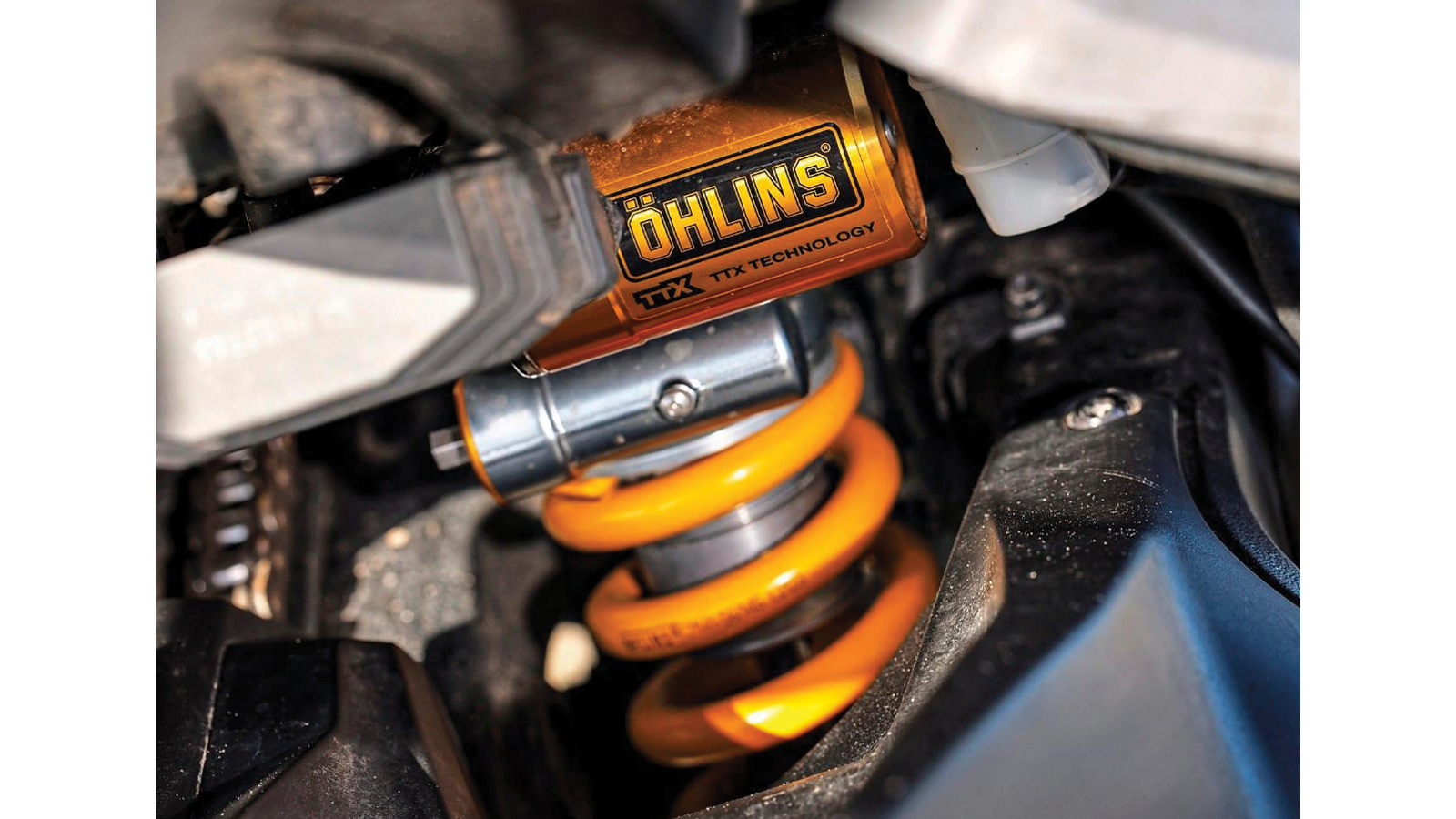
That golden shock is worth its weight in…
So, while the base Hornet has that Showa shock, the SP boasts an Öhlins TTX. Typically a £1000£1500 upgrade, the difference in control, ride and mid-corner feel is stark – especially compared to our 4000-mile basemodel test bike. Although static ride heights are similar between the two bikes, when under load mid-corner the SP feels higher at the rear – an d that steeper geometry makes it feel more poised and eager to hold a line. You especially notice this on corner exits, where it feels more stable and gives you the confidence to get on the power harder.
Our test bike came to us with 2500 miles on the clock and is typical of the handful of SPs that are now coming onto the used market for about £9k. Just like our base model, it does have the patina of miles and age, but the engine feels smoother and a tad more responsive, while the Brembo brakes are a modicum stronger than the other SPs I’ve ridden. I suspect it is down to unglazed pads, even if there still isn’t a clear benefit over the base-model’s Nissin four-pots.
“‘The SP’s proven to be a great package over the past month’”
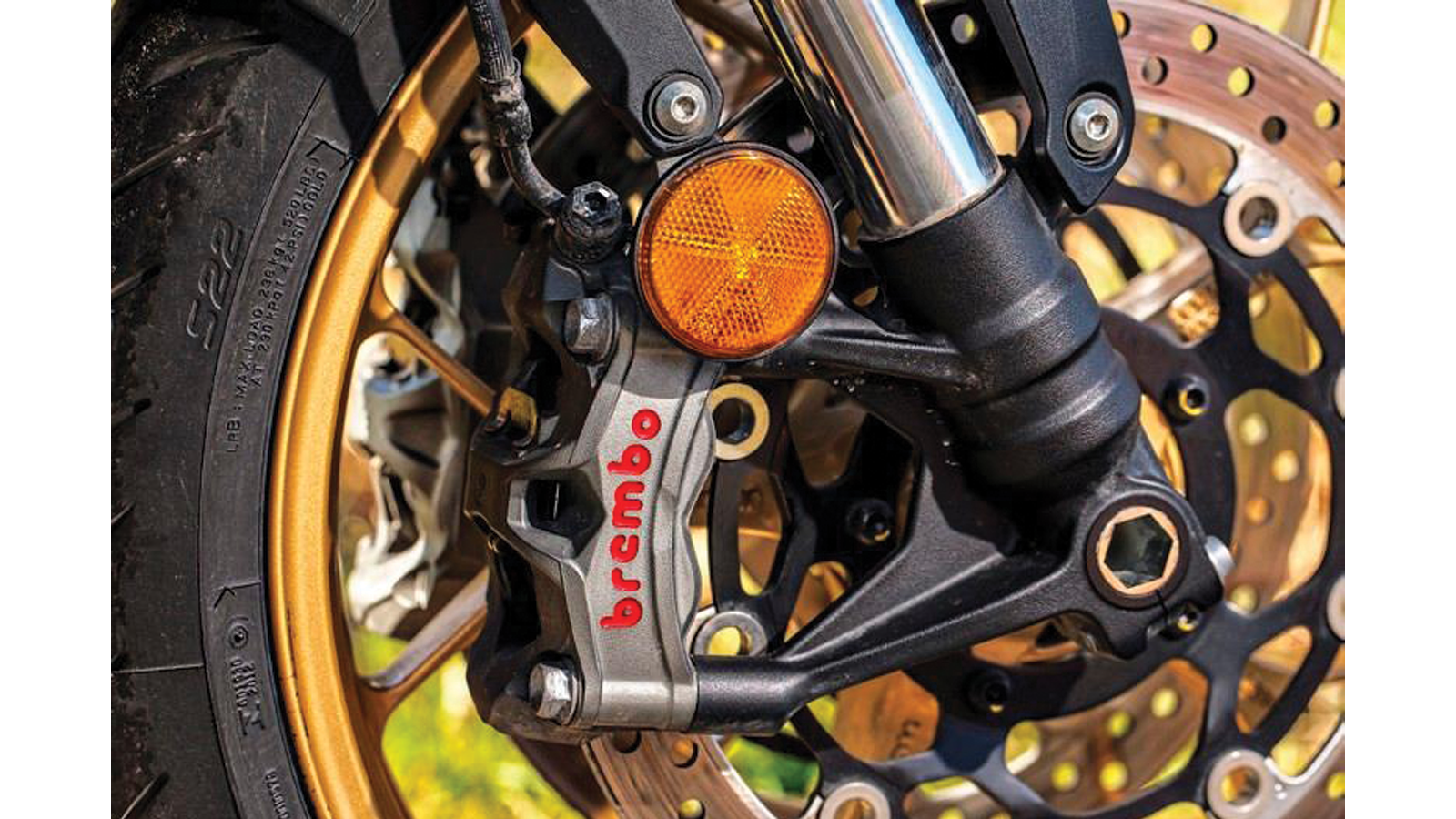
Brembo Stylema calipers are good – so long as they’re used hard
The SP’s proven to be a great package over the past month and 400 miles of autumn, and suits my riding style well. Revelling in the dying embers of an Indian summer, it’s great at sniffing out grip and imbuing confidence - OE Bridgestone S22s have never felt so good, and just surfing the midrange is a perfect way to make serious progress.
It’s easy to see why owners have loved Hornets so much.
I definitely prefer the SP to the base model as its level of ability is a tad higher, with no obvious drawback. So long as you like matt black paint, that is – it’s the only option for 2025.
This time of year I always feel compelled to make the most of every dry or sunny day and lift my mood at a time that can be slightly depressing as a biker. Next month we’ll try to make it a bit more practical and a better all-rounder. Hopefully the wonders of global warming will mean it’ll be mild, grippy and salt-free so I can make the most of it.
MATT WILDEE
WHAT DEALS CAN YOU GET?
When we first reviewed the Hornet in February, there was a five-month waiting list for an SP. Plumping for the base model was an easy choice.
But those days are over. Not only are bikes in showrooms, but there are strong discounts, too. Base Hornets are as low as £8000 new (and ultra-low demo models for the same), while new SPs can be had for £9495 – a £600 saving. At these prices, a base model is very attractive, but we’d still pay extra for an SP.
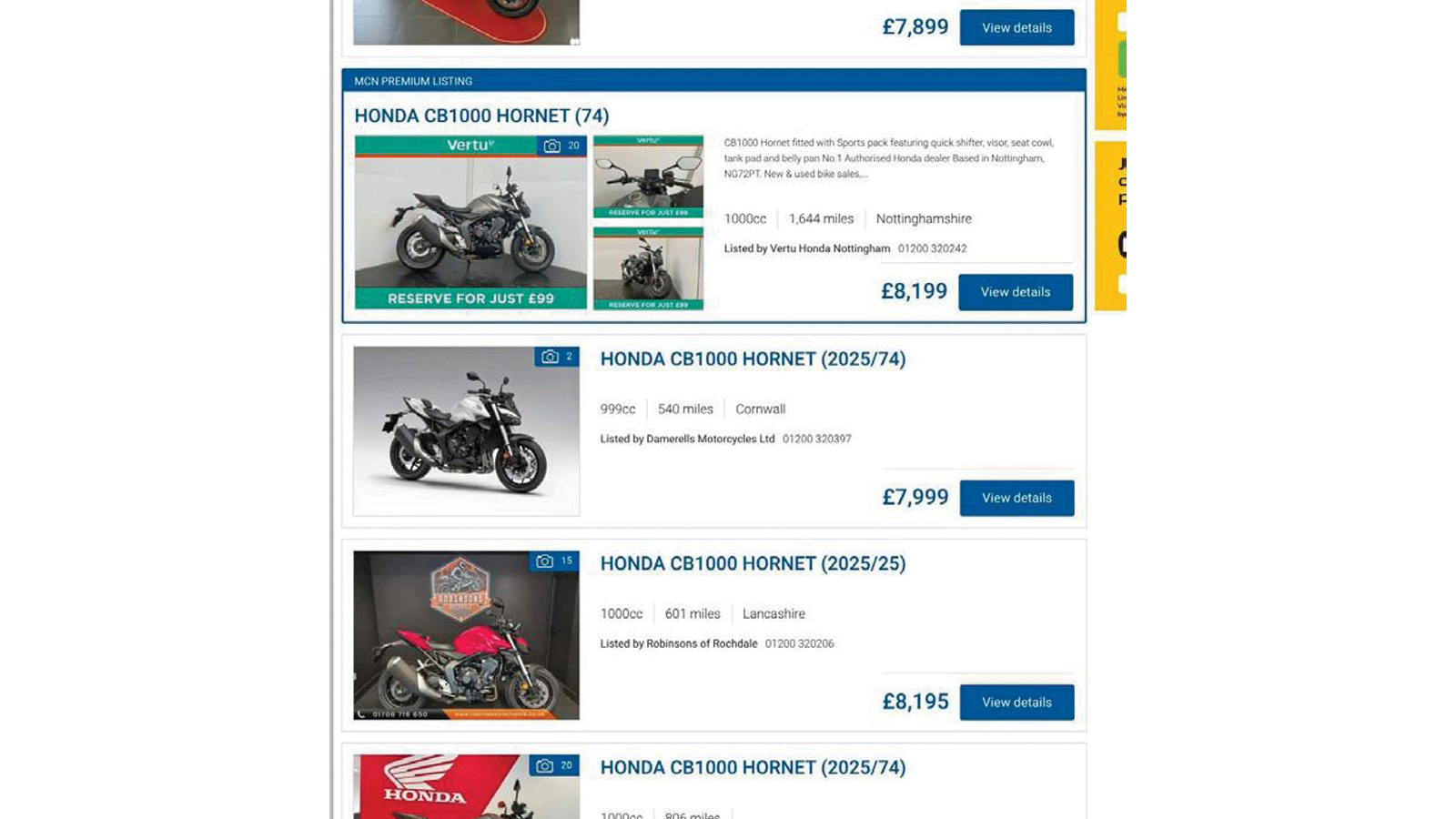
The deals are out there and you don’t have to look far
THE FACTS
£10,099
155bhp
212kg
MILES THIS MONTH 400 MILES
FUEL CONSUMPTION 42.6 MPG
COSTS £52.96 (Fuel, 28.94 litres @ £1.36/litre)
Head into stores to grab your latest issue, or why not subscribe to RiDE Magazine and GET YOUR FIRST 6 ISSUES FOR ONLY £19.99
A great route to ride... Fishguard figure of eight

Best for Zany B-road loop antics across hills, moors and farmland in the tip of Pembrokeshire, starting and finishing in Fishguard
Length 60 miles
Route Fishguard, Greenway, Maenclochog, Narberth, Haverfordwest, Greenway, Eglwyswrw, Fishguard
Love it because It’s off the beaten track, not much traffic, and plenty of opportunity to enjoy a spot of light two-wheeled entertainment.
Take a picture at The 100ft-high dam at Llys-y-frân Reservoir.
Stop for food at The Withybush Café at Withybush Roundabout, Haverfordwest.
A great route to ride... About Anglia

Best for Fast and characterful roads taking in the rural charm of Norfolk and Suffolk.
Length 113 miles
Route Thetford, Scole, Harleston, Halesworth, Beccles, Ditchingham, Poringland, Trowse Newton, Wymondham, Watton, Thetford.
Roads A1066, A143, Harleston Road, Laxfield Road, B1116, B1117, Walpole Road, B1123, B1124, A145, A146, A143, B1332, A47, A11, B1172, Fairland Street, Wymondham Road, B1108, Thetford Road, A1075.
Love it because South Norfolk and North Suffolk have a charm all their own thanks to the Broads and numerous picturesque market towns.
Take a picture at Anywhere near the Broads, especially early morning when mist often hangs across the landscape.
Stop for a cuppa at The Single Café in Diss. Biker friendly and known for its all-day breakfast and snacks.
Head into stores to grab your latest issue, or why not subscribe to RiDE Magazine and GET YOUR FIRST 6 ISSUES FOR ONLY £19.99
‘Brilliant value all-round textile suit’
5000-MILE TEST
After a year’s use, the ARMR jacket and trousers are a lowcost triumph of modern motorcycle kit, says Simon H

Pictures Jason Critchell, Simon Hargreaves
ARMR KUMAJI 3.0 £169.99 (JACKET) £129.99 (TROUSERS) www.oxfordproducts.com
THE FACTS
USED BY Simon Hargreaves
USED FOR 5000 miles
USED ON Adventure bikes
TOTAL MILES 5000
THE CLAIM
“The Kumaji 3.0 is the ultimate adventure companion, designed to take on whatever challenges come your way. Its DryGuard waterproof construction ensures a safe and dry ride, no matter the weather conditions. With a multitude of strategically placed vents, you can stay cool and comfortable during even the most intense riding. CE knee and hip protectors come as standard, complementing the garment’s CE AA rating.”
DUAL PURPOSE
Sleeve zip acts as fastener and vent at the same time (although we would swap the silicone tag to the front zip).
WAIST ADJUSTMENT
Standard waist buckles offer a good range of adjustment. Don’t look like they’ll break anytime soon.
TRIPLE VELCRO
Three Velcro patches on the trouser leg bottoms is more convenient than a zip, but slightly less elegant.
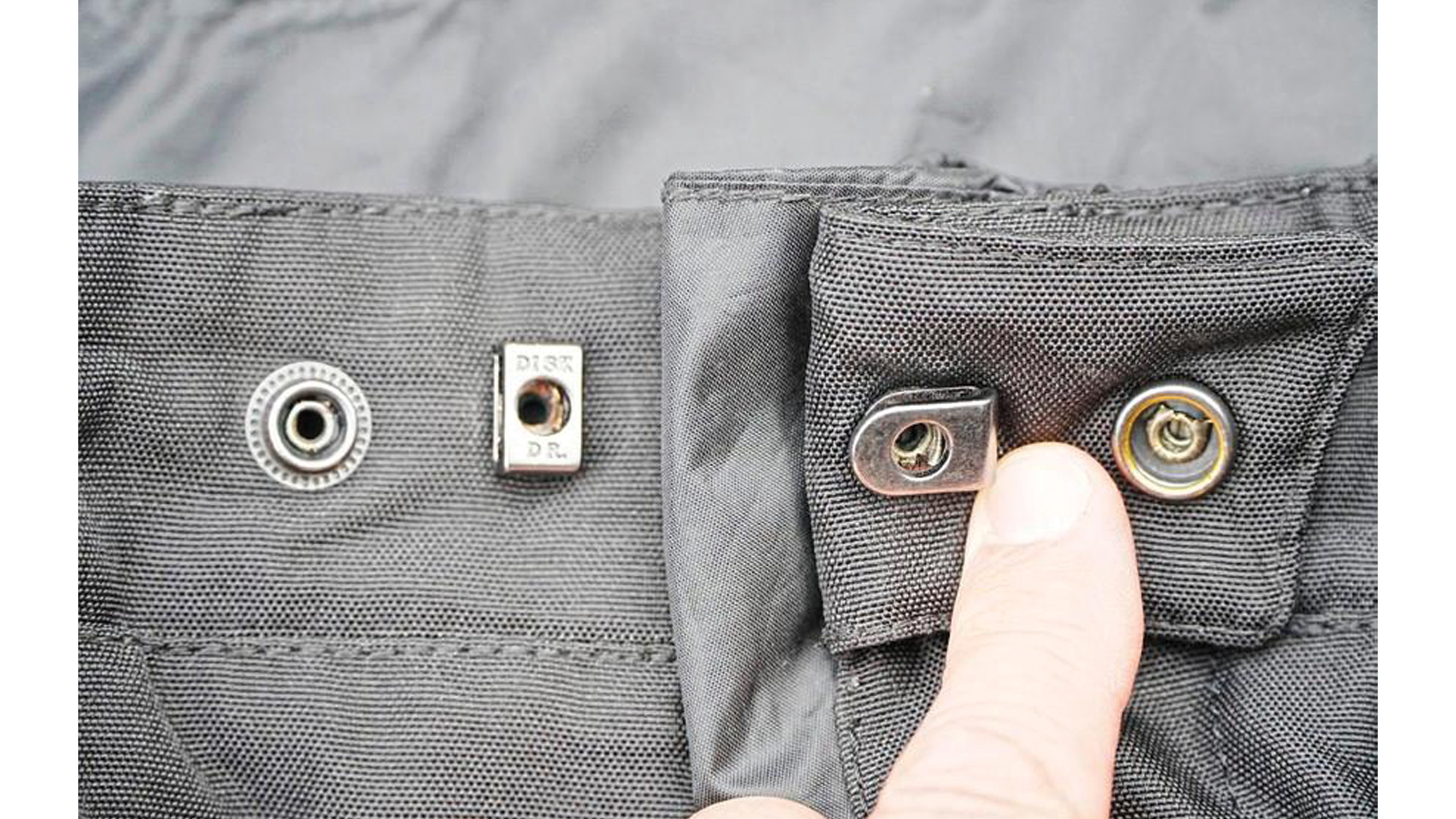
As someone who regularly pops popper-only waist buttons, for SiH a hook system is gold dust
The basic spec of the Kumaji is an AA-rated 600D polyester outer shell with a proprietary waterproof fixed membrane, CE level 1 armour, zipped inner thermal liner, two zipped and two Velcro jacket and trouser pockets each, and zipped sleeve, back and chest air vents (very welcome this summer). A back protector is extra.
Fit is good – so good that I’ve actually slept in it – while the sleeves are a decent length and it’s snug across the shoulders but not tight. I ordered the suit in a 2XL and the jacket is a bit short, but the matching trousers are a bit too baggy; XL trousers would be a better match for me (worth bearing in mind if, like me, you have skinny legs, no arse, a beer belly and weedy shoulders). And I need braces because the zip-together is too long to be useful.

Neoprene neck is nice, but the popper is fiddly and too tight. Velcro is better
The poppered neoprene collar is a bit too tight to fasten onehanded – why do I always wait until I’m on the move to fasten it? But the suit material feels supple and durable, the Velcro cuff flaps are tough, the silicone zippers feel solid, and the suit survives short rain showers without leaks. A prolonged downpour defeated it in the usual crotch and chest areas, but I was nearly home anyway.
Warmth is okay but I wouldn’t rely on it in winter, but on chilly days I wear a heated liner instead.

Jacket and trousers zip-together looks short, but it doesn’t actually support the trousers
THE WEAR AND TEAR
Almost none. No fraying, no zip problems and the Velcro’s in good nick. A tiny section of stitching has failed, but it’s in a non-critical area and can’t spread (see image, left).
After a year of wearing the suit in all weathers, the most it needs is a bit of a wipe-down.

Stitching on this flap has failed, but we have no idea why it’s there. It doesn’t hold anything together

Head into stores to grab your latest issue, or why not subscribe to RiDE Magazine and GET YOUR FIRST 6 ISSUES FOR ONLY £19.99
Q: Is the latest Triumph Speed Triple the super-naked for proper road riders?
BIG QUESTIONS ANSWERED
It’s more powerful and cleverer than before, but does it really work better where we need it the most?
Words Simon Hargreaves Pictures Adam Shorrock
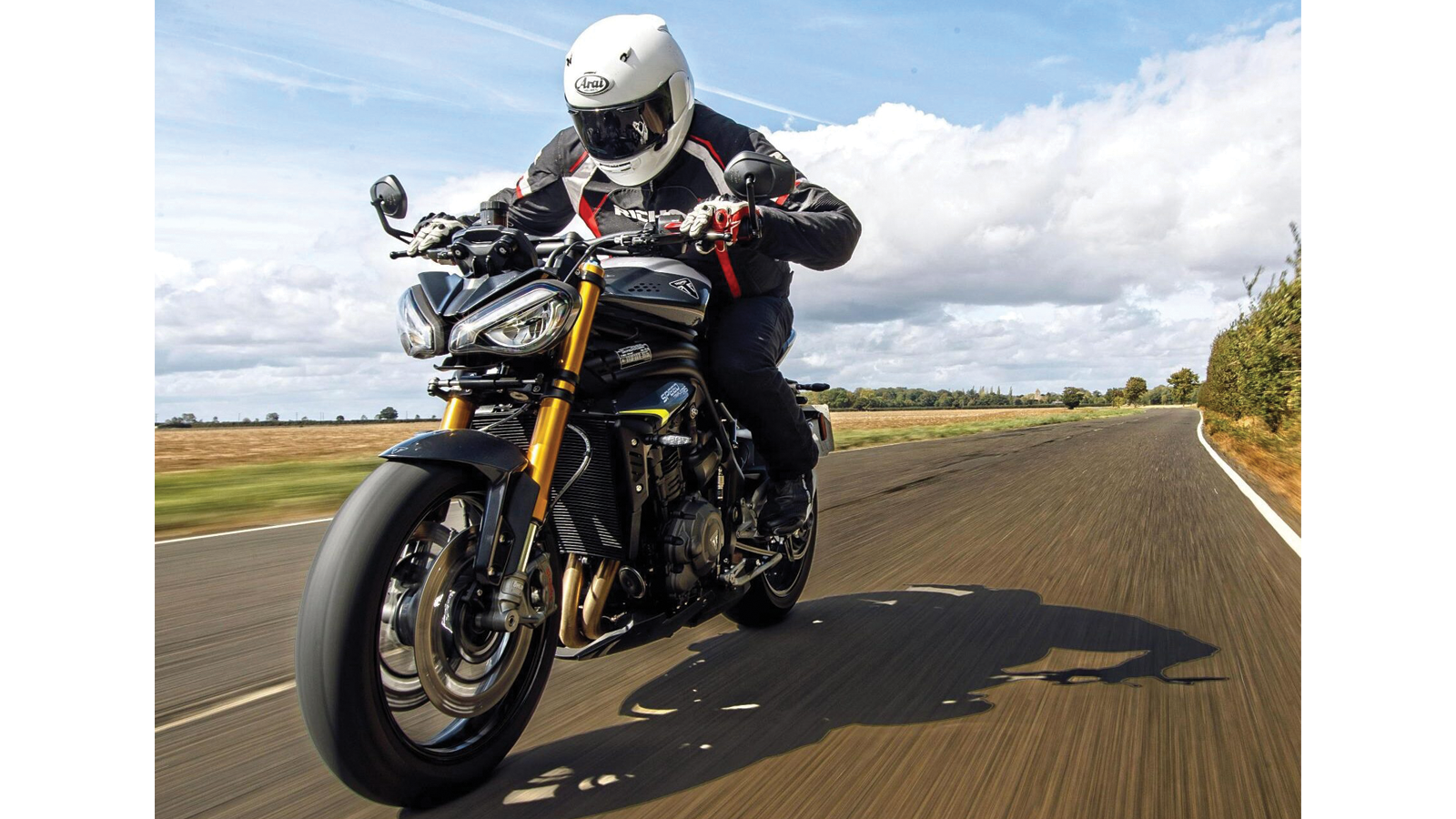
A recklessly fast British heavyweight with 30 years of bad behaviour. And the new Triumph
REMEMBER THE TRIUMPH advert with a black, muscular naked bike guarded by a Rottweiler, unsure whether to clamp its jaws around the front wheel or cock a leg on it? The original Speed Triple was launched 31 years ago, at the start of a model evolution that saw it pass through a streetfighter phase in the late ’90s into the super-naked class by the end of the 2000s.
But whatever Triumph marketing people said, truth is none of the iterations were off-the-leash intimidating. The Speed Trip doggedly possessed a user-friendly side beloved by all styles and genders of rider. More of a Labrador retriever kinda bike.
In 2021, the RS moved the Speed Triple into hyper-naked territory. However, its highperformance engine, suspension set-up and committed riding position made it less fun and forgiving on the road. What was once an all-round, big-bore
naked was too single-minded in pursuit of horsepower and lap times. We weren’t fans – it only really worked once you backed off the power and the suspension.
But Triumph updated the RS for 2025. It’s the most powerful, most advanced Triumph ever built – and when editor Matt rode it in a Speed Triple anniversary feature (RiDE, August), the signs were good. So, let’s see how it fares in biking’s most thorough road test.
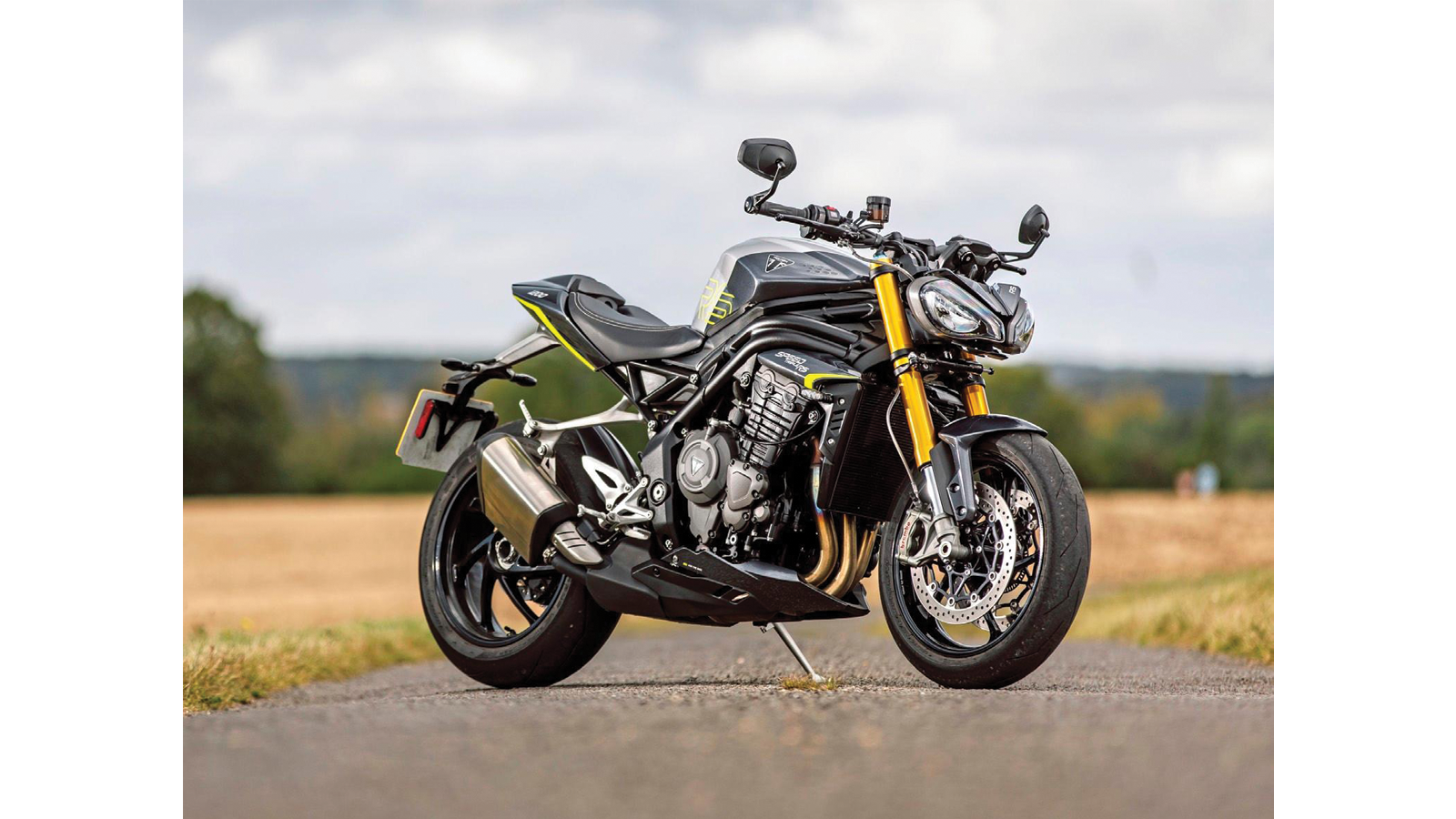
RIDING POSITION
The 2021 bike’s low bars placed a lot of rider weight over the front end and always felt very committed, like you’re permanently waiting for the flag to drop. Pegs and seat position stay the same for 2025, but one-piece bars are 10mm wider and 7mm higher.
EQUIPMENT
Next-level electronic riding management and, now, electronic suspension set-up includes independently variable wheelie, engine braking and braking slide control, as well as existing cruise control and the usual Bluetooth integration. Heated grips aren’t standard, but Triumph’s latest quickshifter and keyless ignition are.
THE COSTS
The 2025 Speed Triple RS starts at £17,495 for the base bike in black, £1700 more than 2024 – thanks in part to the added cost of semi-active Öhlins and associated software, and new steering damper. Red/Granite or Yellow/Granite add £400, heated grips are £220, and a fly screen and visor add-on are £152 and £112, respectively.
SUSPENSION
Out goes 2021’s stiff Öhlins set-up, and in come their latest Smart EC3 semi-active springs with electronic set-up options for fine-tuning, or the option to disengage the semi-active bit and have them act as conventional forks and shock, but still fully adjustable and customisable per riding mode. Also new is an adjustable Marzocchi steering damper.
WHEELS, TYRES AND BRAKES
No messing with the sporting intent of Brembo Stylema four-pot calipers on 320mm discs, with their Multiple Click System span lever and three-way ratio adjustment. Tyres switch from Metzeler Racetec RRs to the equally trackflavoured Pirelli Diablo Supercorsa SPs.
ENGINE
The 1160cc, 12v, 120° inline triple has been lightly modified to meet Euro5+, with a freerflowing exhaust, plus intake and fuelling mods hence the new dual-exit wheelie-bin… sorry, ‘end can’). Also a rebalanced crank for smoother low-down running and fewer vibes. Power is up a claimed 3bhp to 181bhp at 10,750rpm and torque up 2lb·ft to 94lb·ft.
Q: Is it more fun or more fearsome?

It’s fun on British B-roads without being too crazy…
Definitely more fun – the 2025 Speed Triple is delightfully rapid without being crazily rabid (unlike some other hyper-nakeds). While the engine refinements are subtle and you’d need to zoom in on the dyno graph to spot the extra power and torque, the greater difference is the way the motor’s performance blends with the rider’s inputs. It’s smoother, throttle control more balanced, and power delivery more rounded than ever.
Even the vibes – a patch of tingles when you bat the throttle open from 3000rpm in top – are more like a massage chair than mechanical grumbling.
But it hasn’t gone soft. Flick down the Triumph’s exemplary quickshifter and dip into the Speed Triple’s midrange, and all the old guff about a triple being a great compromise between a twin and a four makes sense. It’s magnificent to gun it, mid-shifting between 5000rpm and 6000rpm in a series of staccato raps. You want to go use the engine again and again because it’s so wellengineered – for fun.
Q: Is the riding position better?

Riding position is perfect for getting stuck in
Very much so. Like the engine changes, it’s a subtle shift on paper – the pegs and seat are in the same positions as before (seat vinyl finish is upgraded from a dimpled effect that looked like a shower mat to a smoother, more premium look). But the bars are 10mm wider and 7mm higher than the old bike.
Sounds like nothing, and cynics (who, me?) may dare suggest the only reason Triumph raised the bars is to gain a few extra millimetres of clearance for plumbing the cables at the top of the longer, semi-active Öhlins forks.
But let’s pretend it was for our benefit – and it makes a difference, reducing load on the wrists and the tendency to lock arms, instead suiting a gentle bend in the elbows and generally making the Triumph’s top half a more civilised, less aggressive place to be, either in town or on the motorway. It’s now a perfectly poised, semi-sporty position, but not demanding at all.
Q: How good is the new suspension?
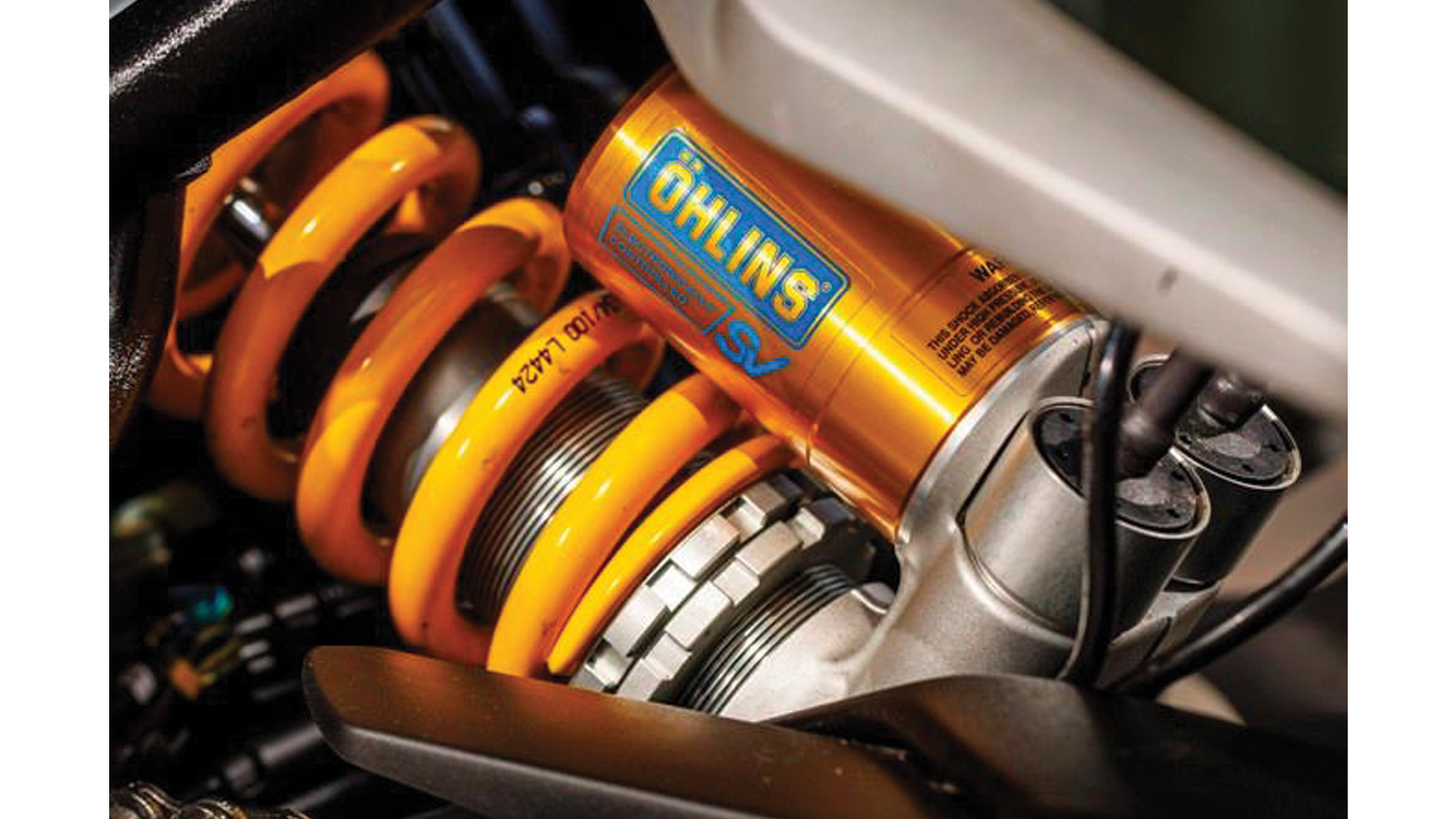
Third-gen Öhlins semi-active shock is very good
Stunning. Set up as standard, in Road mode, the ride quality is plush and composed. There’s no gritting teeth for crashes into ruts or ripped tarmac; just a genuinely glowing sense of control and calm.
If you want to tailor the settings, the scope of adjustment from the dash is extreme with 10 steps across seven parameters. You can feel the difference, too.
Or, you can switch semi-active off and run the springs as passive suspension with 23 ‘clicks’ per setting (and it’s still brilliant). Or, you can ignore all that and use supplied Rider mode settings with the set-up Triumph and Öhlins think works best.
Q: Has it got too much technology?

Simple and clear, but minor annoyances
No, because it doesn’t get in the way of riding enjoyment. The only possible source of complaint is that traction control and wheelie control, although both independently adjustable, are both either on or off. So you can’t have traction control still active while happily hoisting third gear monsters – hardly an imposition for most of us.
In the meantime, in Sports mode the Triumph will skim its front wheel 6in above the tarmac when you button it on corner exits, letting the front wheel countersteer then flick straight when it meets the road again – stability guaranteed with a new, adjustable Marzocchi steering damper.
Four riding modes – Sport, Road, Rain and Track – cater for most scenarios, with each customisable for traction, ABS, throttle map, suspension mode, engine braking and wheelie control. Two custom modes – one road and one track – allow further individual set-up.
All this is controlled via Triumph’s usual mini-joystick and dash interface, which is intuitive and easy to navigate. Cruise control is a welcome addition, but it’s still annoying to not have a trip reading and remaining range on the dash at the same time.
“‘The tech doesn’t get in the way of riding enjoyment’”

Lots of fun factor despite all the gizmos
Q: How much does it actually weigh?
On our scales fully fuelled, the RS has a 51/49 front/rear weight distribution and weighs 203.5kg, 4.5kg up on Triumph’s kerb claim.
Q: How well made is the Speed Triple?

Looks striking, but Simon’s not sure about that end can…
Engine
Modern Triumphs have an excellent reliability record overall, and the 1160cc motor – launched five years ago, and with a similar T-plane unit to the Tiger 1200 – has done nothing to blemish it with no mechanical recalls issued. And with a 10,000-mile service interval and 20,000 for valve clearances, all you have to do is keep it topped up with oil.Finish and details
New touches include a black finish on the milled handlebar clamp and top yoke to unify the cockpit view, while details like sculpted Brembo brake and clutch levers, aluminium numberplate hanger and arched alloy pillion footrest hangers remain. But the front mudguard has switched to plastic from carbon fibre on the old RS.Looks
Most of the looks – italic headlights, bolted aluminium subframe (now black, not silver), waisted seat unit – remain. But we have to talk about that end can. Still a single-sided twin exit, the design is shorter but deeper – Triumph say it centralises mass, which it will do to marginal effect, but the real reason must be related to Euro5+ approval.
Q: What are the best options and add-ons
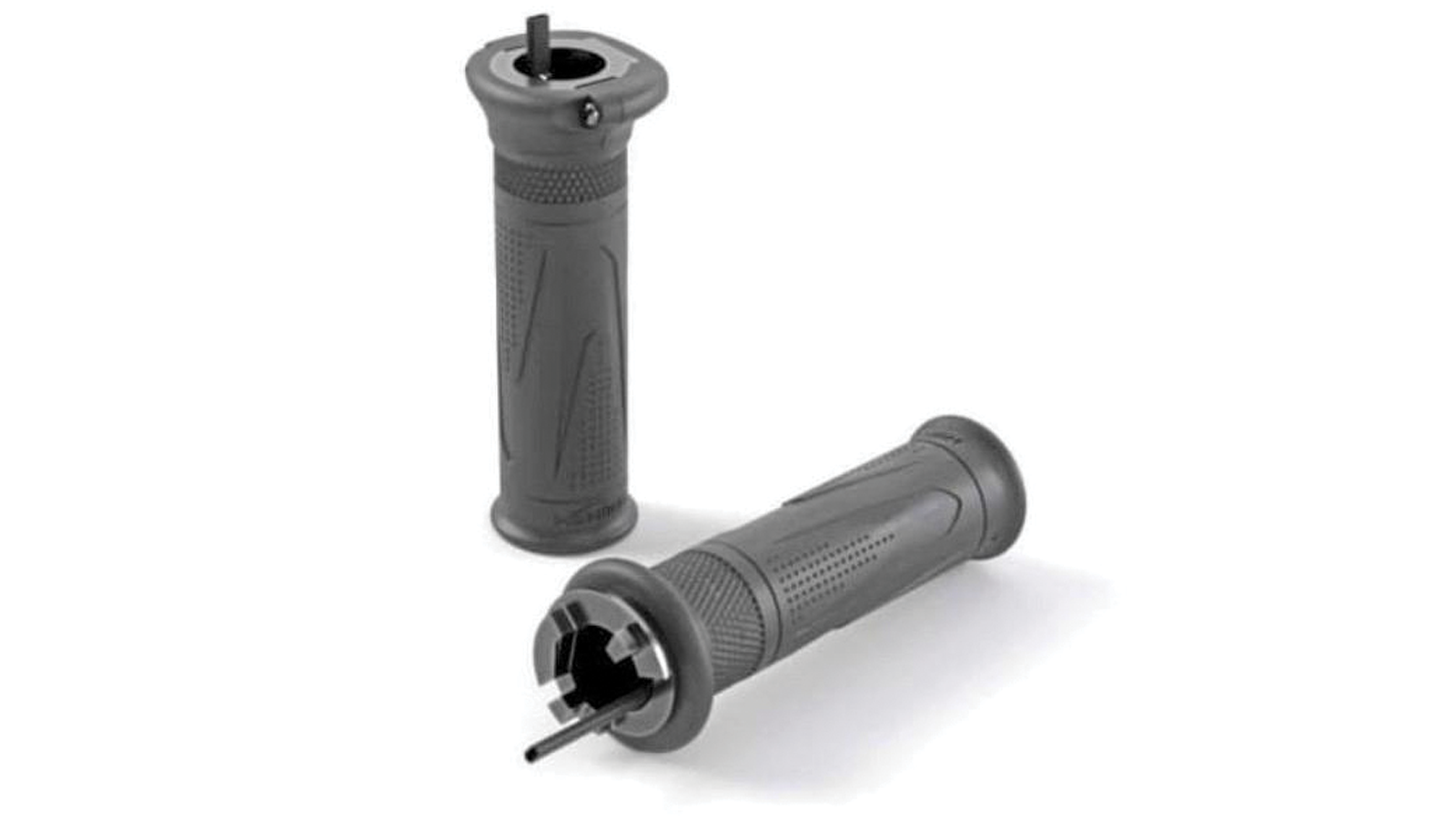
Triumph heated grips £220
Triumph’s own-brand heated grips have integrated controls and wire through the bars for a sleek look. They work well and are a good resale feature.
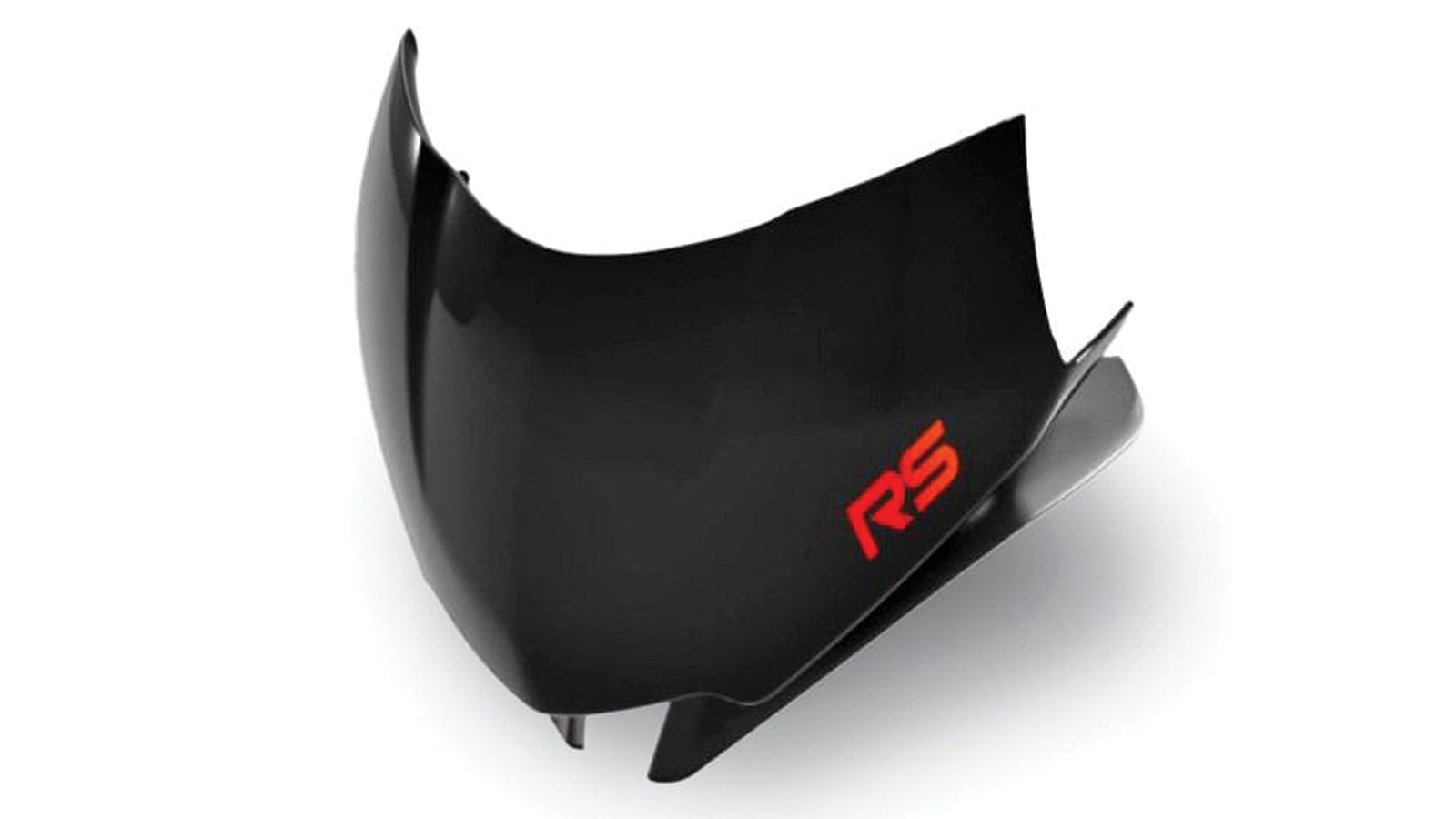
Triumph fly screen £152
Handy for taking the edge off headwinds. Textured black infill complement the colour-coded screen with no visible fixings. Optional visor (pictured) is £112 extra.
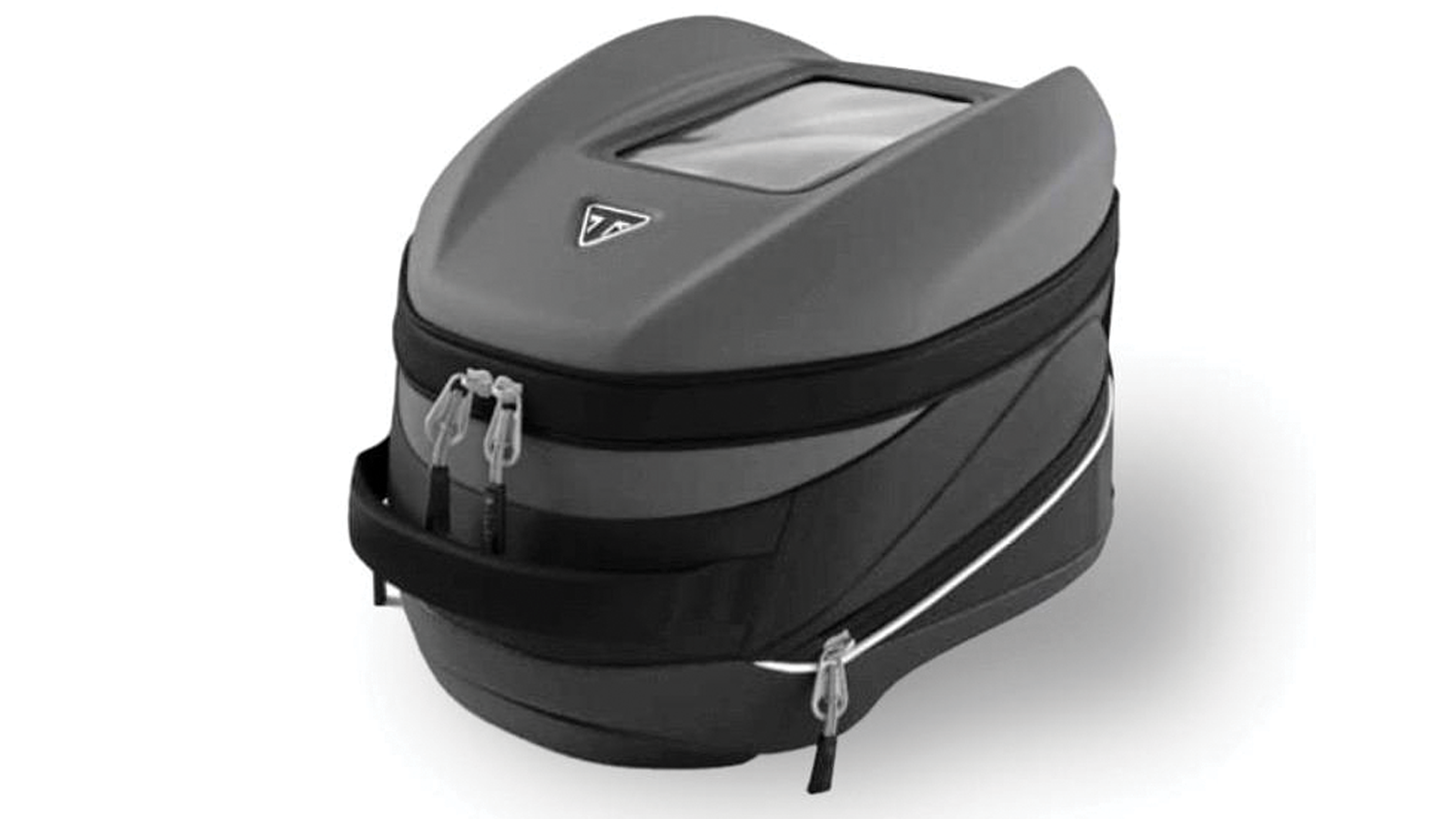
Triumph 10-litre tankbag, £215
A bespoke product for the Speed Triple, is waterproof, quick-release and should reduce windblast. Can be combined with matching tailpack.
Q: What will it cost to run?

Q: How easy is it to work on?
The Speed Triple comes with a seat cowl, but a pillion pad is optional. Both are removed using a Torx key, located on the inside of the coolant expansion tank cover (there’s also an Allen key, for emergency access to the keyless filler cap in the event of it not opening). The unadjustable rider’s seat is bolted down with two Allen bolts.
The battery lives under the seat, but because the positive terminal is obscured by the fuel tank flange, an electrical bus runs across the battery to allow easy access – a nice touch. The 12V socket on the right side of the bike, just above the clutch basket, can be used to reverse-charge the battery.
Its naked nature means home servicing is quick and easy; most will go to dealers for the next decade, though.

You might be able to store a chopped Pepperami under here
Q: What power does it make?
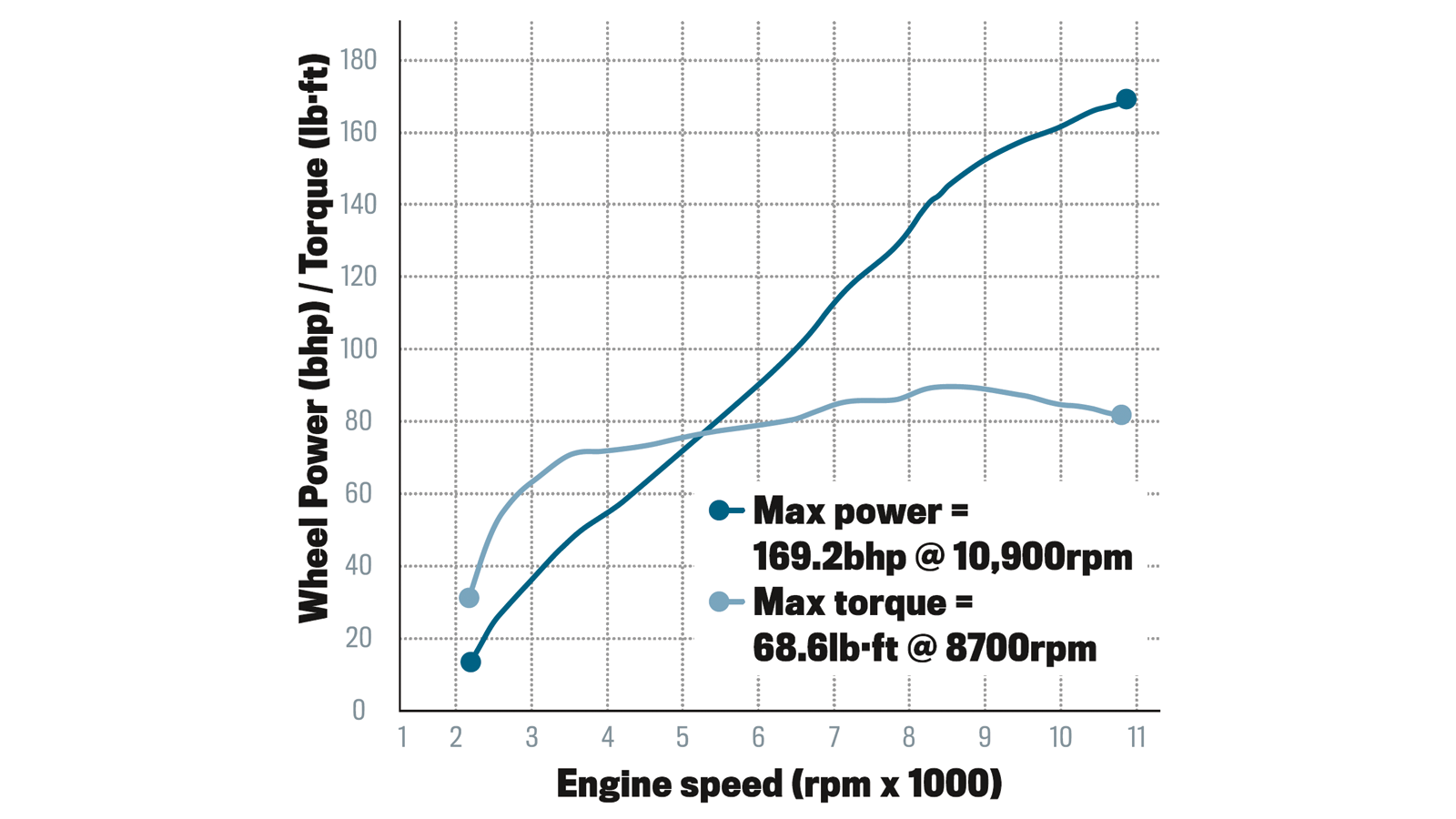
The 2025 Speed Triple makes 169bhp at 10,900rpm against a claimed 181bhp at 10,750rpm. A fair chunk to lose, especially as other Triumphs tested recently have been close to their claimed figures.
Torque is the same; we measured 90lb·ft at 8700rpm against Triumph’s claimed 94lb·ft at 8750rpm.
But when we plotted the curve over last year’s Speed Triple tested on the same dyno, they were almost identical, suggesting this isn’t an anomaly. And it’s certainly a great-looking pair of curves – linear, no bumps or dips, just a steady ramping up of performance.
Q: What’s it like to ride as a pillion?
RiDE veteran Caroline Barrett finds out how the RS fares two-up

Not much to hold on to, but there is a smile on Caz’s chops
My most recent pillion ride was on the back of my partner’s Yamaha MT-10, and I’ve been on the back of plenty of sportsbikes.
The MT-10 has somewhere to hook my fingers, but there’s nothing like that on the Triumph. I reached down to see if I could grab onto anything or wedge my fingers anywhere, but there’s nothing, not even an indent.
Obviously I knew the seat was going to be high, but when I first went to put my foot up on the pillion peg, I was nowhere near it. I’m 5ft 5ins, so I had to hitch my trousers up a bit more to get some lift. But after a few times I got used to it and it wasn’t too high to push up and get on.
It’s a sliver of a pillion seat – for a short ride or a Sunday blat and some fun on the back of a bike, it’s fine, I wouldn’t say it was uncomfortable. But there’s no cushioning – basically sitting on a hard bit of plastic. For any length of time, I don’t think it’d be any good – but obviously it’s not built for that.
I thought my knees were gonna be up under my ears, but actually there’s a decent amount of legroom and when holding on to the rider I could wedge my forearms on my knees for extra support, so I had something to lock into. My view was the back of the rider’s head, but that was okay because I was tucked in behind. Sometimes on sportsbikes you sit so high up you feel a bit up in the air and precarious. Also, there was no buffeting – I could just feel the wind on my arms.
The motor was vibey at low revs, but not harsh. It’s a really deep vibration – it goes through everything and I could feel it in my ears. As soon as the rider changes up, it disappears and the engine is smooth after that. And the quickshifter is good. I could feel the bike changing gear, so there’s a motion to it – but I was gently nodding, not bashing the rider in the back of the head. Nice and smooth.
I’d get on a Speed Triple again – it would be quite enjoyable on a nice Sunday afternoon ride. It’s much better than I thought it was going to be.
THE FACTS
Triumph Speed Triple 1200 RS
Engine 1160cc DOHC inline triple, 4v per cyl, l/c
Power 181bhp @ 10,750rpm (claimed) 169bhp @ 10,900rpm (tested)
Torque 94lb.ft @ 8750rpm (claimed) 69lb·ft @ 8700rpm (measured)
Transmission Six-speed chain
Frame Aluminium twin spar
Front suspension 43mm USD semi-active/passive forks, manually adjustable preload
Rear suspension Monoshock, semi-active/passive, manually adjustable preload
Front brakes 2 x 320mm discs, four-piston calipers
Rear brake 220mm disc, two-piston caliper
Front tyre 120/70 ZR17
Rear tyre 190/55 ZR17
Wheelbase 1445mm
Rake/trail 23.9°/104.7mm
Fuel capacity 15.5 litres
Seat height 830mm
Weight 199kg (kerb, claimed) 203.5kg (kerb, measured)
Rider aids multiple riding modes, semi-active/passive suspension set-up, traction control, wheelie control, engine braking control, cornering ABS, cruise control, up/down quickshifter, Bluetooth multimedia integration
Q: What are its rivals?
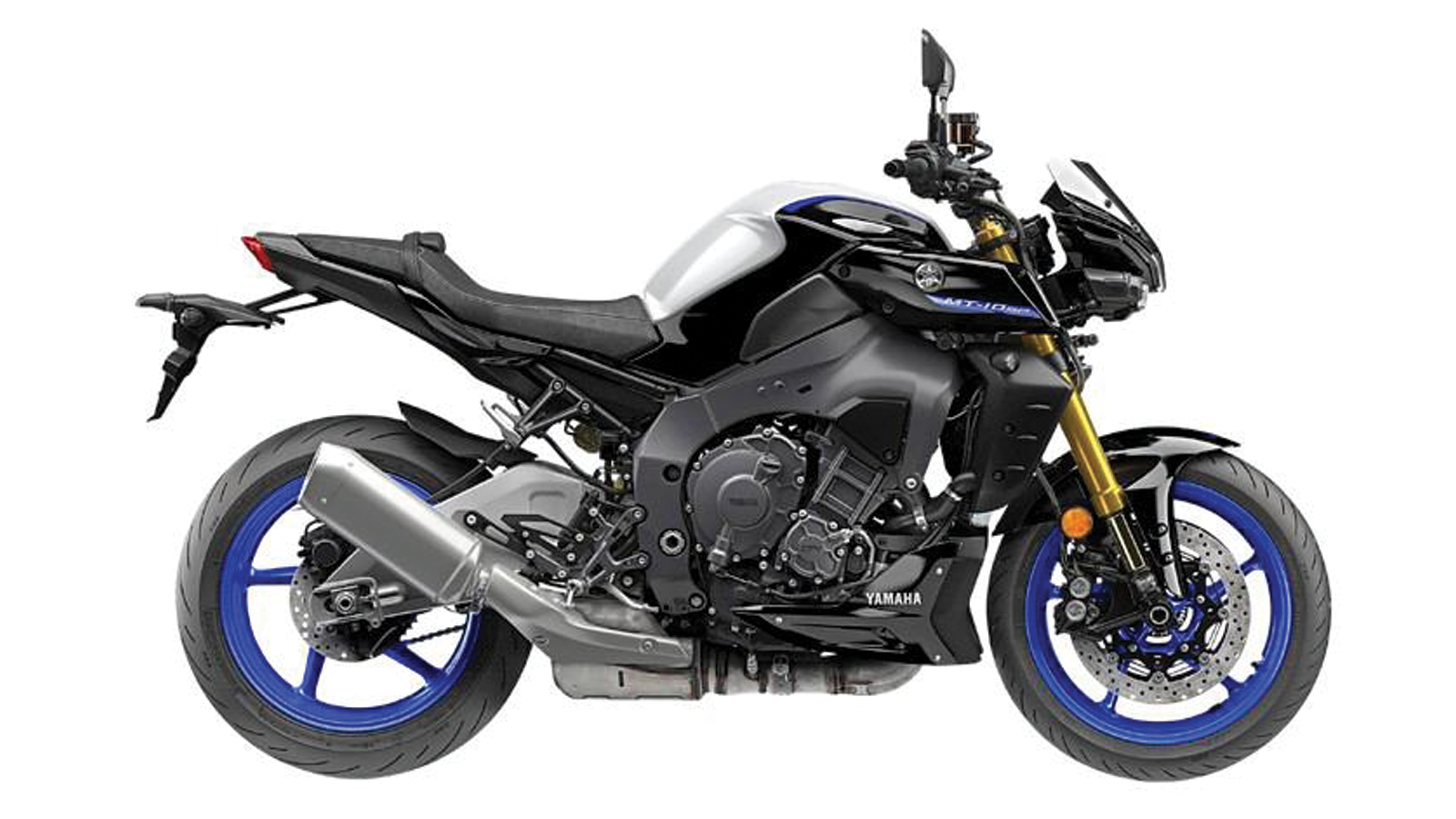
Yamaha MT-10 SP £16,620
> 164bhp > 83lb·ft > 214kg (kerb)
Similar outright engine performance and deep dive electronics as the Speed Triple, and same delicious semi-active Öhlins set-up – but the MT’s crossplane inline four delivers a punchy, zappy, completely loopy riding experience, as if it’s the Speed Triple’s crazy younger brother.
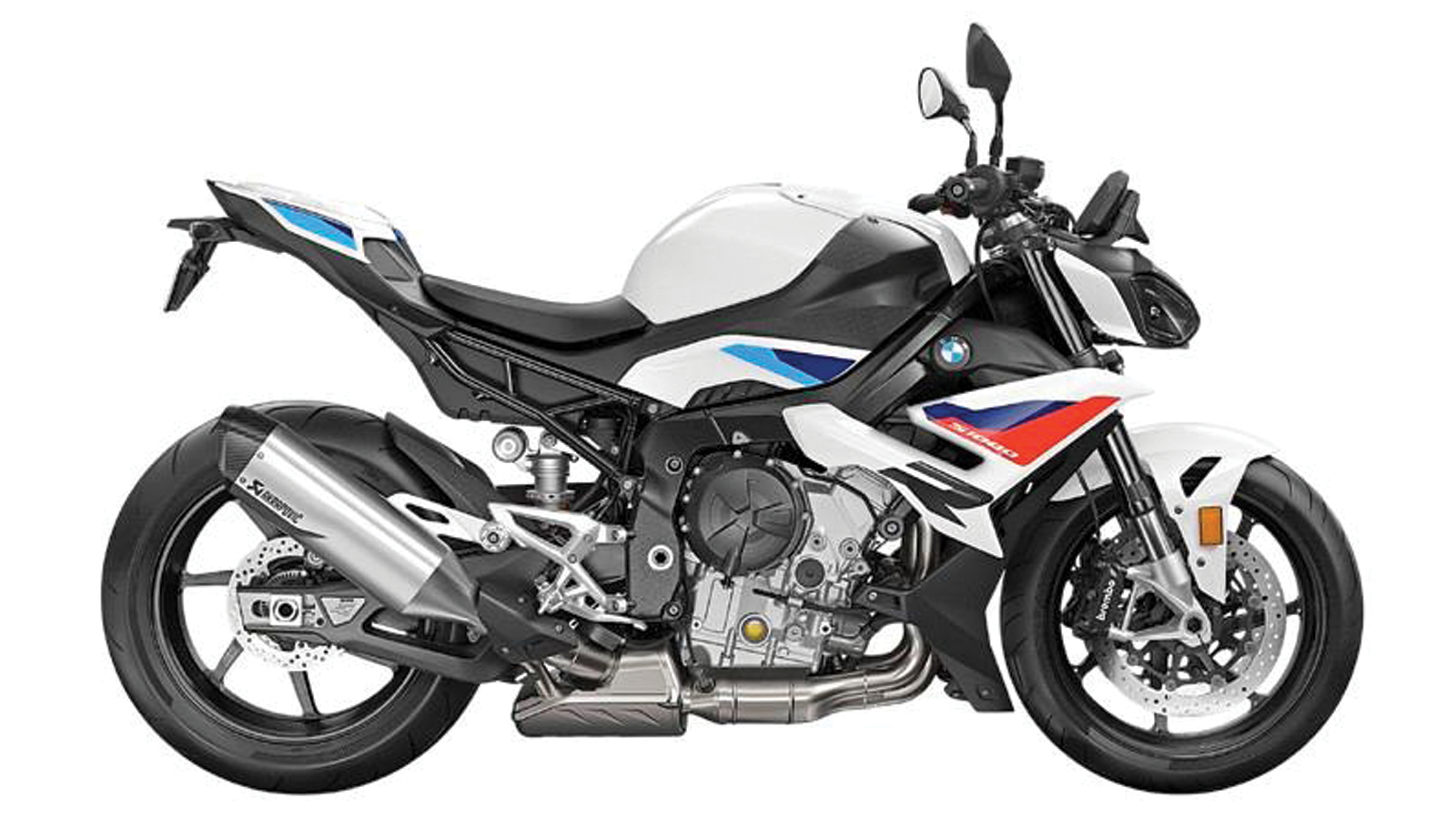
BMW S1000R £16,215
> 168bhp > 84lb·ft > 199kg (kerb)
If you spec the BMW to close to the Speed Triple’s level – adding the Comfort Pack (keyless, cruise, heated grips) and Dynamic Pack (quickshifter, full engine modes, semi-active suspension) – it comes out close to the Speed Trip. Not quite as much charisma.
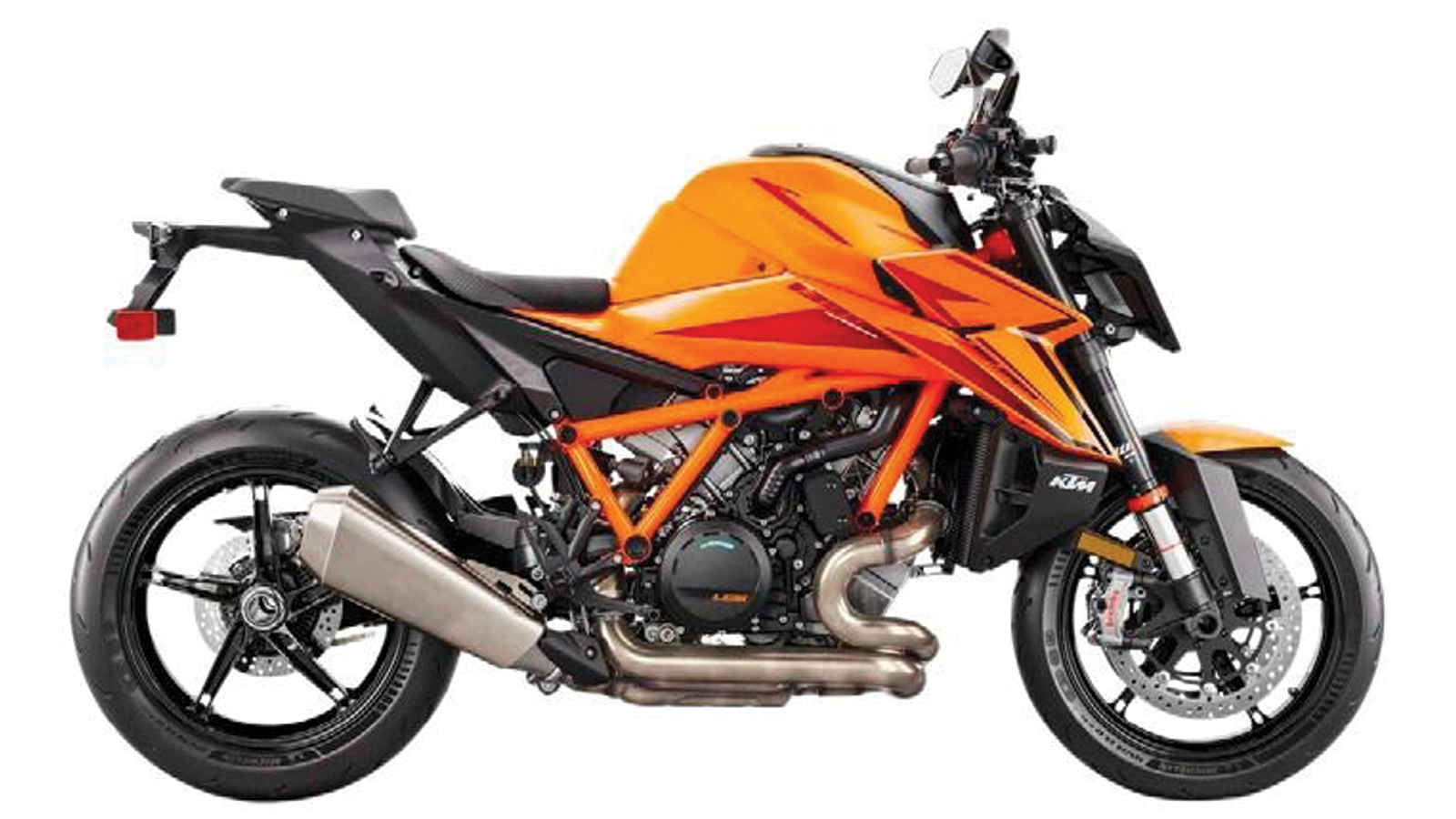
KTM 1390 Super Duke R £15,299
> 187bhp > 107lb·ft > 214kg (kerb)
Not the beast KTM’s marketing pretend it is, the 1390 Super Duke is actually a roomy, comfy hyper-naked – obviously, with a bonkers side if you crank it. No semi-active option, but a full suite of electronics otherwise. Not as pretty as the Triumph.
A: It’s our favourite for the road, but hasn’t gone soft

A glorious celebration of Brit engineering – and a decent road machine as well
On paper the 2025 Speed Triple RS isn’t a big leap forward from its predecessor, but the changes – basically the addition of super-plush semi-active suspension and a slightly less committed riding position – bring a disproportionate improvement to the on-road riding experience. (They also make it £1700 more expensive than it was previously, which may come as a shock if you were thinking of buying an RS last year and only got round to it this year.)
The Öhlins semi-active is adept at buttering up bumps and papering over cracks in our crumbling road network, and higher bars do just enough to prop up ageing wrists and necks for another few years of Sunday fun.
The overall feeling is the Speed Trip has gone from a bike designed and set up to cut hot lap times on smooth racetracks to the exclusion of all else, to now being properly refocused on having a blast on the road instead – and it’s all the better for it. But it’s also lost none of its ability to muck about in the fast group, if that’s your bag – the engine is still a marvellous, howling, churning bucket of hot whizz with a unique Hinckley triple flavour you can’t stop thinking about long after you’ve put the bike in the garage.
And the chassis dynamic is still blissfully direct, diving with glorious stability and confidence into turns with a single-minded sense of purpose.
It’s stirring stuff, and while the engine configurations of other manufacturers all have their moments, not many keep you wanting to come back for more as consistently as the Speed Triple RS.
NEXT MONTH... Is the Yamaha Tracer 7 GT now the class-topping middleweight tourer?
Head into stores to grab your latest issue, or why not subscribe to RiDE Magazine and GET YOUR FIRST 6 ISSUES FOR ONLY £19.99
A great route to ride... Galloway Gallop

Best for Exploring an often-neglected part of Scotland with its own distinct brand of panoramic hillsides and forests, with some top-drawer riding and tarmac
Length 160 miles
Route Dumfries, Dalbeattie, Kirkcudbright, Gatehouse of Fleet, New Galloway, Newton Stewart, Straiton, New Galloway, Dumfries
Love it because It’s a convenient, compact weekend trip into a remote and beautiful part of Scotland without having to slog all the way north to the Highlands.
Take a picture From the top of the Forest Park – there’s no ambient light so it’s a great spot for wild camping, shooting star trails, and other nocturnal proclivities.
Stop for food at The Belfry in Kirkcudbright (pronounced Kuh-coo-brii).
Head into stores to grab your latest issue, or why not subscribe to RiDE Magazine TODAY AND NEVER MISS AN ISSUE!
Continental highs
SLOVENIA ROAD TRIP
Some of the world’s most beautiful roads are within a couple of days’ riding. Carl Stevens discovers the serpentine twists of Slovenia on Yamaha’s new Tracer 9 GT and GT+
Words Carl Stevens Pictures Yamaha

The roads heading into Slovenia are ace – and only get better the further you go
VISITING SLOVENIA
Distance from Calais 840 miles
Why it’s great Slovenia boasts stunning Alpine scenery, smooth roads, less traffic, friendly locals and beautiful lakes and forests – perfect for touring motorcyclists.
When to go Between late May and early October, when the weather is warm and mountain passes are open.
Best roads Ride the Vršič Pass with its famous hairpins, and explore Mangart Saddle, Triglav National Park, Soča Valley, Loibl Pass, and the stretch from Lake Bled to Bohinj.
While you’re there Don’t miss Lake Bled, known for its picturesque island church, clifftop castle and emerald waters in a mountain setting.
TOURING DOESN’T HAVE to be the usual treks to Spain and Portugal, or exploring the south of France. There is a whole world to explore. Last month editor Matt rode the roads of Croatia, but you don’t have to go that far. Head east through France and Austria into Slovenia, and you’ll be rewarded with some of the finest roads on the planet, views that are so beautiful your eyes feel like they’ve been upgraded to high definition, and such a variety of weather, landscapes and environments that you feel like you’re crossing continents rather than a country.
You can be rolling alongside 10ft of snow in the mountains on a glorious mountain pass, then 20 minutes later you’re sweating while riding through sun adorned forests alongside stunning lakes and rivers.
Starting strong
Before that, there’s the small matter of crossing Europe to reach Slovenia’s good stuff.
The Eurotunnel is quick and effective, and once the other side it’s all about making the most of the time. We love France and there’s so much to explore, but for the purpose of this trip it’s a motorway blast to cover the miles. It’s tempting to get lost in the rolling countryside, but not doing so is worth it as it allows you to spend more time further east.
Saying that, a ride through France isn’t complete without a stop for some good food, and quick pit stop for a picture in Reims. An old racetrack pit complex that’s still maintained and looking smart on a main road? It gives me goosebumps every time I stop.
Up in Austrian heaven
Austria is not only the land of rolling hills, glorious food and even better beer (for when you’ve finished riding, of course), but it’s also home to some incredible roads – and one you can’t miss out on is the Grossglockner High Alpine Road.
The Grossglockner is Austria’s highest mountain, and the Alpine Road is a toll road that’s 30 miles of sheer beauty, laced in glorious tarmac and incredible corners. It’s €35 for the pleasure, but well worth the cost; it isn’t dubbed ‘Austria’s best view’ by mistake.

Lake Sandersee, along the mighty Grossglockner Pass in Austria. The ideal way to kick off your ride into Slovenia
It’s S-love-nia
But that’s just the taster. The real, unsung destination in Europe comes from navigating the Julian Alps, a range that stretches from north-east Italy into Slovenia.
Open the map app on your phone, fire in the Vršič Pass and head there – and I’ll wait for a thank you letter in the post. That’s because it’s not only an incredible road to ride, with switchback hairpin after switchback hairpin; the views are also staggeringly breathtaking. If you look up ‘beautiful’ in a dictionary, its definition should be the landscape surrounding the Vršič Pass.
It’s also the highest pass in Slovenia. At over 1600m up, the tarmac cuts through the mountains in such a way that it feels like it’s been sculpted purely for the enjoyment of motorcyclists, and whatever pace you fancy rolling at, it will reward you.
But that wasn’t the case. The Vršič Pass is on Route 206, which runs from Bovec to Kranjska Gora and is known as Ruska cesta (‘Russian road’) to commemorate the Russian prisoners of war who were forced to build it by Austro-Hungarian authorities during the First World War, then keep it clear of snow during the winter.

Where’d those trees come from? They were mountains a few corners back
Some stretches are wide and open, but at the heart of the pass are 50 tight hairpins that wind through a national park. You’ll need your wits about you – some of the corners are paved with cobblestones, but that makes them feel even more special.
Then there’s the scenery – on one corner you’ll have snow-covered mountains towering above you; the next the mountains are replaced by trees. It’s like riding through multiple countries in one go.
It’s not a section of road to ride flat out, but you won’t want to – there is so much to take in.
But you’ll want to ensure you have a good motorcycle underneath you. Something comfortable but with a sportier side that you know is reliable and won’t leave you stranded (phone signal isn’t great). Yamaha’s Tracer 9 GT is the perfect tool – it blends a good level of comfort and practicality with a feisty side when the road allows it – which is plenty of the time. Plus, some corners are very tight, so keep that in mind if you’re planning to cover a big cruiser in panniers.
“‘You feel like you’re crossing continents rather than a country’”

It’s 1600m up but the views along the Vršič Pass will have you light-headed with joy
It’s not just about the riding either. A host of locations are worth stopping at, and the route is filled with history that’s well worth exploring. The Russian Orthodox chapel, for example, is a must – it was built by Hairpin 8 (every hairpin is numbered) by Russian First World War prisoners on the site of a snow clearing camp to remember comrades who were buried by an avalanche.
If it’s hot, a host of nearby waterfalls and crystal-clear natural lakes offer the opportunity for a swim and cooling dip. The Soča River, the Tolmin Gorges and the Virje waterfall all look like they’ve been lifted straight from a Disney fairytale, so take your time and enjoy.
A bit out of the way, on the Italy/Slovenia border, is the Sentiero del Lago inferiore – and on its bank is a lovely restaurant, bar and hotel. Cracking local food and the surroundings are out of this world. Highly recommend. Sure, you can visit loads of places on the continent, and many of these routes and locations will reward you with incredible tarmac, memorable rides and glorious landscapes. But the next time you cross the Channel, go that little bit further and explore the lesser-known glory of Europe – you’ll be seriously rewarded for your troubles.

Calais to Slovenia: almost 1000 miles of touring euphoria
HOW MUCH DOES IT COST?
Eurotunnel £160
Fuel (2500 miles) £330
Accommodation £600
Food and drink £500
Extras (tolls, roads) £250
Total £1840
Getting there
This will depend on how much time you have. From the Eurotunnel, we headed to Reims and bashed out the motorway mileage across France. With a quick stop in the bag, we stopped the night near Metz. The following day you can head into Germany and take the quickest route around the top of Munich, or hug the top of Switzerland and head through Austria (our preferred route). Just remember to stop off at the Grossglo Pass on the way through. Then it’s south into Slovenia and into your riding haven.

Map data ©2025 Google, GeoBasis-DE/BKG (©2009). Inst. Geogr. Nacional
THE FACTS
Price £17,004 (GT+ Y-AMT)
Engine 890cc DOHC inline triple, 4v per cyl, l/c
Power 117bhp @ 10,000rpm
Torque 69lb·ft @ 7000rpm
Fuel capacity 19 litres
Seat height 845/865mm
Wheelbase 1500mm
Kerb weight 232kg
Rider aids Cornering ABS, traction control, wheelie control, riding modes, Y-AMT transmission, Matrix lighting, adaptive cruise control, blind spot detection, navigation, semi-active suspension, tyre pressure monitoring
‘Perfect for touring’
Carl clocked more than 2500 miles on the new Tracer 9 GT and the GT+. This is what he thought of the range-topper as a distance machine…

Tracer’s practicality is perfect – but it also enjoys showing its sporty side
RIDER AIDS
Cruise control is easy to use, intuitive, and makes long-distance runs less tiring. The dash is clear, but the built-in satnav is cumbersome and dated, struggling with newer roads and roundabouts. On the GT+, adaptive cruise control is almost too cautious, leaving a large gap to the car in front. The forward collision warning is very sensitive and somewhat annoying, although it can be switched off. These rider aids work, but their implementation isn’t always flawless.
HANDLING
The suspension is well judged for its touring intentions; comfortable and calm, yet capable of hustling through corners when required. Each new generation of Tracer gets slightly more touring-oriented, but it can still pull some shapes when asked. Brakes and ABS are average – functional but not especially inspiring. The standard fitment tyres perform reliably over distance, and the panniers with central locking are practical additions for real-world touring.
WIND PROTECTION
Wind protection is generally good, aided by an adjustable screen. However, taller riders will notice some buffeting, especially compared to rivals like the Triumph Tiger Sport 800, largely due to the windscreen’s shape. Shorter riders are much better sheltered behind the fairing. The new LED matrix lights are a highlight – bright, effective, and adaptive, automatically dipping and adjusting to other vehicles or ambient light. Riding at night or through poorly lit areas is genuinely improved by this lighting system.
RANGE
Fuel consumption is decent for this class. Expect around 150 miles from a tank if you’re riding enthusiastically; more relaxed riding should get you closer to 180 or 190 miles. The tank itself is spacious, and you can really lean on it on long journeys. This isn’t an ultra long range tourer, but you can comfortably cover a couple of hours between fuel stops.
ENGINE
The three-cylinder engine is a gem. It runs quietly and smoothly at cruising speeds (70–80mph), but has real punch and character when pushed, especially in second and third gears. There’s enough power for spirited riding, but you can sit at motorway speeds all day comfortably. The engine’s soundtrack is subtle yet engaging, lending the bike a lively personality despite its touring focus.
COMFORT
Comfort is a standout feature on this bike, especially for average-sized riders. At 5ft 7in with a 28in leg, I found the seat, peg and handlebar positions very well judged, creating a pleasant riding triangle. Taller riders (5ft 10in and taller) may feel more cramped. The standard seat is not particularly plush, but the comfort seat upgrade is excellent – arguably even better than the supposedly exclusive GT+ seat. The tank’s shape is great for resting on longer trips, and the mirrors provide a clear view. Yamaha’s Y-AMT is the only gearbox option for the GT+ but makes the bike easy to ride in dense traffic or at low speeds, saving physical and mental energy on long days.
Head into stores to grab your latest issue, or why not subscribe to RiDE Magazine TODAY AND NEVER MISS AN ISSUE!
Is bike licensing broken?
RiDE INVESTIGATES
Some say our licence structure is complicated, expensive and outdated. Is it true – and how can it be fixed?
Pictures Bauer Archive Words Ben Purvis

Current laws mean scores of under-trained riders on the road. This needs to change
GETTING A BIKE licence in the UK is a fraught exercise. Baffling rules and myriad licence levels make it a long-winded process punctuated with hefty training and test costs, and statistics suggest no safety benefit.
Since January 2013 we’ve toiled under the structure imposed by the EU’s Third Driving Licence Directive (3DLD) and despite Brexit the rules remain in place today. EU countries are preparing to introduce a Fourth Driving Licence Directive; it won’t apply to the UK but brings an opportunity to implement a better system.
The clearest indication of the current regime’s failure is seen in accident statistics. Whether the idea was to reduce motorcycle crashes by adding more training and testing or, through a cynical lens, to cut accidents by making bikes harder to access, it hasn’t worked. Over nearly 50 years motorcycle deaths in the UK have generally been reducing, with the notable exception being the decade from 1993-2003 when an increase was roughly proportional to a boom in biking popularity that saw licensed bikes on the road increase from around 700,000 to 1.2 million.
Since 2004, the number of licensed bikes has remained around 1.2-1.3 million. It’s measured at the end of December each year, so the summer peaks will be higher. Against that background, motorcycle fatalities dropped every year from 2006-12, at which point they were more than half 2003’s level (328 deaths in 2012, 693 in 2003).
But since 2013, when 3DLD came into force, there’s been no further improvement. In 2013 there were 331 deaths; in 2024, 343 riders lost their lives on our roads.
“‘We believe it should be simpler and progressive’”
Testing, including a two-part off-the-road module, needs a revamp
Correlation isn’t causation, but the parallel between the halt in safety improvements and the introduction of 3DLD is remarkable. From 2006-12 deaths dropped every year, but in eight of the 12 years since, fatalities have been higher than in 2012.
How can stricter, more extensive testing lead to a worse outcome? By making it harder to climb the bike licence ladder, riders are disincentivised from stepping up to the next rung. Vast numbers of CBTs are issued – around 180,000 per year – allowing new riders on the road on 125s with L-plates, but only a fraction of them go on to take the training and tests to get a full licence. The hurdles of the current regime mean fewer riders are prepared to battle through it.
The landscape since 2013 has changed, too. Mopeds are a dying breed – only three riders took an ‘AM’ moped test in 2023 – and e-scooters and power assisted bicycles are booming, with no licence requirement, confusion over legality and little enforcement of existing laws on their use.
Motorcycle Industry Association (MCIA) chief executive Tony Campbell said: “The current regime is unnecessarily complex, costly, and deters new riders – particularly younger people – from choosing powered two-wheelers.
“We believe it should be simpler, progressive, and proportionate to risk, making access to motorcycling more approachable without compromising safety.
“With the UK no longer bound by EU directives, we have a real opportunity to design a fit-for-purpose framework that supports sustainable transport and encourages more people to ride responsibly.”
The National Motorcyclists Council (NMC) has proposed similar changes, calling for a system that’s simpler, more accessible and cheaper, with less repetition of testing, while maintaining the country’s high standards of education and encouraging post-test training.
It would like a regime that more reflects international norms set out by the Vienna Convention, the benchmark for licensing regulations across the world.
NMC executive director Craig Carey-Clinch said: “It’s time for action on this. Department for Transport ministers told us last winter they were ‘considering’ a review, but have since been silent on the issue.
“The safety stats speak for themselves – the regime is not fit for purpose, and the longer the Government delay the review, the less confidence riders have in the present system.”
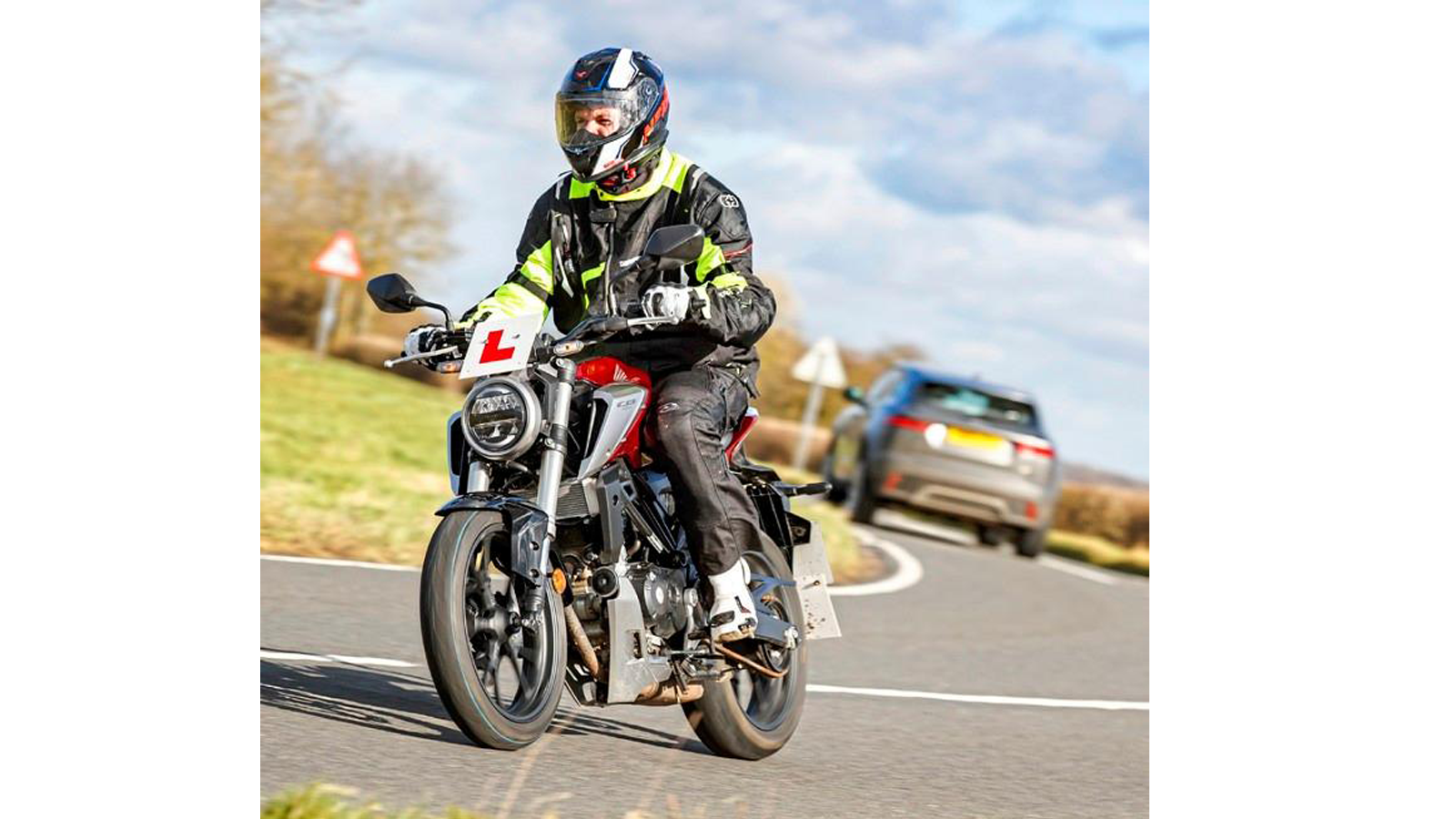
16-year-olds could be let loose on 125s with the correct training
WHAT CHANGES SHOULD HAPPEN?
When it comes to testing and training for bigger bikes, both the MCIA and NMC have extensive proposals but agree on several key elements for a potential future licence structure, including:
A more extensive ‘CBT Plus’ for riders who want to extend their CBT beyond two years. Two years after taking the CBT Plus, a final assessment from an instructor would upgrade to a full AM (moped) or A1 125cc licence.
Revisions to rules for 16-year-olds to give them access to 15bhp ‘A1’ bikes once they have the correct training.
Changes to ‘A2’ (sub-47bhp bikes) rules, allowing progressive access with two years’ experience from 19 to 18. The NMC would like ‘A2’ to be replaced with a new ‘A-restricted’ licence, with a 47bhp limit, available from the age of 18.
Direct access to a full ‘A’ licence available from the age of 21 (currently 24).
Licence upgrades via additional training and assessments carried out by certified instructors rather than repeated tests by DVSA examiners.
A return to a single test from the current off road ‘module 1’ and on-road ‘module-2’ format.
Head into stores to grab your latest issue, or why not subscribe to RiDE Magazine TODAY AND NEVER MISS AN ISSUE!
A great route to ride... Colmar to Saint-Dié-des-Vosges

Length 61.2km
Why it’s a must-ride It snakes its racetrack-smooth surface through stunning scenery – valley floors, hillsides and forest. An absolute gem of a road.
Head into stores to grab your latest issue, or why not subscribe to RiDE Magazine TODAY AND NEVER MISS AN ISSUE!
Good. Bye?
GOODBYE SV650
Unassuming, affordable, but also brilliant – for more than 25 years. Suzuki’s SV650 has nurtured novices and entertained veterans alike. But is this epic era coming to an end? SV650 expert – and owner – Martin Fitz-Gibbons investigates…
Words Martin Fitz-Gibbons Pictures Adam Shorrock

Snappy, fun, still looking good in middle age. The SV shares at least some of its virtues with writer Martin
THE FACTS
Price £7399
Engine 645cc DOHC 90° V-twin, 4v per cyl, l/c
Transmission Six-speed chain
Power 72bhp @ 8500rpm
Torque 47lb·ft @ 6800rpm
Fuel capacity 14.5 litres
Seat height 785mm
Wheelbase 1445mm
Weight 200kg (kerb, claimed)
Rider aids ABS
SHARKS ARE NATURE’S most astonishing survivors. They’ve existed on planet Earth for between 350 and 450 million years, depending on how you count it. In that time they’ve seen dinosaurs come and go, survived five global mass extinction events, and hung around longer than spiders, cockroaches and even trees. That kind of staying power only happens when something is pretty special – and when it’s also adaptable, versatile and resilient. Suzuki’s SV650 is a two-wheeled shark. Not in the conventional sense, perhaps. The friendly middleweight has hardly carved out a fearsome reputation as an apex predator, nor inspired a litany of camp Hollywood horror flicks. But the SV has shown astounding staying power. Fireblades, GSs and Speed Triples? The names have been around longer, but the bikes themselves have mutated into unrecognisably different creatures – the evolutionary equivalent of Trigger’s broom. But like sharks the SV650 has evolved far more gently and slowly, its family resemblance easily traced across the years.
Fossil records suggest the SV650 dates back to prehistoric times, or the 20th century as we know it today. When it was launched in 1999 it brought together a lightweight trellis frame, unadjustable suspension and a 70bhp, 645cc V-twin. More than a quarter of a century later, that same recipe remains instantly recognisable on the latest version. There have been a few environmental adaptations along the way – aluminium tubing has been swapped to steel, carbs have given way to fuel injectors, and analogue dials replaced by a digital dash. But the slim, frisky roadster flashing eagerly along Lincolnshire back lanes this morning is unmistakably still an SV650.

Cameras have changed slightly since the SV first broke cover
The SV’s enduring appeal begins with its compact proportions. Now, as then, the SV650 welcomes riders of all sizes and experience levels. That’s evident in its approachable seat height (just 785mm) and manageable mass (only 200kg fully fuelled). To my mid-40s dad-bod the SV seems surprisingly small – the fuel tank sits low and lean between my knees, grips are only a short reach away, and footpegs are set higher than expected. When I first climbed on an SV650 more than 20 years ago, it felt dauntingly huge after my titchy, twitchy two-stroke 125. The SV’s proportions haven’t changed much; the same, sadly, can’t be said for mine…
One element that’s remained constant is the SV’s effortless, eager agility. It flicks into corners with minimal muscle, darting deftly around its slender 160-section rear tyre and settling confidently at lairy lean angles. You can sense the bike’s mid-corner balance is a tad rear-biased, in part because of its low seat, while suspension is set slightly soft and springy. The right-way-up forks still use basic damper-rod internals, while the only adjustment at either end is a stepped preload collar on the shock. There’s no hiding that it’s all built to a price using yesterday’s tech – but it also remains deceptively capable, with better roadholding and ride quality than the last Yamaha MT-07 or Kawasaki Z650 I rode.
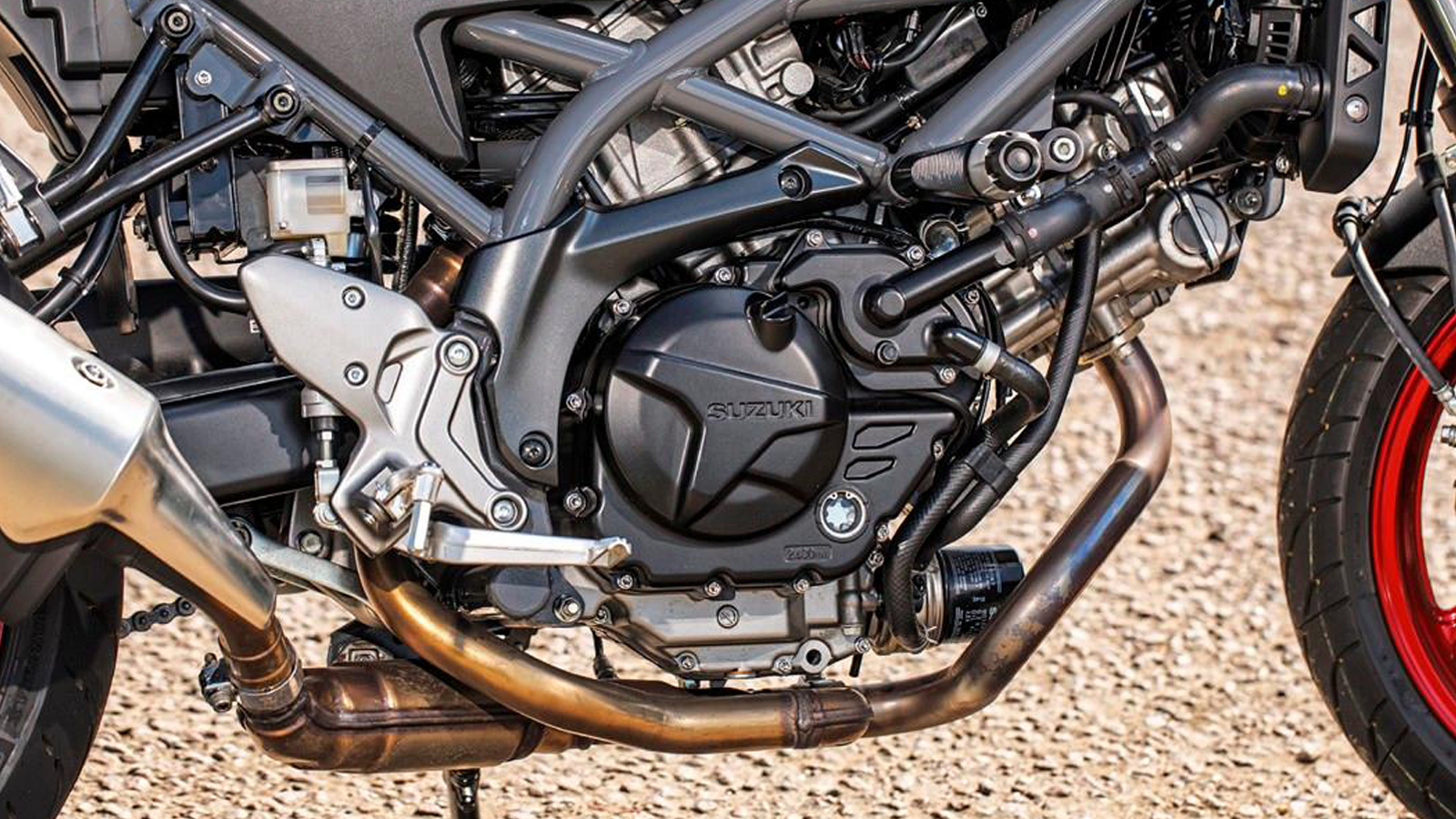
Stood the test of time like no other – it’s from a different millennium
If you’re after forensic front-end feel and debonair damping, perhaps don’t come looking for it in a seven-grand street bike. But grab it by its handlebar and the SV delights in being chucked about. It romps gleefully along these countryside lanes, dancing through a series of right angled turns and floating over a railway bridge with playful panache. Its Dunlop Roadsmart 3 tyres bite reassuringly into the sun-baked asphalt, the road ahead framed by luscious, deep-green hedgerows bulging with summer life. Flecks of white cow parsley blur past in my peripheral vision exaggerating the modest speeds. Overhead, a red kite glides effortlessly on invisible currents through the crisp cyan sky. What a day for it.
While the SV650 doesn’t propel itself along with quite that level of serene majesty, its motor remains an all-time gem. Fundamentals have barely changed from the ’99 original: same bore and stroke; identical internal gear ratios; and within a couple of horsepower and pound-feet of peak performance. Hard to think of another engine that’s managed to last as many years so well preserved.
“‘You’ll struggle to find a rider with a bad word to say about the SV, which speaks volumes’”
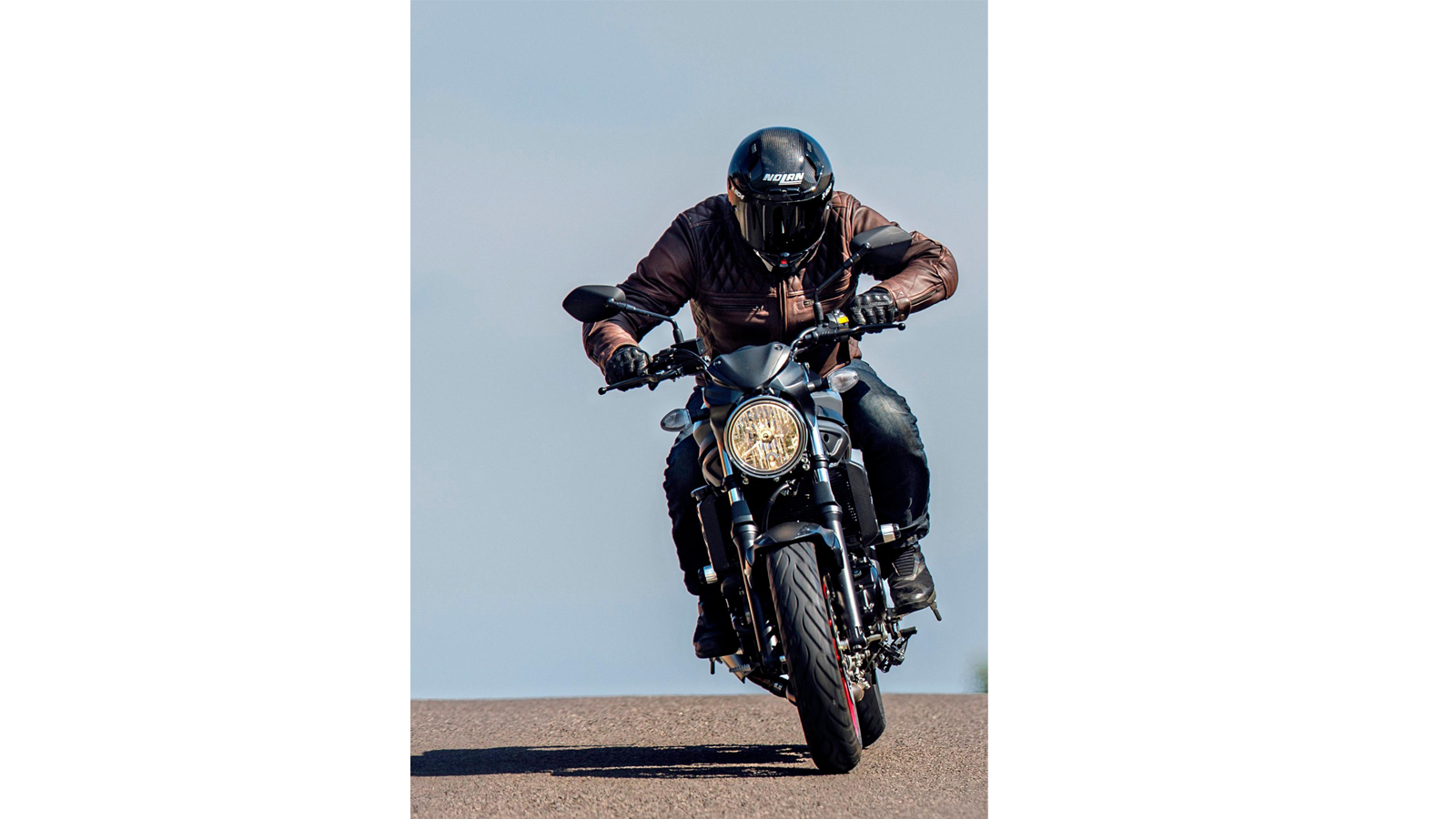
Martin goes with the flow as SV shows off its ‘playful panache’
Despite its age, the V-twin refuses to feel dated or old-fashioned. It chugs softly from just off tick over, pulls smoothly and briskly through the bottom end, discovers a touch more spirit around 6500rpm, then zaps off happily to its 10,500rpm limiter. The delivery is broad, linear and undemanding, but deeply engaging. Gearshifts are slick in both directions and ratios are nicely spaced, while the motor’s even-handed delivery means that at all times you can be in any one of about three gears. The flexibility is fabulous, accommodating all moods, experience levels and riding styles. Chunter along politely one second, then thrash its brains out the next – it gladly does both, switching speeds instantly. The SV650 may not have the same naughty rortiness of Yamaha’s CP2 twin, but it runs it close. Impressive going for an engine that’s older than many of the riders it’s aimed at.
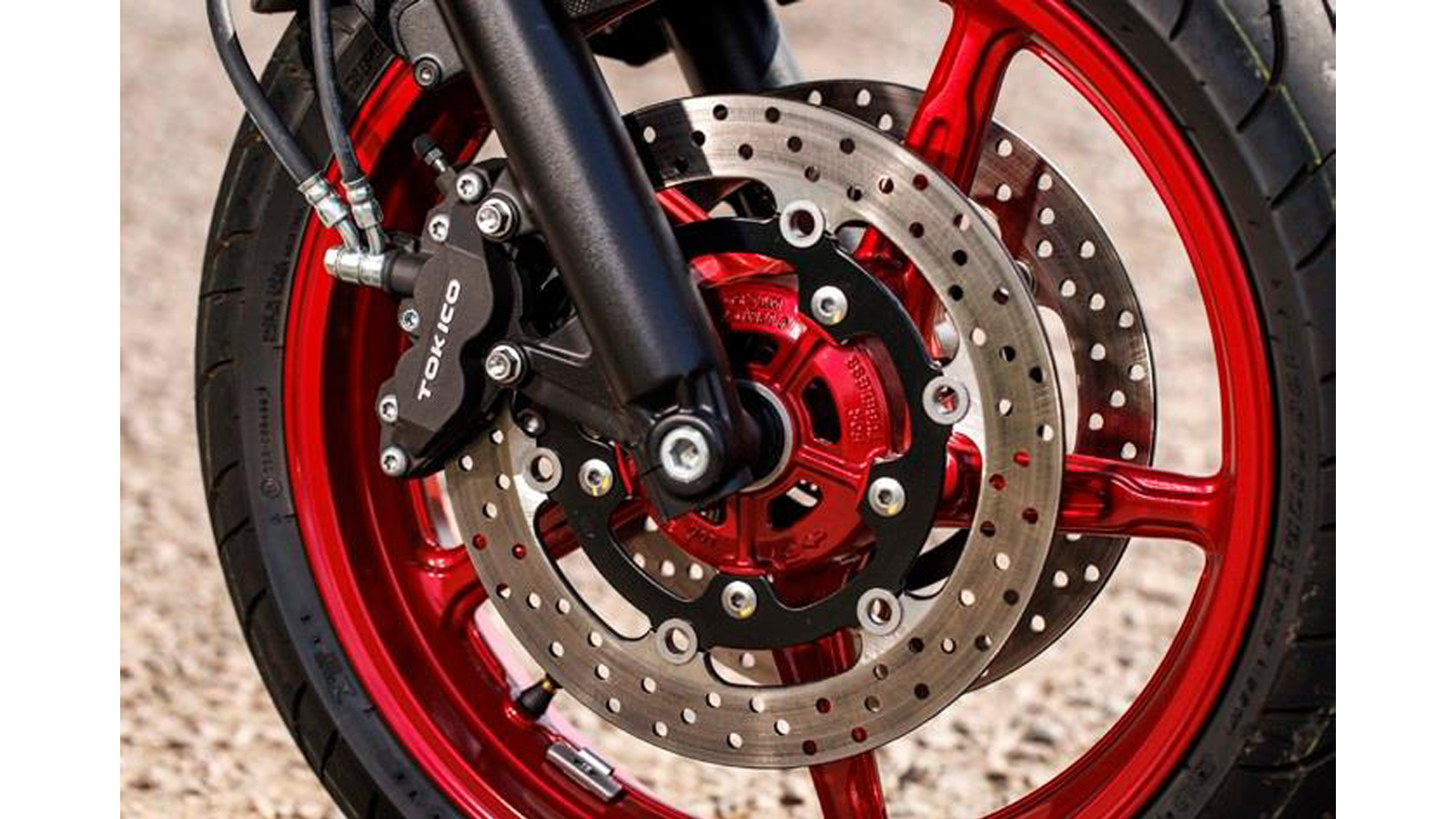
Old-fashioned by today’s standards, but they add to SV’s simplistic charm

The appeal of the Suzuki’s engine runs deeper though. There’s something special about riding an authentic 90° V, rather than a parallel twin with a wonky crankshaft like most modern middleweights. I can’t quite put my finger on what it is – my rational side knows the firing intervals are the same, so they should sound identical and vibrate similarly. But opening the SV’s throttle delivers a sense of substance, refinement and engineering gravitas that I rarely get from a parallel twin’s slightly hollow, whispy thrum. Even if it’s all in my head, it’s still real to me.
While it wins on character and charm, the SV650’s powertrain does lack many of its rivals’ modern conveniences. On the physical side it doesn’t have a slipper/gripper clutch, meaning the lever pull isn’t as light as the latest set-ups. And on the electronics side there’s, well, almost nothing. No riding modes, no traction control, no cruise or quickshifter or 19-axis wheelie autopilot. Switchgear is sparse and clear as a result: instead of baffling buttons and four-way joysticks there’s just indicators, a horn and a kill switch. When I want to reset the trip, it feels kinda retro to take a hand off the controls and reach forward to press a button on the clocks. How quickly things have changed.
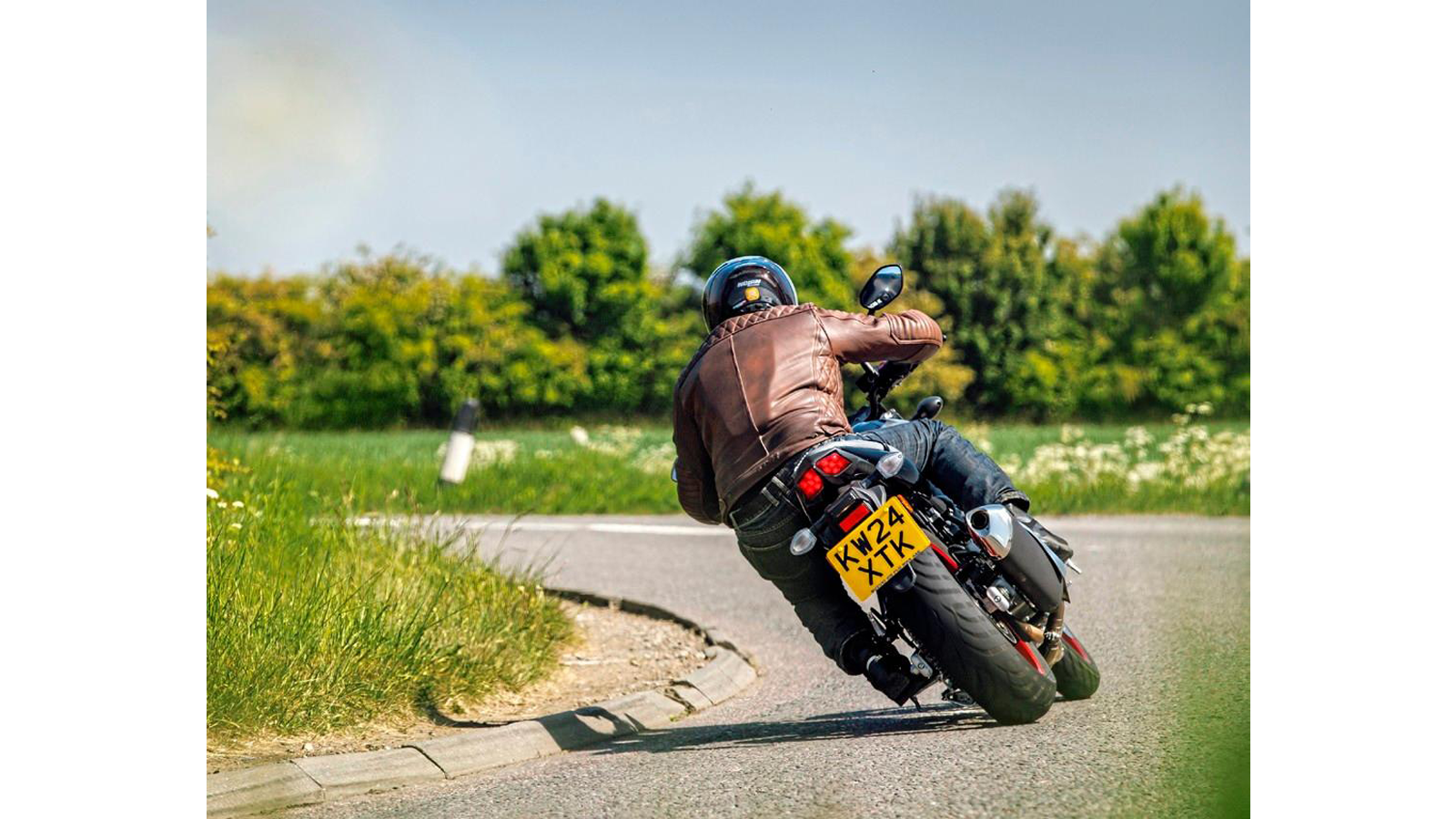
Peg scraping is common – the SV’s handling is deceptively good
Old-fashioned simplicity is in abundance when I pull over to poke round it. Inside the SV’s traditional round headlight are traditional round halogen bulbs, not LEDs. There’s no immobiliser in the skinny ignition key. And while its LCD dash would have looked fantastically futuristic 20 years ago, next to today’s connective colour TFT touchscreens it’s as cutting-edge as a Casio calculator watch. Brakes were uprated a few years ago from the original’s sliding two-pots to four-piston Tokicos, but remain axially mounted rather than radial.
It’s easy for old-school riders to dismiss all this with: “Yeah, but do you really need any more?” Perhaps not, but ‘need’ and ‘want’ are two different things. Showroom battles are won with hearts and eyeballs, and there’s no getting round the fact that in 2025 the SV650 looks old-fashioned – even if it still rides perfectly pleasantly.

No thumb yoga, no flickering rider aids – just rider, SV, and road. So pleasingly simple
Which brings us to the crossroads the SV650 finds itself at today. Tellingly, it doesn’t meet the current Euro5+ emissions standard, so it’s only on sale thanks to a short-term loophole called ‘derogation’. Suzuki can still sell existing stock in limited numbers, but the clock is ticking very loudly indeed. So, what’s next for the venerable V-twin?
Despite persistent pestering and polite probing, Suzuki’s lips are sealed shut regarding the SV’s future. But their options are as clear as they are limited. An all-new model with a comprehensive overhaul makes little sense – Suzuki already has the GSX-8S, a bike that’s just 131cc, 10bhp and £900 more than the SV. Alternatively, a mild update to keep the SV650 going into its 27th year could potentially happen, but this kind of romantic last-minute reprieve is far from certain.

Emissions regs means its days are numbered – so get one while you can. You won’t regret it
Which leaves the very real possibility that, in Europe at least, the SV650 may be facing extinction. And if these are its final days, then it’s time we appreciated the incredible run it’s had – from the curvy original, through the fuel-injected second-gen model, to the divisive ‘Gladius’ rebrand, to its stripped-back 2016 return. The SV was a hit right from the start, becoming one of the bestselling bikes in Europe, inspiring an entire Minitwins race class, and forcing rivals to rethink how they built middleweights. Out went a class built around old detuned supersport engines, and in came a fresh generation of punchy, nimble twins.
Hundreds of thousands of owners along the way – myself included – owe an enormous thanks to the SV650 for helping us find our feet, whether on road, track, or both. Affordable, reliable, forgiving, accommodating and endlessly entertaining, its gentle genius transcends generations and genders like few modern bikes. You’ll struggle to find a rider with a bad word to say about the SV, which speaks volumes. If there isn’t a 2026 model waiting in the wings, and if today’s spirited countryside dash really does mark the final chapter of the SV650’s marathon story, then its place as a future classic is in no doubt.

SV holds a special place in Martin’s biking story – as it does for many riders
THE PARTS THAT MAKE IT A JOY
ACCESSIBILITY
Standard seat height is 785mm, or less than 31in, making it easy for shorter riders to feel confident and in control. Kerb weight is just 200kg.
ENGINE
Long-running 645cc V-twin still delivers a handy blend of eager bottom end, perky midrange and satisfying, free-revving top-end. Claimed 72bhp is just two more than in 1999, but still enough to boogie.
SIMPLICITY
Technophobes rejoice – the phrase “less to go wrong” could have been made for this bike. The SV650 has no ride-by-wire throttle, no riding modes, no traction control, no IMU, no phone connectivity…
RELIABILITY
The last major update was in 2016, and the engine’s been going since the last century. Serious problems in all that time? Nothing. Proven, refined and trusted, the SV is a bike you can rely on to start first time every time.
AFFORDABILITY
In 1999 an SV650 cost £3999. Accounting for inflation that’s about £7600 today, meaning an SV650 is actually cheaper now (£7399 otr) in real terms. But that’s just the official RRP – you can find new bikes advertised for as little as £5995.

FANCY A USED SV650?
The SV650 family tree breaks down into four generations: the curvy carbed original (19992002); the pointy fuel-injected model (2003-2008); the SFV650 Gladius (2009-2015); and the latest version (2016on). Here’s what to look for and what to pay:
1 Finish
Not great, particularly on earlier models. Fork lowers corrode, engine case paint is vulnerable (especially the water pump cover), and brake calipers can seize if not cleaned regularly.
2 Modifications
Affordable, popular with younger riders and occasionally dropped, the SV650 is a magnet for bolt-on bits that, ahem, aren’t to all tastes.
“I’m sure you do love your furry purple screen… but do you still have the original, perchance?”
3 Exhaust
Exhaust systems on 19992008 models are one-piece, so aftermarket silencers require cutting into the pipework. If there is a noisy pipe fitted, ask whether the fuelling has been adjusted, and consider whether it’s noisy enough to annoy an MOT tester.
4 Suspension
Cheap and cheerful at the best of times – and almost certainly due a service by now. Forks benefit from heavier-weight oil and slightly firmer springs. Shocks benefit from being replaced altogether.
5 Ex-racers
The SV650 inspired the Minitwins race class, so check for ex-track bike giveaways like lockwire holes drilled into the sump plug or oil filler cap. Mint bodywork on tired bikes is a clue, as is shelves of trophies adorning garage walls and a race transporter on the drive.
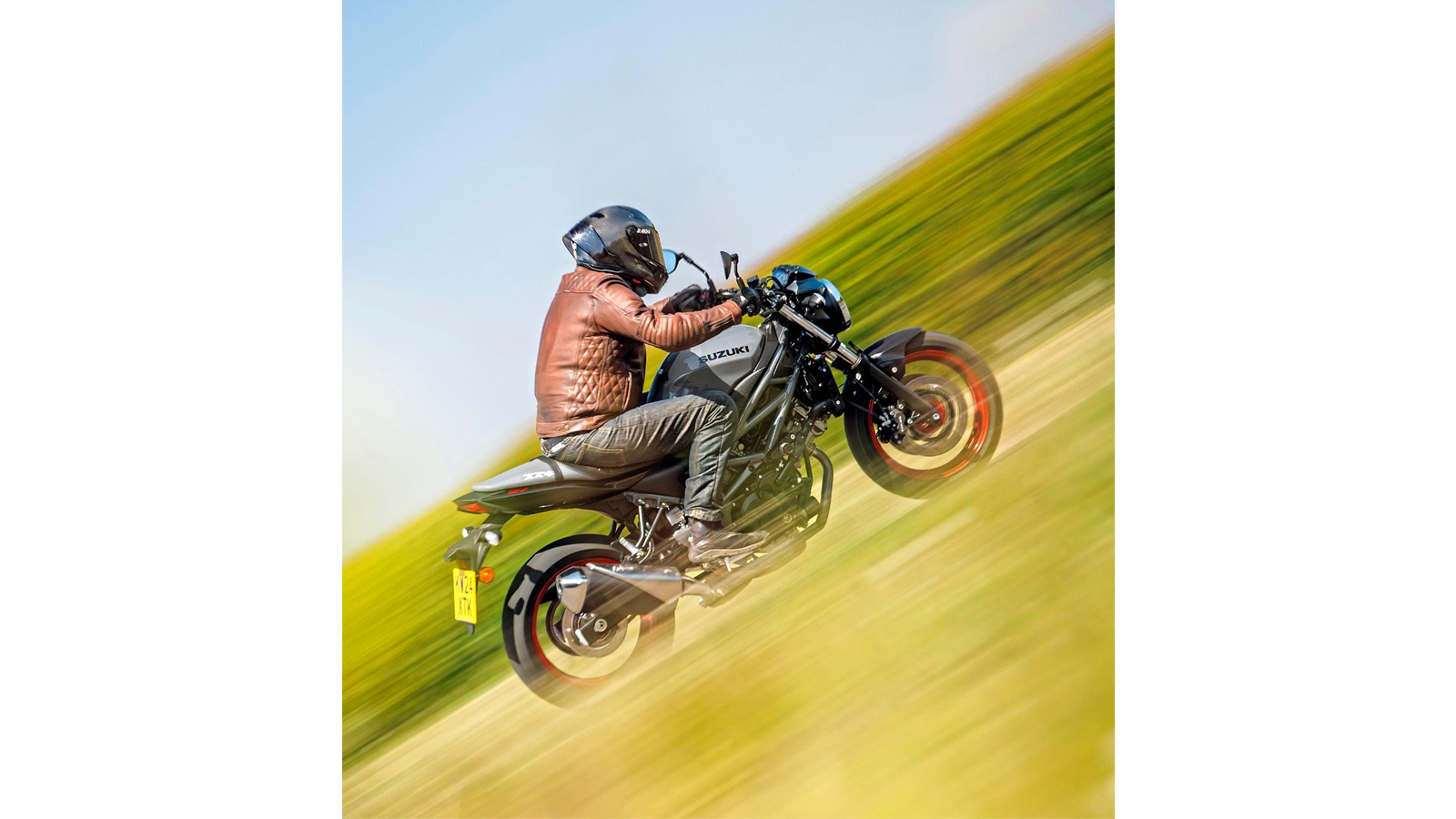
What to pay
£900 – the cheapest SV650 we found on eBay was a carbed original SV650S with 33,000 miles on the clock
£2500 – gets you a 20,000-mile Gladius, or a later SV650S (identified by its black frame)
£4500 – buys a wealth of 2020-ish models with very low miles from a dealer