
Q: Is the £3499 BSA Bantam 350 a biking bargain?
BIG QUESTIONS ANSWERED
Or does the ride match the low asking price?
Words Jon Urry Pictures Adam Shorrock
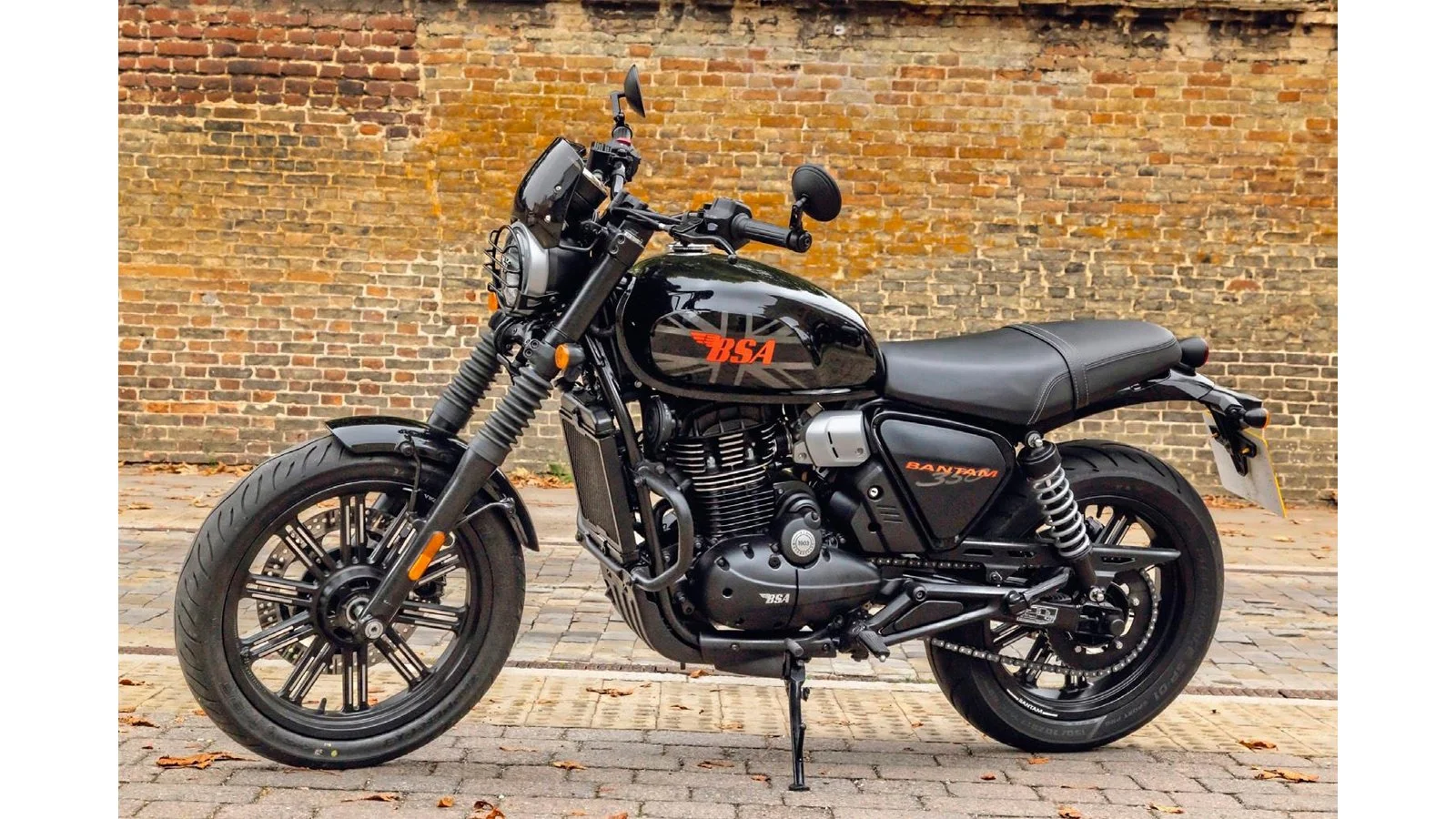
Definite shades of Triumph’s Speed 400 in BSA’s offering
US BRITS ARE keenly buying up small-capacity bikes that put price, ease of use and fun at the forefront of their design. After Royal Enfield led the way with the likes of the Interceptor 650 and Himalayan 411, machines such as the Honda GB350S and Triumph Speed 400 have picked up the baton and ran with it – topping the UK’s new registration charts. And now there is a new bike hitting the market ready to tempt riders – but this one carries an iconic name from yesteryear.
Following up on their reimagined Gold Star 650, which was released in 2023, BSA have introduced a Bantam 350 into their model range. A bike generally credited for getting post-war Britain moving again in the 1940s (BSA claim it’s still the UK’s bestselling bike of all time), the Bantam name carries with it a lot of prestige.
Built in India rather than the UK, does the new BSA Bantam 350 do its heritage justice and offer the same simple charms to a fresh generation of buyers as its forefather? Time to find out…
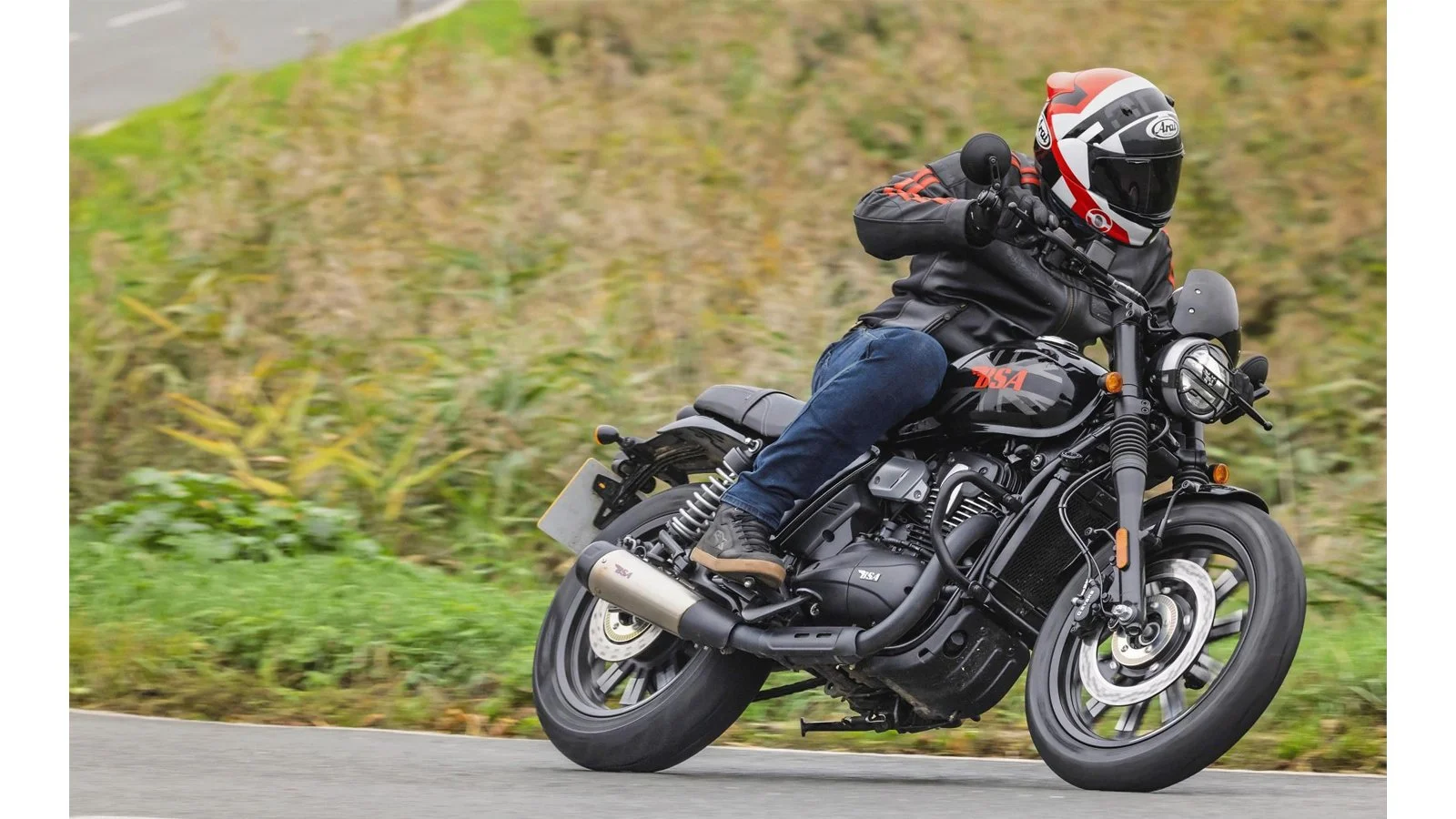
OPTIONS
The Bantam 350 comes in Avalon Grey, Firecracker Red, Victor Yellow, Oxford Blue and Barrel Black paint options, and you can choose an analogue or digital dash.
THE BRITISH LINK
Classic Legends (part of Mahindra) bought BSA in 2016 and brought the new Gold Star to market in 2022, 49 years after the last bikes from the Norton Villiers Triumph ownership period were sold. In 2021, BSA was awarded a £4.6 million UK Government grant to develop zero-emissions motorcycles under a low-carbon automotive initiative. A design facility near Coventry is within minutes of the original BSA factory.
STYLING
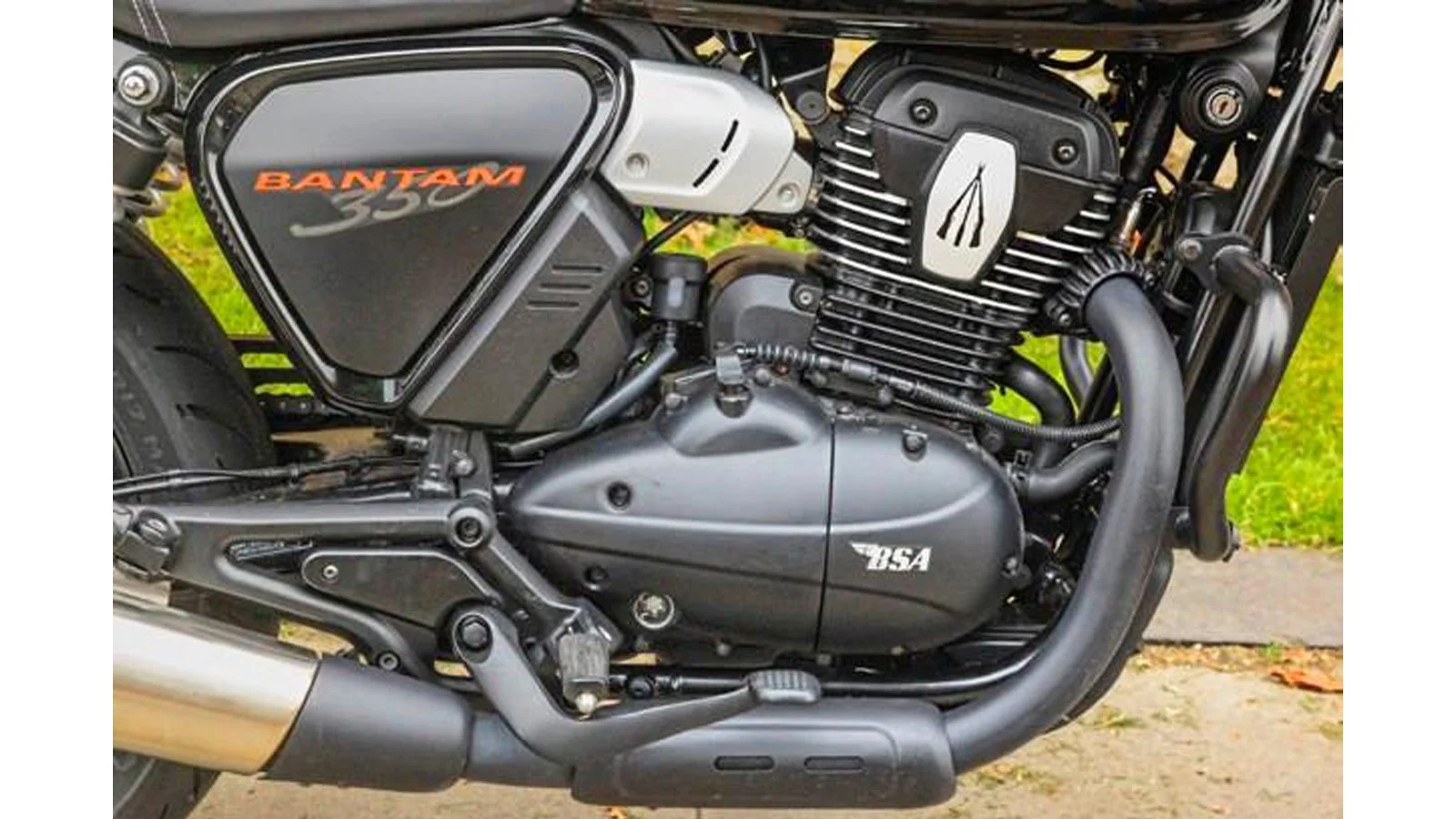
Inspired by the 1948 Bantam D1, nods to the past include BSA’s three-gun logo on the engine, a classic round headlight (all lights are LED), teardrop fuel tank and curved rear mudguard. The BSA logo is also etched on the exhaust end can and features on the tank and engine case.
ENGINE
The 334cc liquid-cooled single-cylinder engine features a four-valve head with double overhead cams and complies with Euro5+. Producing a claimed 29bhp with 22lb·ft of torque, it is built in India by BSA’s parent company, Mahindra. The Bantam comes with a three-year, unlimited-mileage warranty.
CHASSIS
The twin downtube spine frame is made from steel and the Bantam runs cast wheels with a 18in front (100/90) and 17in rear (150/70) shod in tubed MRF Zapper FX-3 tyres. Spoked wheels are not an option.
SUSPENSION AND BRAKES
Fairly basic in their design, the Bantam’s telescopic forks have gaiters but are non-adjustable while the twin shocks feature variable spring preload with five settings. The single front brake caliper is a floating two-piston unit built by ByBre; the rear a singlepiston caliper. Dual-channel ABS is standard.
Q: Is it too simple for having fun?
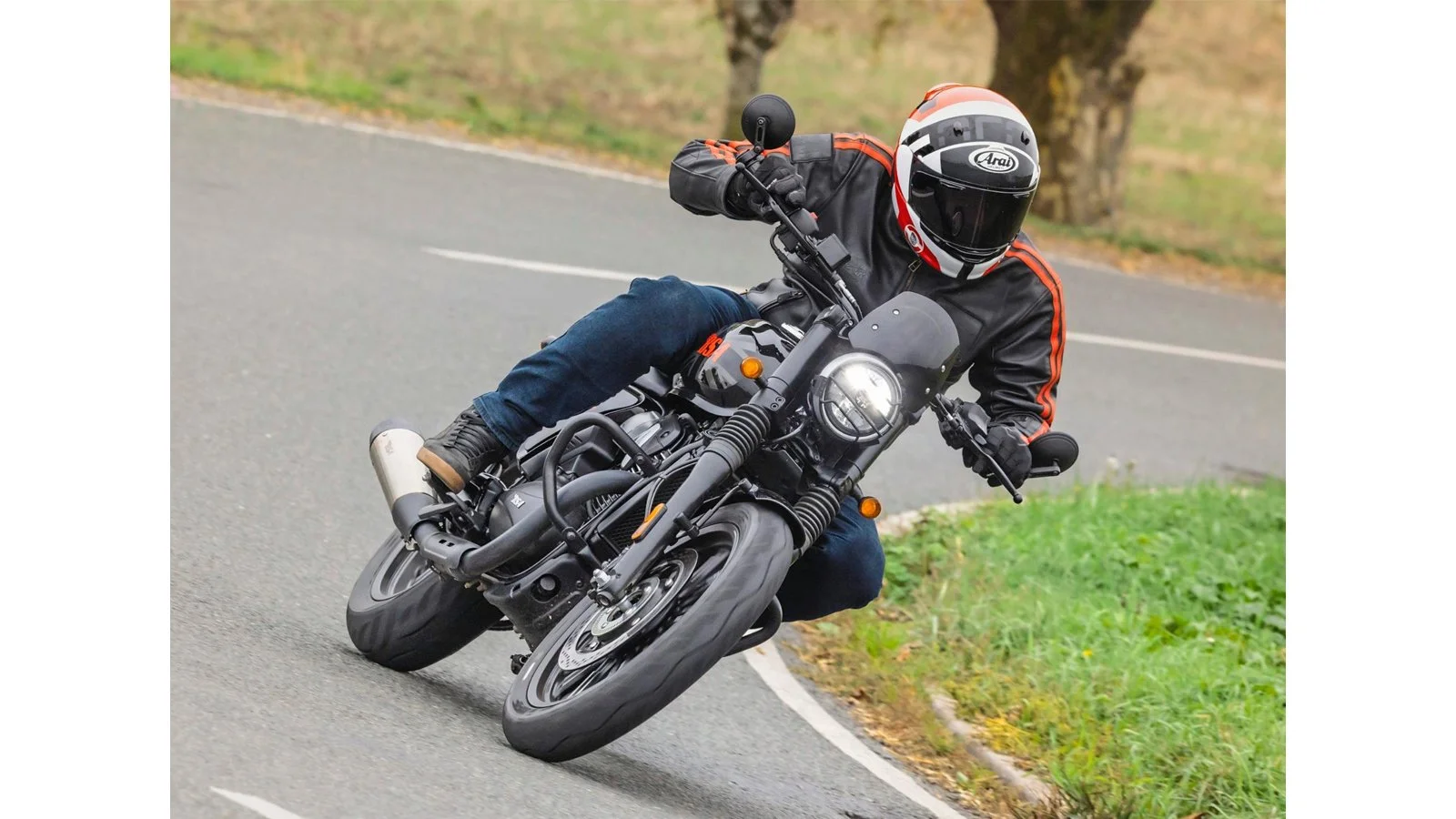
Definitely one to dodge potholes on
Given the right conditions, the BSA is undeniably fun to ride. On smooth roads the Bantam zips along merrily with a pleasingly gruff exhaust note that makes it sound like it has a larger capacity. On a ride like this the BSA is enjoyable and has a certain charm to it, which is enhanced by the name on the tank.
But should the road get uneven, the fact it’s built to a cost starts to hamper ride quality. Over smooth undulations the suspension damping is acceptable and allows the bike to track the road’s surface, but as soon as you hit a harsh bump the shocks throw in the towel and the kick is transferred through the bike. Harsh and unforgiving, your back takes the brunt of the impact. Unpleasant.
Front-end feel is an acquired taste, too. At slow speed the 18in front wheel is resistant to changes of direction. It’s not terrible, but there is definitely a reluctance to turn. There again, vintage bikes have similar quirks and limitations, so it could be chalked down as character.
Q: Does it have enough grunt?
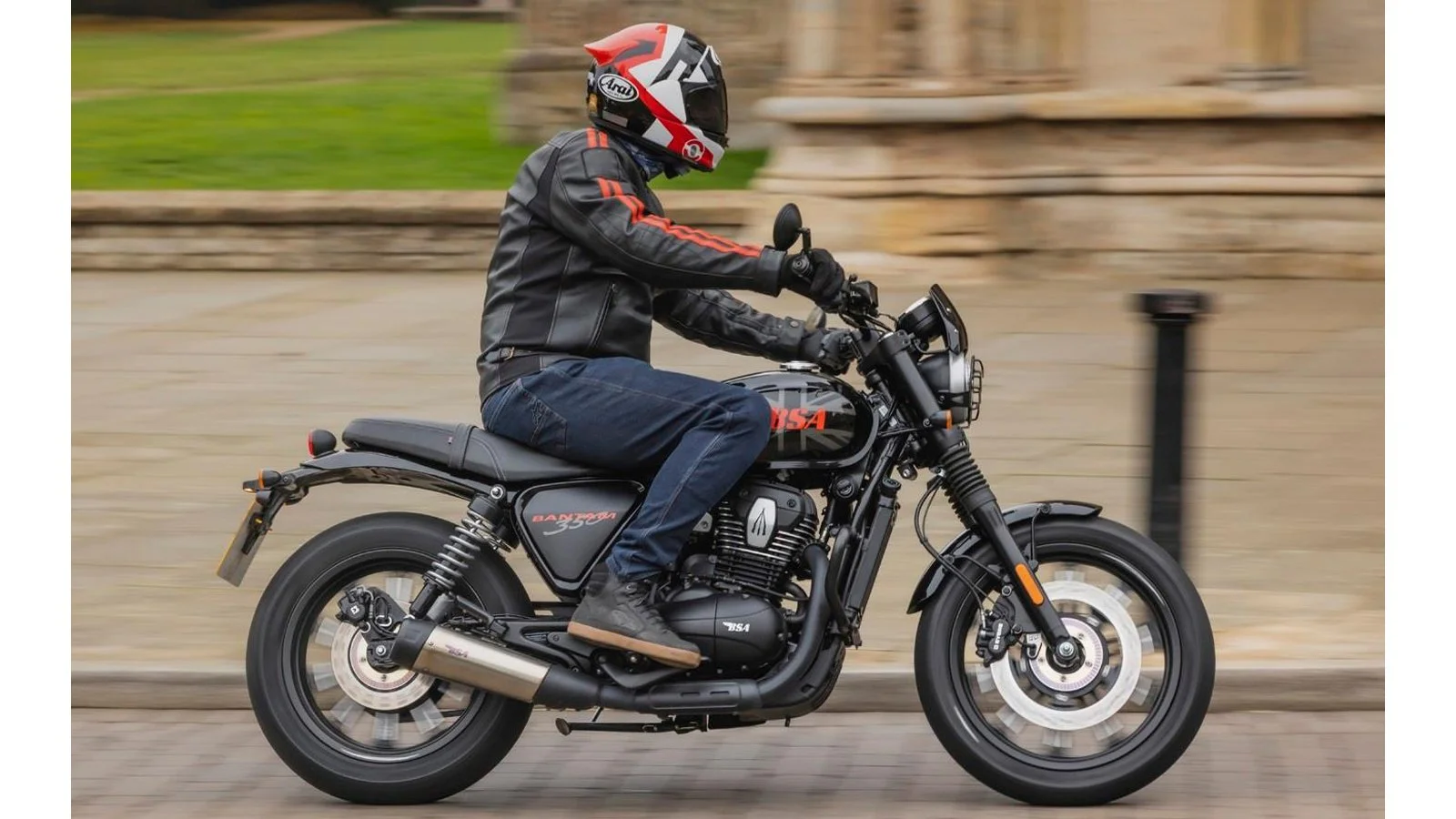
Six-speed gearbox helps make the most of the gentle power
Where rivals including the Honda GB350S and Royal Enfield’s 350cc models use a basic air-cooled 2v SOHC engine, BSA have chosen a more modern liquid-cooled 4v DOHC motor – much like Triumph’s 400 models.
It’s a smart move, because this gives the Bantam enough poke to feel like it can keep up with modern traffic, whereas both the Honda and the Royal Enfields run out of steam at 60mph.
On the road, this extra grunt – and a six-speed gearbox – means overtakes or accelerating into fastmoving traffic requires far less planning, and results in safer manoeuvres.
Sprightly to accelerate and easy-going in town, importantly the engine still looks retro enough to be visually appealing thanks to cooling fins, yet packs performance that ensures you aren’t continually tap-dancing on the gear lever – which is good, because the gearbox is notchy and not as refined in its action compared to the Honda.
The fuelling is acceptable, the clutch light, and while the mirrors blur quickly, the engine itself isn’t unpleasantly vibey.
Q: Does it deliver value for money?
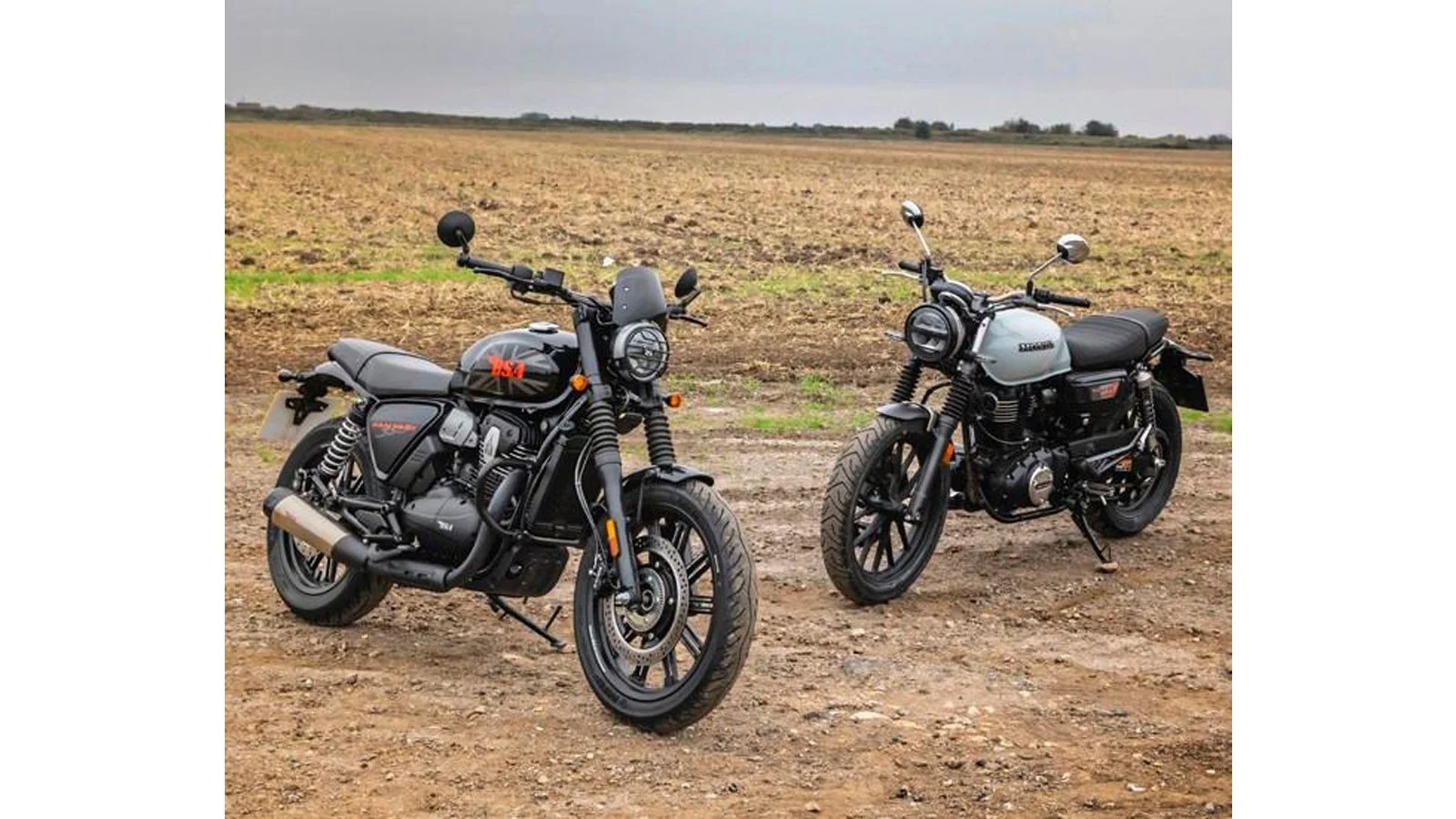
The BSA trumps even the top-selling GB350S’s bang for your buck
It’s undeniably remarkable value for money. After a deposit of less than £1000, you can have the £3499 BSA for £58.99 a month on a three-year PCP deal or £88.99 on HP over three years.
Its closest rival price-wise is Royal Enfield’s 350 range, but the Classic 350 is £4459, HNTR 350 £3899 and Bullet 350 £4629. Honda’s GB350S is £3999 and the Triumph Speed 400 is £5345. If you want a British-named retro, the BSA is the cheapest option.
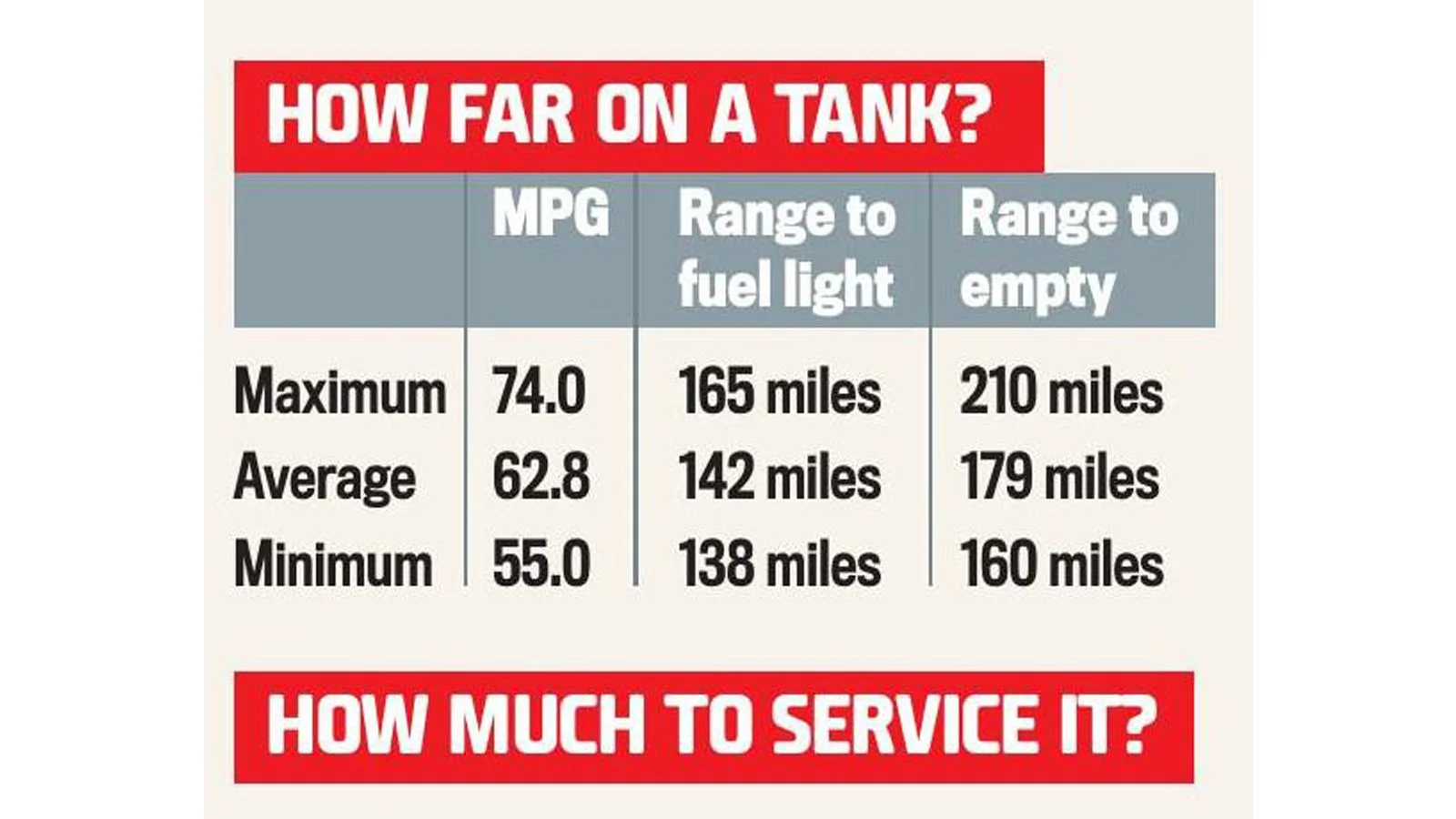
The BSA’s 3500-mile service intervals aren’t too bad and the valve clearance check is every 7500 miles. We recorded economy figures of around 60mpg, which is pleasingly frugal, and insurance should be low.
Q: Does it feel and look like a £3499 bike?
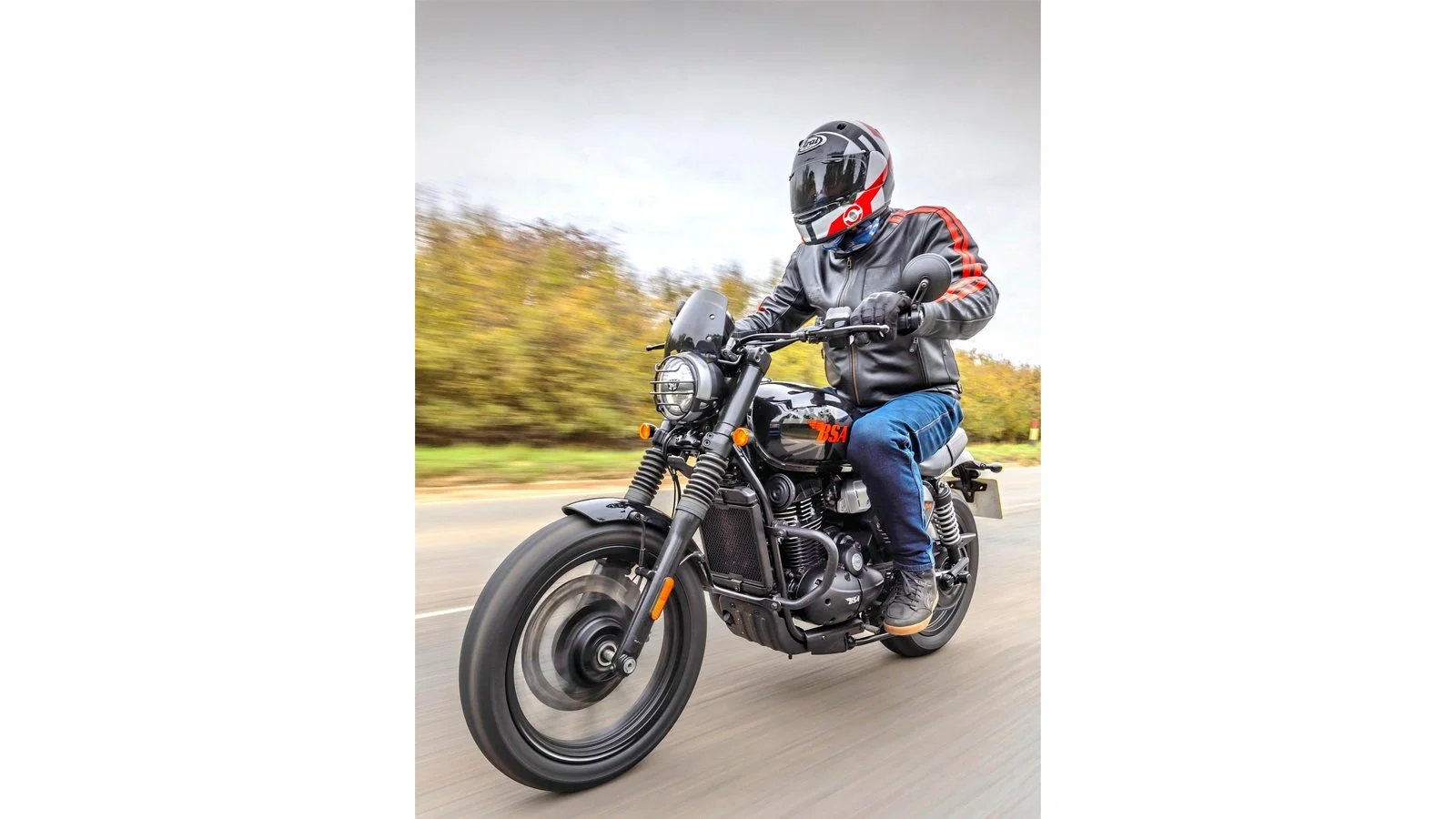
It’s not a premium offering, but neither does it feel low-rent
“‘Good-looking – and the badge draws attention’”
From a distance it’s a good-looking machine – and the badge on the tank draws attention while you’re parked up.
BSA is a brand that seems to still hold affection and has escaped the damaging effect of repeated rebirths under poor management, as other British names have suffered.
Nice details add to the ownership experience, but some areas convey its budget nature, too. It’s the small details that UK buyers may feel disappointed by – for example, the centimetre of thread that pokes out beyond the nut on the front wheel spindle, the separate ignition and steering lock, or the poor finish on some fasteners.
But there again, it costs just £3499 – which is a bargain.
Q: How well made is it?
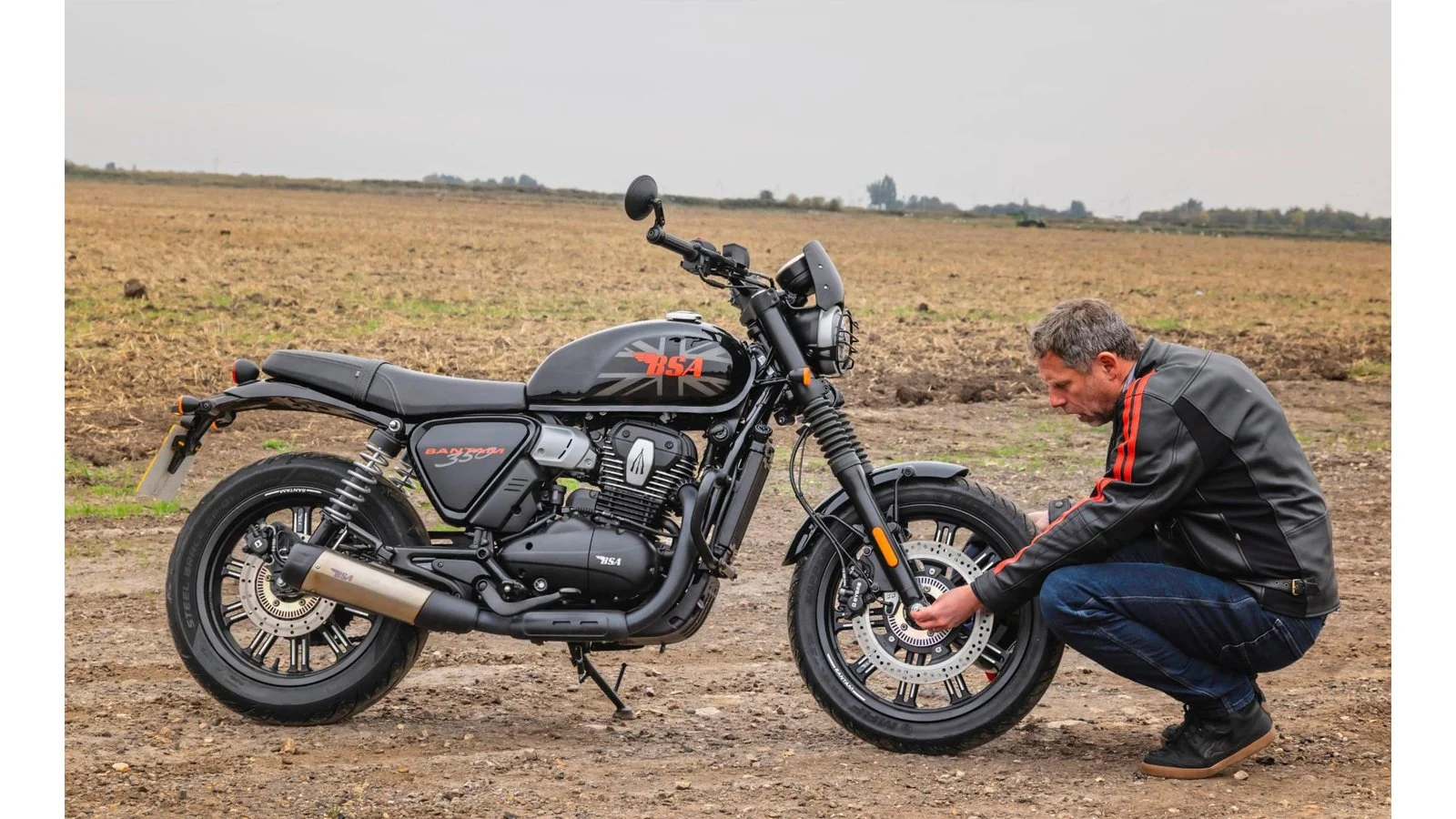
Jon, deeply offended by 10mm of protruding spindle thread
1 Engine
The 334cc single-cylinder engine is built for the Indian market (it is also used in a range of Jawa models) and, as such, is built to last. We wouldn’t expect any mechanical issues even living on its rev limiter, as Mahindra know their stuff, and it appears easy to work on. It has a three-year warranty.
2 Details
A few finer details let the side down. Examples include bolts that are a touch too long, areas where the paint doesn’t seem brilliant, and a slight flimsiness to a few of the plastics. There again, with a price tag so low – it’s £3499, remember – what do you expect?
3 Finish
We wouldn’t be surprised if corrosion starts to show in a few areas unless you regularly apply a protection treatment to the Bantam 350. Indianbuilt motorcycles are generally very sturdily built; however, the finish is never that great.
How much does it weigh?
Fully fuelled and ready to go, the Bantam weighs 192kg, which is 7kg more than the 185kg it is claimed to weigh when 90 per cent fuelled. Our bike had some extras fitted, too. It’s likely their claim is accurate.
Q: What are the best options and add-ons?
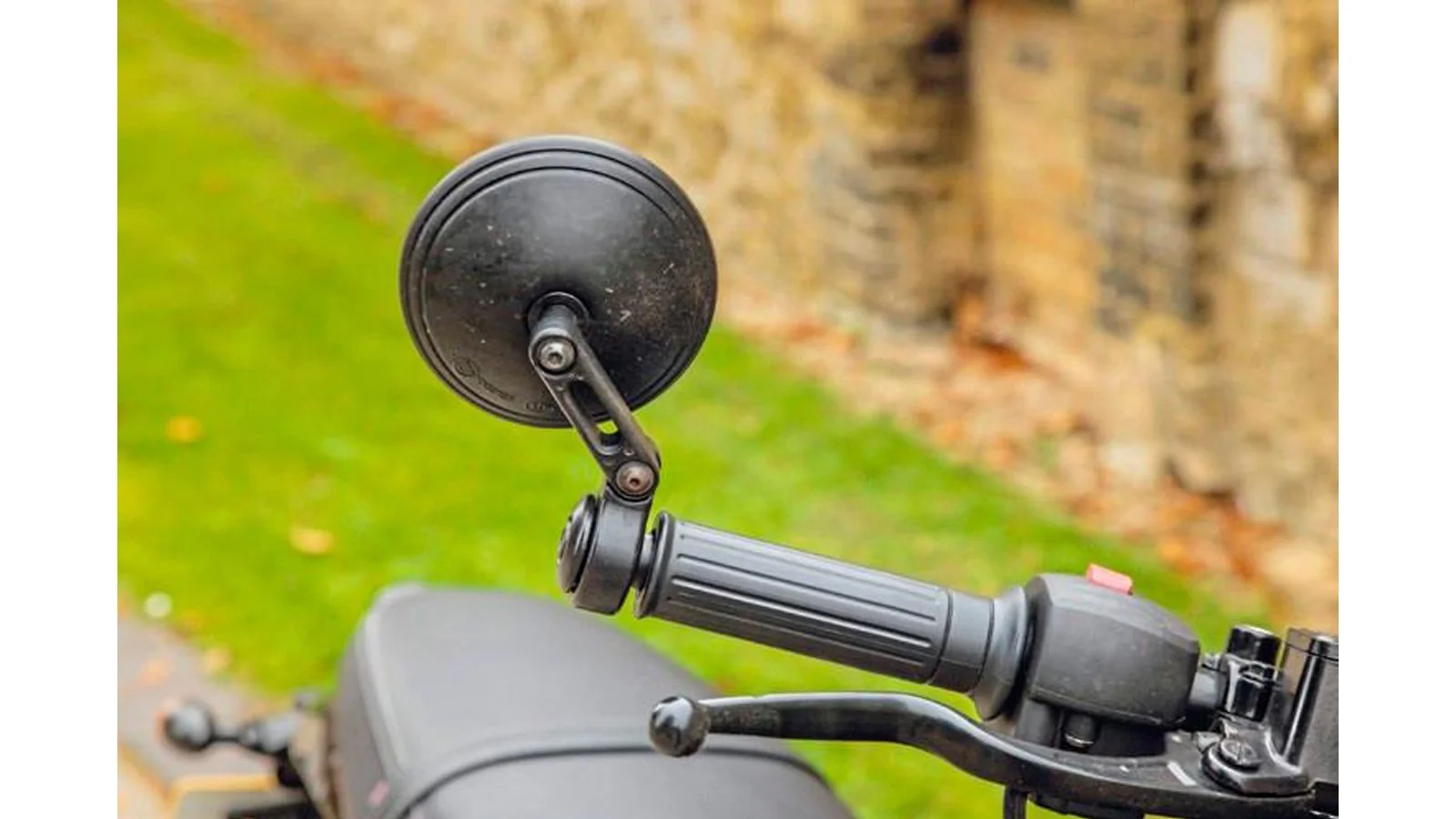
Bar-end mirrors £149
As standard the Bantam comes with ‘Mickey Mouse ear’ mirrors; the accessory bar-end mirrors add a degree of style – although they do catch annoyingly on your hands, which is worth bearing in mind…
Crash bars £159
While not particularly attractive, they are sturdy and may be a good addition if you’re returning to two wheels, or a newer rider. Quick to remove once you’ve gained confidence.
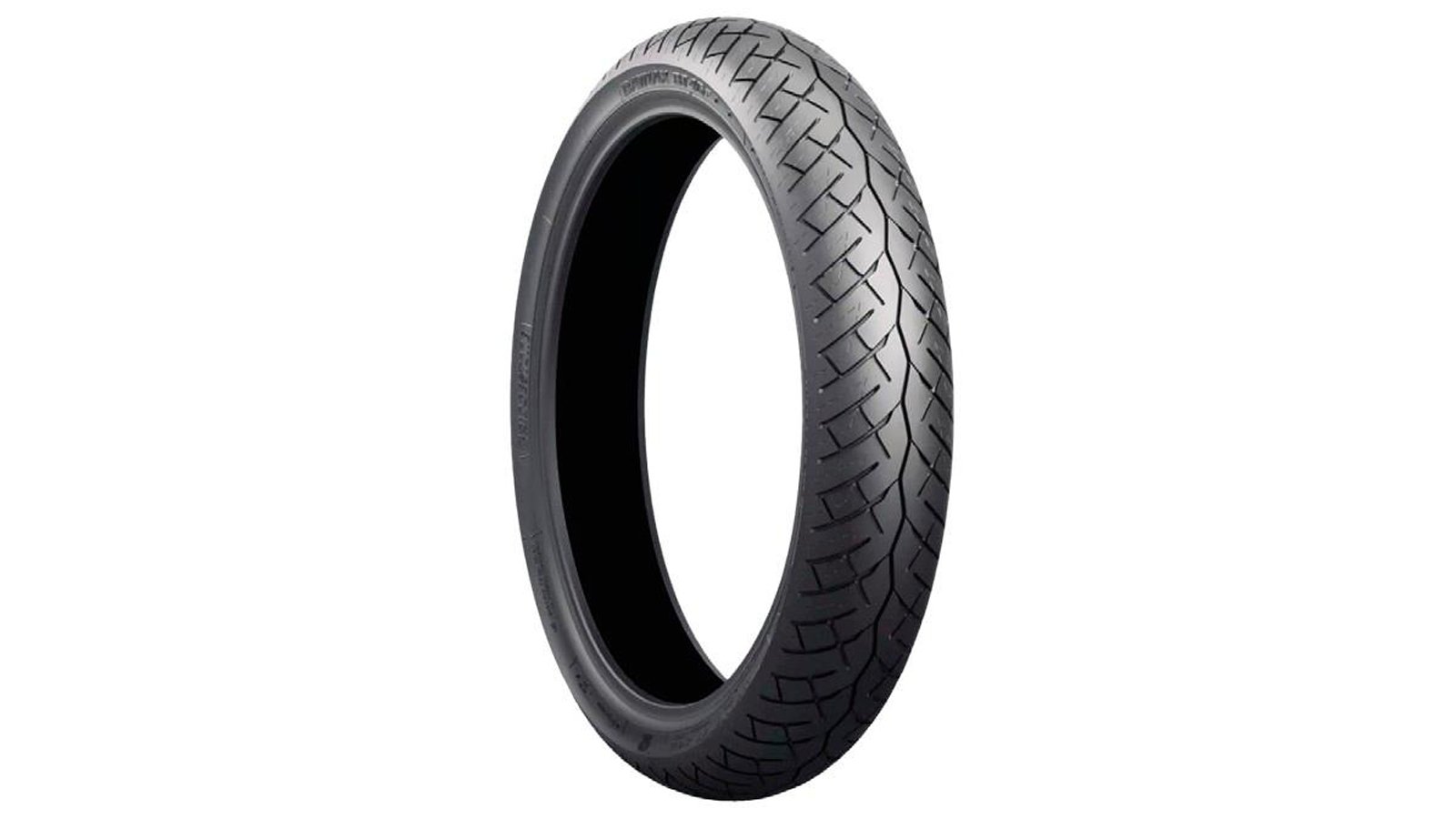
Bridgestone BT46 From £250
The MRF Zapper FX-3 tyres are hard-wearing but not particularly confidence-inspiring. Bridgestone’s BT46 will offer a more confident feel across the board, particularly in the wet.
Q: What will it cost to run?
WHAT ARE MY OPTIONS?
£3499 On-the-road cash price
£58.99 PCP x 36 £965 deposit, 4000 annual miles, £1243 final payment, 9.9% APR
£88.99 HP x 36 £920 deposit, 9.9% APR
HOW MUCH TO INSURE
£295.43 Fully comp, £350 excess
£240.36 TPF&T, £350 excess
2025 model, worth £3499. Based on a 52-year-old male engineer, married, licence held for nine years, eight years’ NCD, no claims or convictions, for social, domestic and pleasure use. Bike is garaged with postcode WA14 1NU and annual mileage 5000 miles. Quote supplied by www.MCNcompare.com in November 2025.
500 miles Replace oil and filter, basic check and lube. £100
3500 miles/annual Replace oil and filter, general inspection and lube. £130
7500 miles Replace oil and filter, change air and fuel filter, valve clearance inspection. £250
Additional Change brake fluid at 11,000 miles and coolant and fork oil at 22,500 miles.
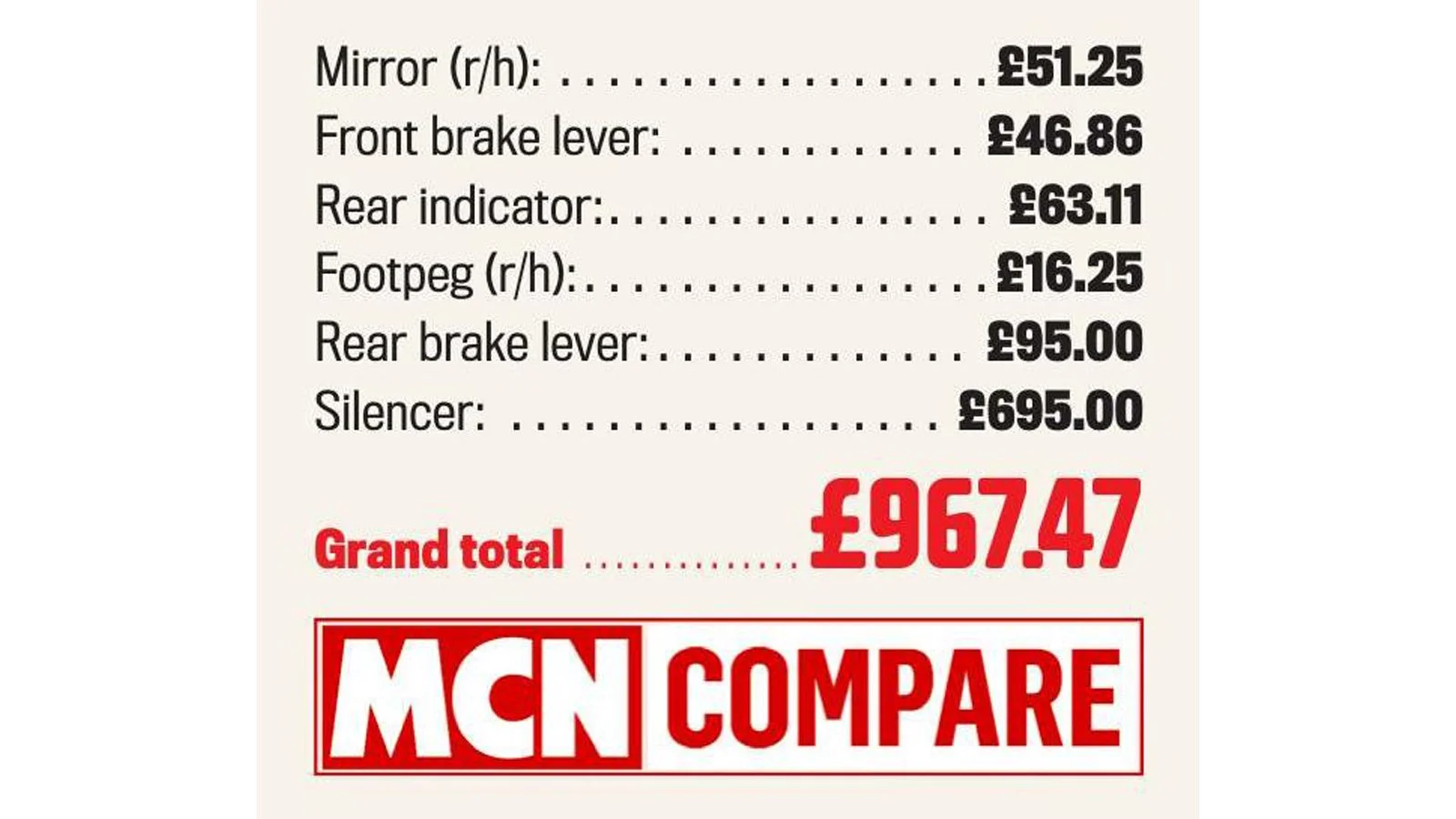
WHAT IF I DROP IT?
Q: How easy is it to work on?
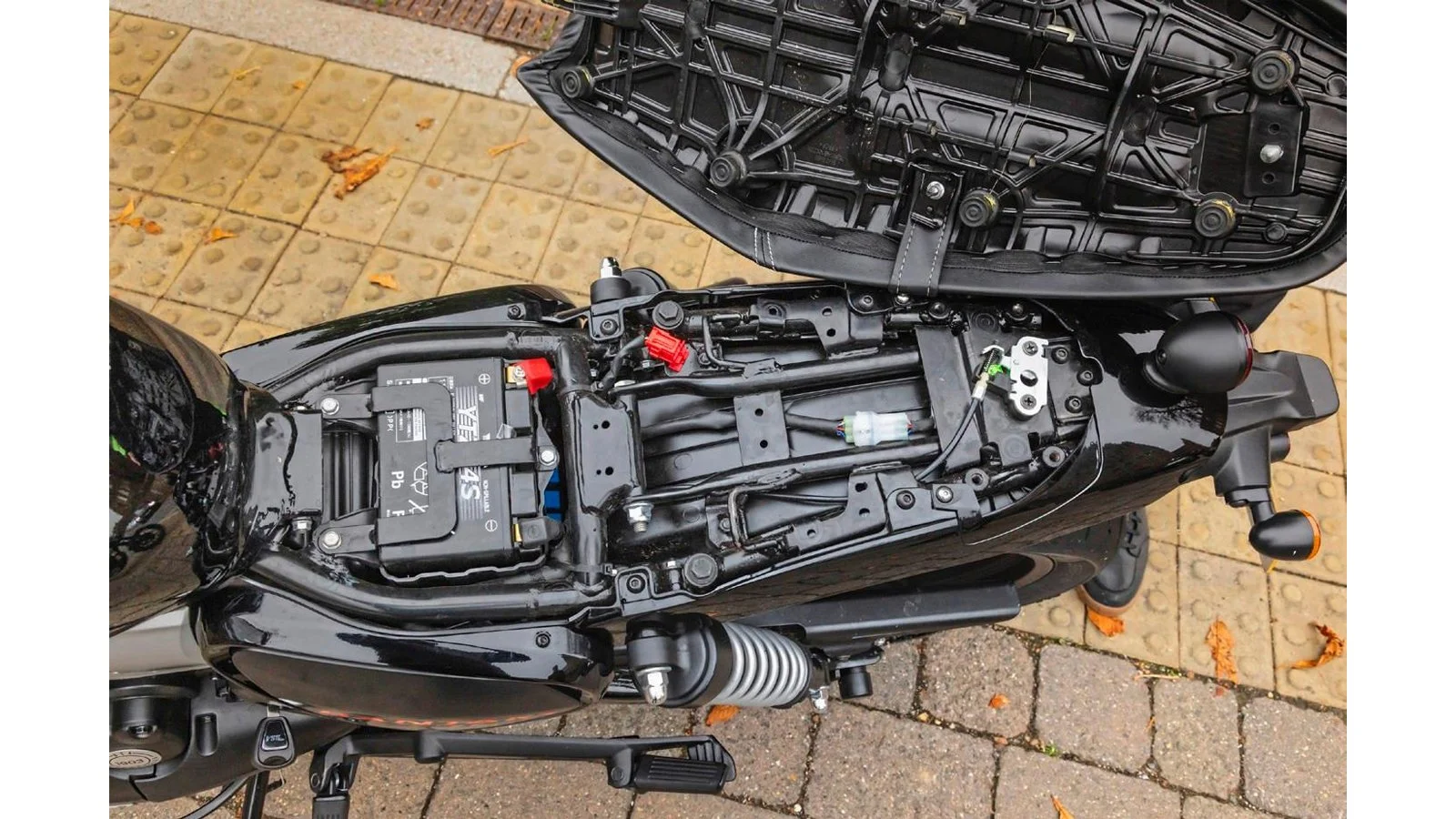
The BSA is pleasingly simple and feels the kind of bike that, valve clearances aside, you may be tempted to work on as everything is very accessible.
A lock on the side pops the saddle off using the ignition key, and beneath is the battery and fuse box, meaning it takes seconds to wire in a 12V socket for heated clothing or a USB charger. That said, there is no underseat storage, which is a shame.
A limited toolkit comes included. Should you wish to adjust the chain you may feel the need to buy a paddock stand as there is no centrestand – either as standard or an optional extra.

Very little bodywork, and relatively simple construction overall
Q: What power does it make?
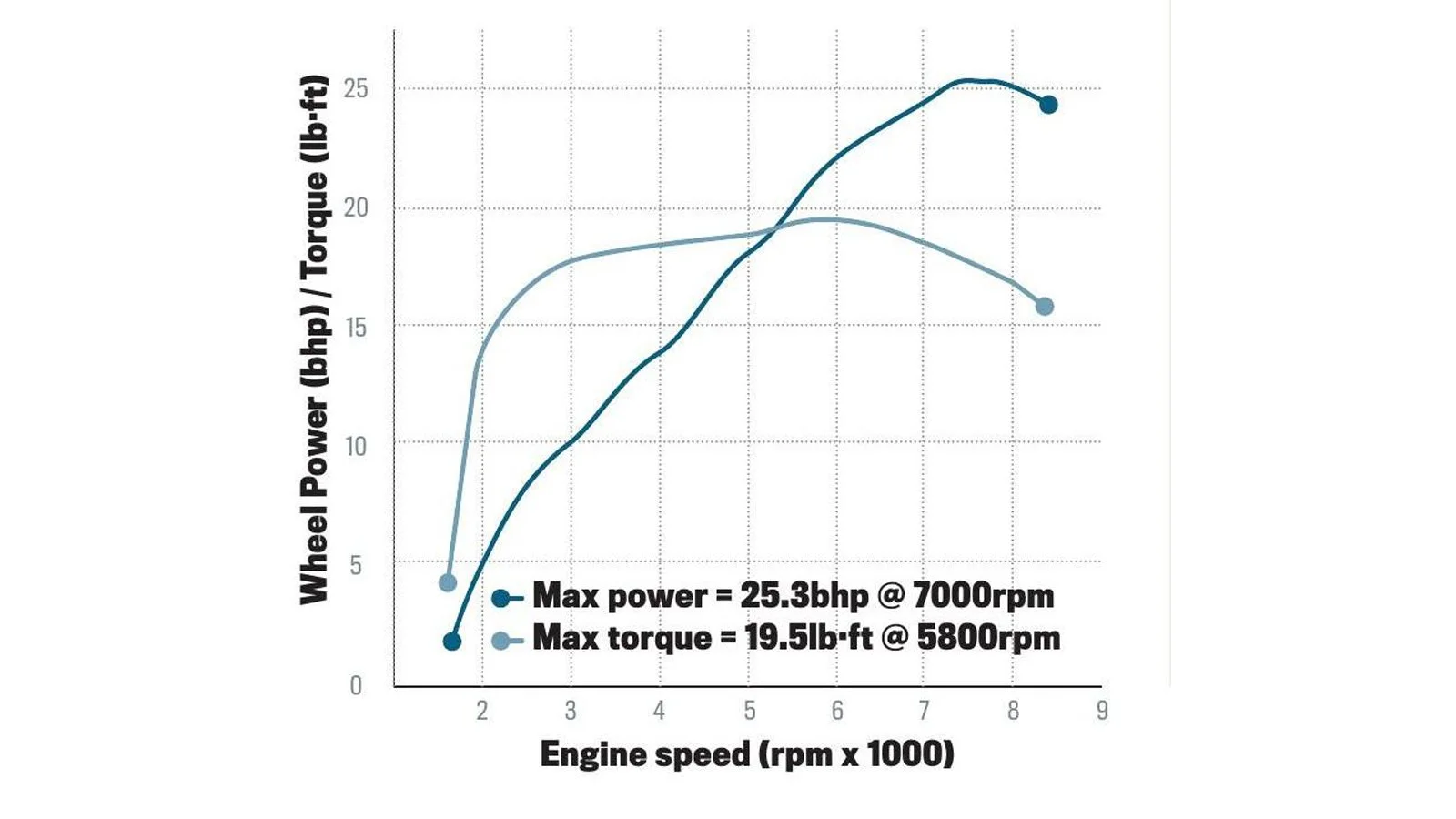
The BSA was never going to cause much of a sensation on the dyno and its genuine power figures of 25bhp with 20lb·ft of torque are roughly what you would expect, considering the claimed values are 29bhp and 22lb·ft.
Usable torque is from 3000-6000rpm and the drop from this point onwards shows little point exists in revving the engine. This motor is designed to live in its midrange and plod along merrily, which suits the Bantam’s character and expected audience perfectly, and explains why the gearing is quite short to help it stay in this range.
Q: Is it a good bike for riding as a pillion?
‘Keep the speed down and it’s enjoyable’, says RiDE’s Caroline
“From a pillion’s perspective, the BSA works well – as long as you stay within a certain window. Stray outside of this area and it quickly becomes tiresome, but that’s to be expected when you consider its engine size and performance.
“On a sunny day and with a rider who is looking to potter about between 50mph and 60mph, the Bantam is a real delight to be on the back of. The seat is well padded and I like the fact the pillion pegs have small heel rests, which is a nice touch. It is a bit of a shame that there is nothing for the pillion to hold onto aside from the rider; however,
I suspect it won’t be long until an aftermarket company makes a pillion grab rail to fit - if there isn’t one out there already. That said, the BSA doesn’t threaten to throw you off the back with its acceleration!
“As the Bantam is very low, it is easy to get on and off (even if you are short in the leg) and the rider reported that the bike’s light weight and low seat height made it easy to support the extra weight of a passenger when stationary. On a bike aimed at older riders, this is important.
“Once moving, the gentle acceleration was reassuring and the suspension seemed quite good, although there is a permanent vibration from the engine or tyres that was mildly annoying at low speed and horrible at motorway speeds. And I was subjected to quite a lot of buffeting at high speed, which was strange. You really don’t want to be on the back of the BSA at 70mph – it’s very unpleasant.
“For me, the BSA is one of those bikes that you throw on a pair of riding jeans and leather jacket and hop on the back to pop to a local pub or the seaside. Its gentle speed means you are never intimidated or worried by its acceleration, and that makes the ride more enjoyable as you can relax and watch the world go by.”
CAROLINE BARRETT
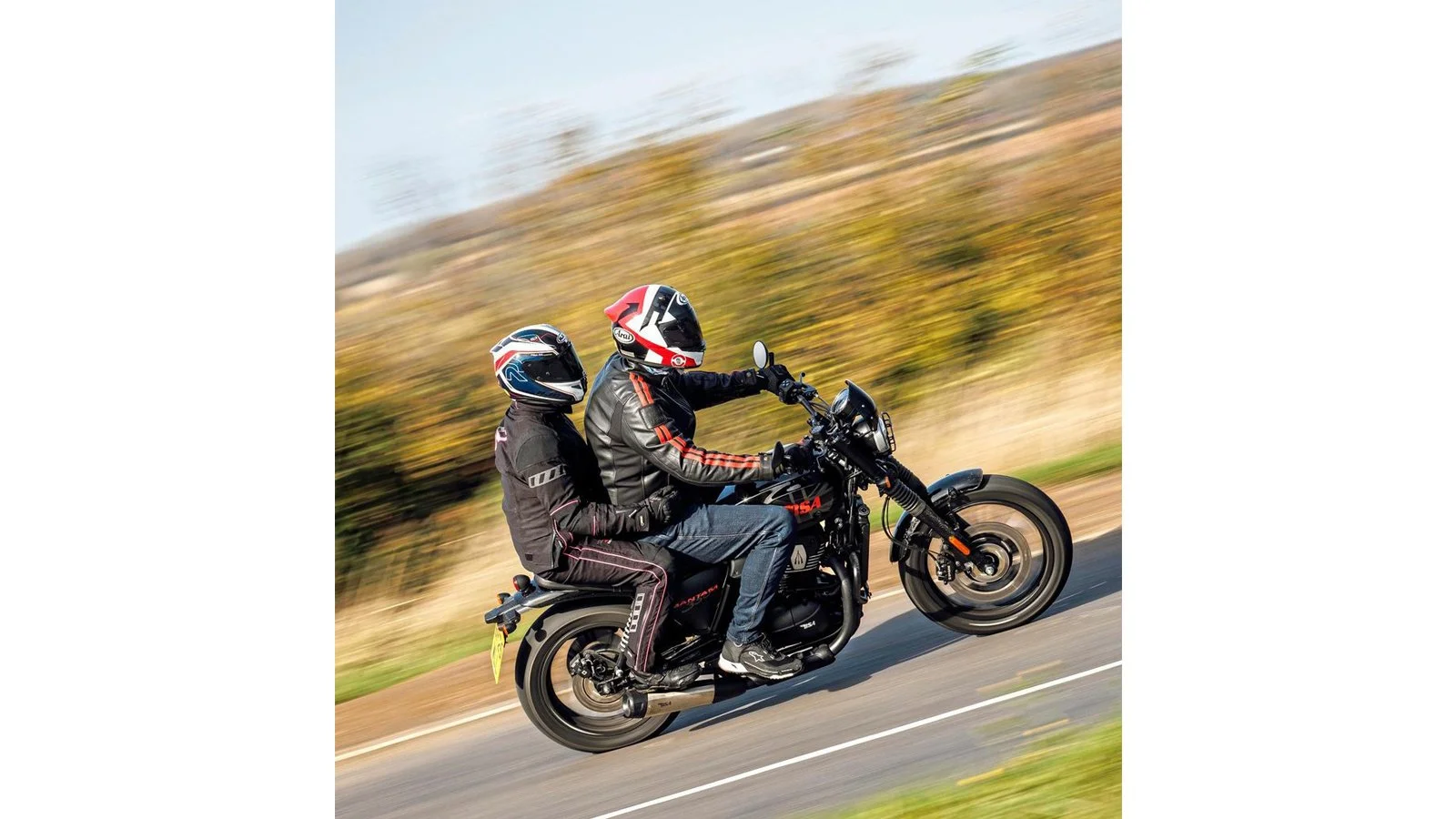
It’s no his ’n’ hers grand tourer, but acceptable for gentle two-person jaunts
THE FACTS
BSA Bantam 350
Engine 334cc DOHC 4v single, l/c
Power 29bhp @ 7700rpm (claimed) 25bhp @ 7600rpm (tested)
Torque 22lb.ft @ 6000rpm (claimed) 20lb·ft @ 5800rpm (tested)
Transmission Six-speed chain
Frame Twin downtube steel spine
Front suspension Telescopic forks, non-adjustable
Rear suspension Twin shocks, adjustable preload
Front brakes 320mm disc, two-piston caliper. ABS
Rear brakes 240mm disc, single-piston caliper. ABS
Front tyre 100/90 – 18
Rear tyre 150/70 ZR17
Wheelbase 1440mm
Rake/trail 29°/NA
Fuel capacity 13 litres
Seat height 800mm
Weight 185kg (claimed, 90 per cent fuelled) 192kg (tested, fully fuelled with extras).
Rider aids ABS
Q: What are its rivals?
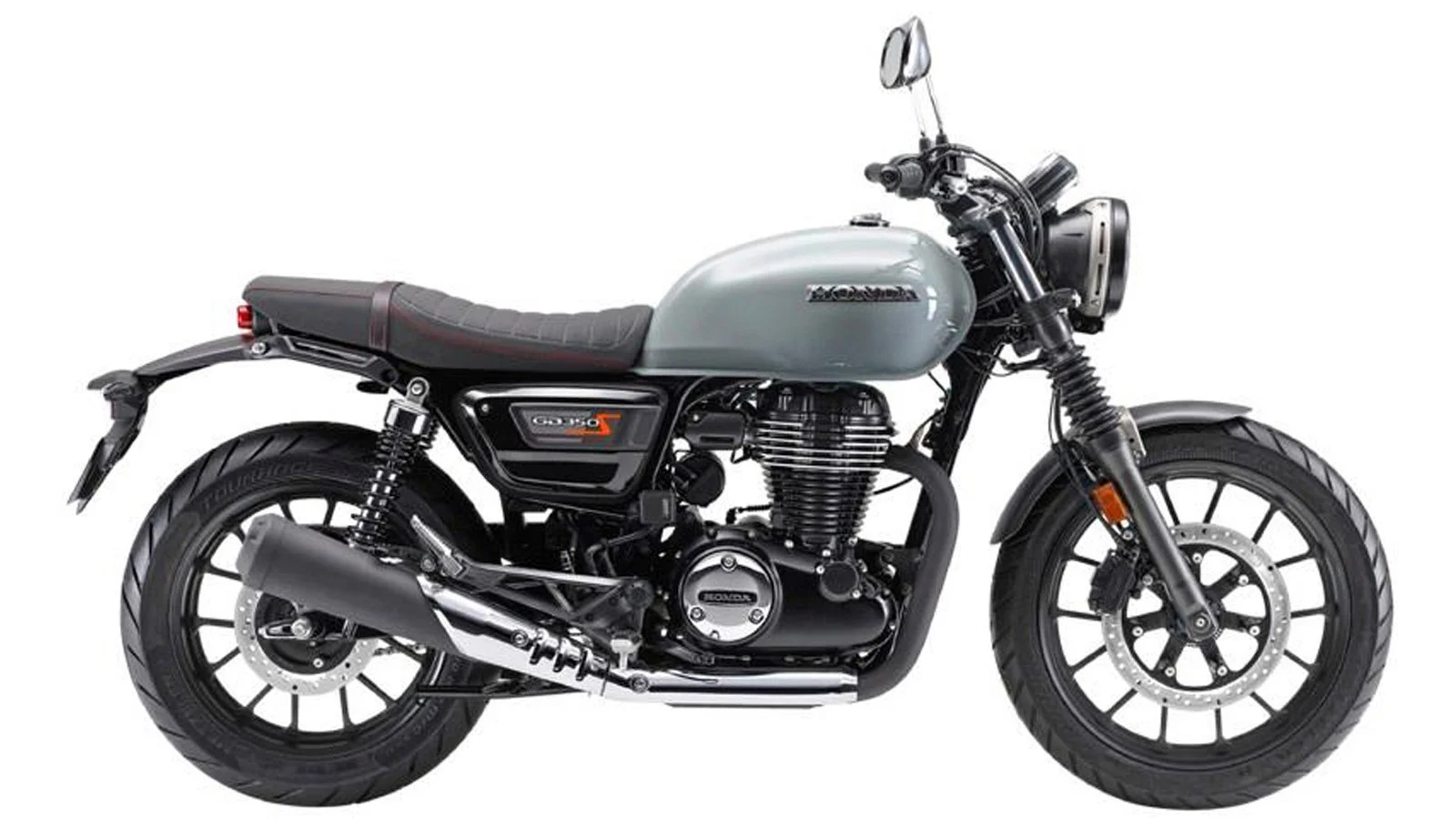
Honda GB350S - £3999
> 21bhp > 21lb·ft > 178kg (claimed)
A huge sales success in the UK during 2025, the GB350S is powered by a 348cc SOHC 2v air-cooled single-cylinder engine that features traction control as standard as well as an assist and slipper clutch. Easy-going and fun to ride, the GB’s retro styling gives it subtle appeal.
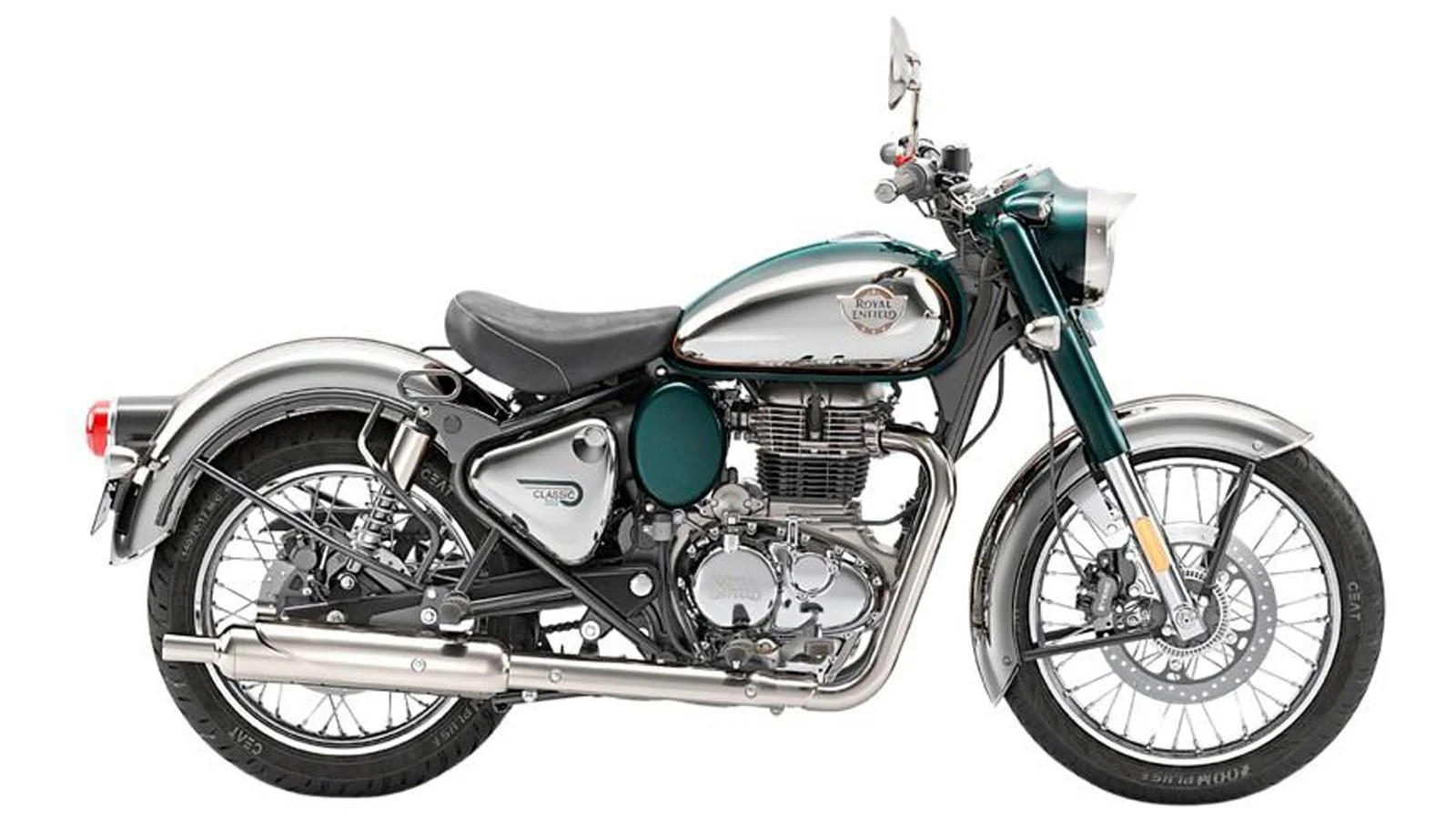
Royal Enfield Classic 350 - From £4459
> 20bhp > 20lb·ft > 195kg (claimed) Royal Enfield’s 349cc SOHC 2v air-cooled single retro harks back to the firm’s rich heritage – and this small-capacity motor is powering their revival. As well as the Classic, there is a Bullet 350, modern-looking HNTR 350 and Meteor 350 cruiser, all based around the same engine platform.
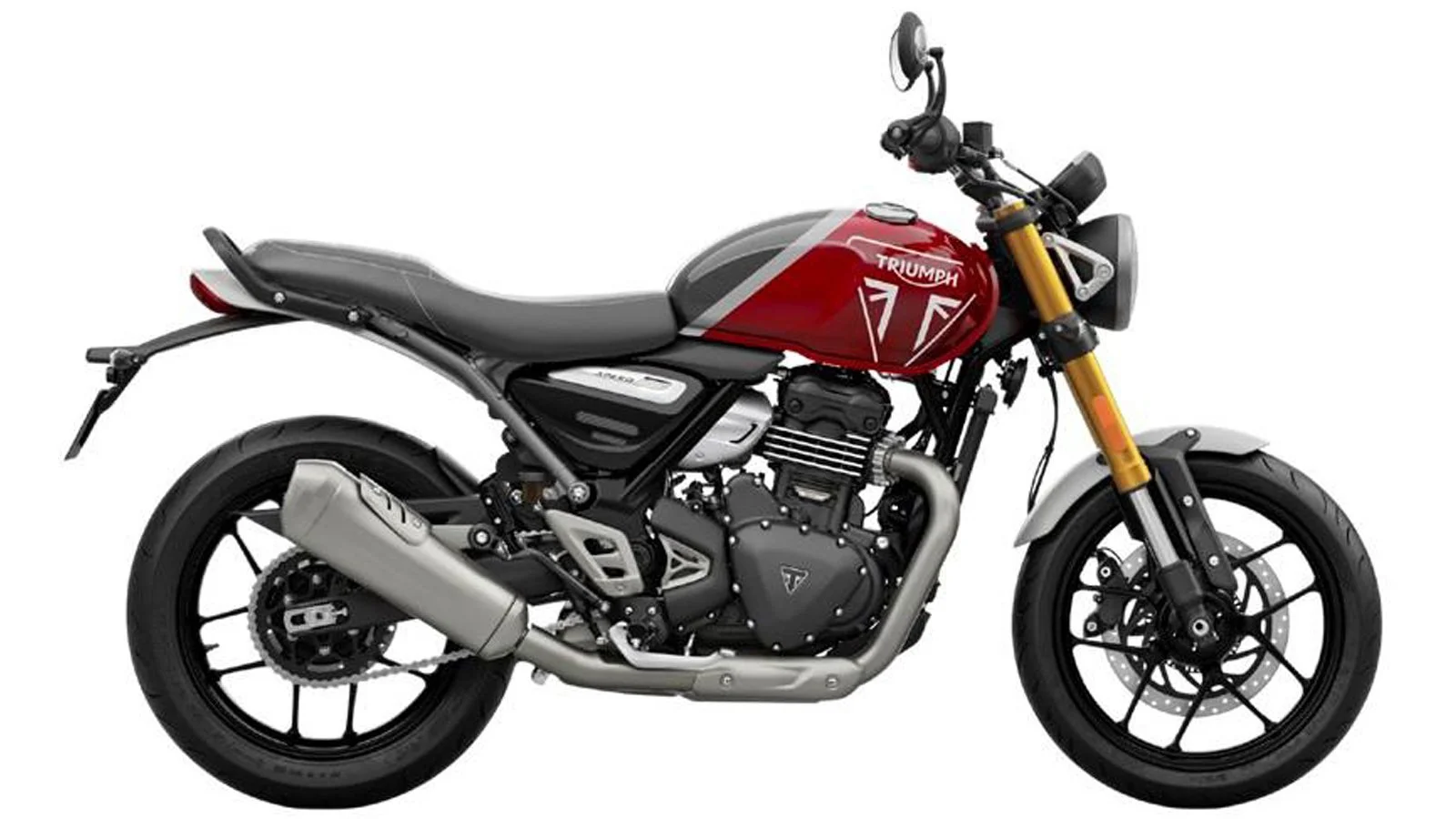
Triumph Speed 400 - £5345
> 40bhp > 28lb·ft > 170kg (claimed)
More a modern naked in its styling and attitude, the Speed 400 was the UK’s bestselling bike in 2024. Powered by a liquid-cooled singlecylinder motor, the Speed 400 features traction control and is a more grown-up machine. Like the Bantam it’s built in India, in a collaboration between Triumph and Bajaj.
A: ‘It’s cheap and fun – and it has the right name on the tank’
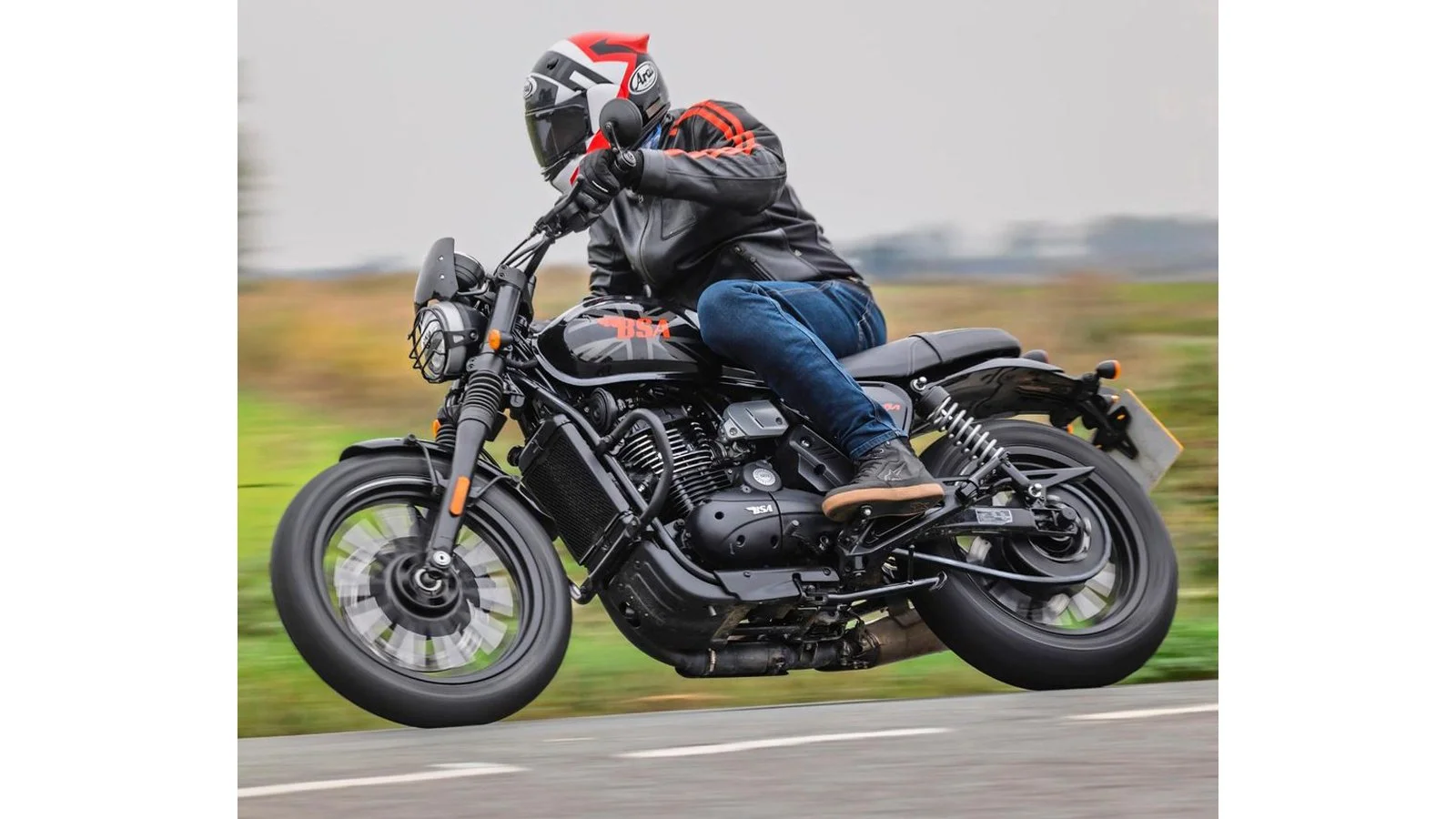
Its link to the past is tenuous, but it’s a great bike in its own right
There is a lot to really like about the BSA Bantam 350, and if you are after a relaxed machine for pottering about on, it delivers in terms of value for money and performance.
It’s the kind of bike that riders can stick in their garage and know that it will start on the button when the sun is out and the mood takes them to go for a ride. And at £3499, you don’t feel like you’re wasting money if you don’t use it as your daily runaround.
But is it true to BSA’s heritage? The Bantam was always a cheap and cheerful form of transport, and on that front this reimagined machine is true to its forefathers. But there is no getting away from the fact it is an Indian-built bike that has basically had a few BSA logos stuck on it, and a rear mudguard and exhaust added, to make a ‘British classic’. When you look at the Jawa 42 FJ and the BSA next to one another, this fact is very apparent and does take the shine off it slightly.
Yes, Triumph’s Speed 400 models are built by Bajaj in India and Royal Enfield’s models are built in India, but they aren’t repurposed models – they are a Triumph and a Royal Enfield only.
Will this bother potential BSA owners? I suspect not, because the fact BSA is on the tank, you get a three-year warranty and the bike costs just £3499 is incredibly hard to ignore.
NEXT MONTH... KTM 390 Adventure R: is it the machine to bring KTM back from the brink?