
Master your suspension adjusters
THE SMALL STUFF
Don’t let rebound and compression adjusters get the better of you
Understanding damping isn’t essential and adjustment is really about preferred personal set-up. Broadly, damping sets the compromise between soft-to-wallowy (less damping, more suspension movement) versus firm-to-harsh for tighter handling control (more damping, less suspension movement). Full in (clockwise) is max damping, full out is min. You may count soft ‘clicks’ as you turn; some adjusters are stepless, so count the turns. Always start from owner’s manual settings – find out what adjustment you have, and note your start point so you can return to it.
YOUR EXPERT
Simon Hargreaves bounces like an undamped spring, so he knows what damping is and why it matters
TOOLS NEEDED Long-reach flathead screwdriver
TIME TAKEN 5 minutes
DIFFICULTY ●●●●●
Fork rebound damping
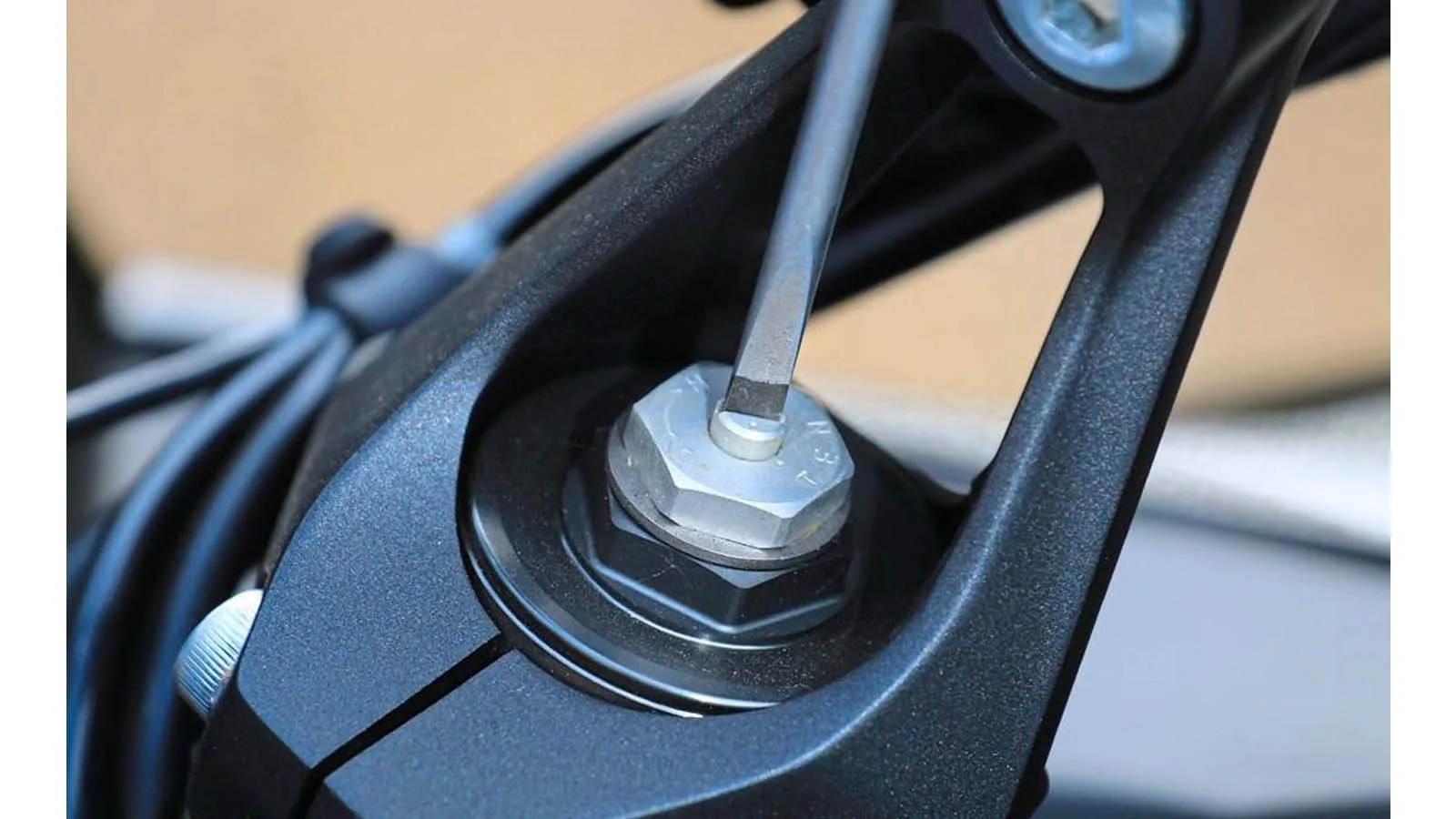
Adjusters are soft metal; use a screwdriver that fits to avoid peeling the slot open
Normally a slotted adjuster labelled REBOUND, REB, TENSION or TEN on both fork tops (if the compression screws are on the fork bottoms) or on the opposite fork top to the compression adjuster. More rebound (clockwise) adds braking and steering stability, but too much may pack the springs down and feel harsh. Less rebound adds plushness, but could feel springy and vague at sporty speeds.
2. Fork compression damping
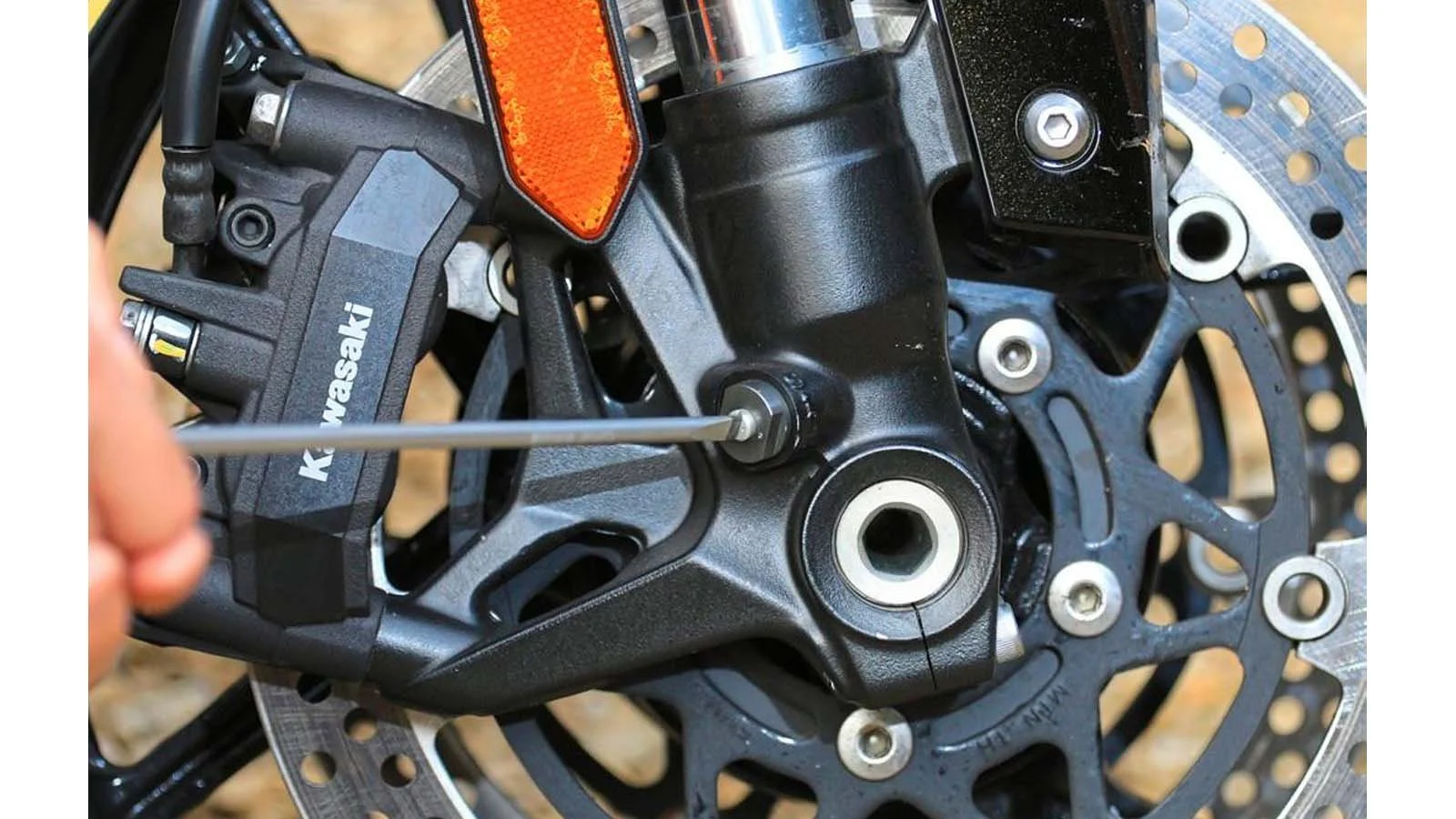
Compression adjusters cop a lot of road filth and can seize over time
Normally a slotted adjuster on one fork top labelled COMP, or sometimes a slotted adjuster at the fork bottom either on one leg, or both. More compression (clockwise) means less fork dive and stiffer resistance to braking, which you may want for sporty riding on smooth roads. But it feels less supple over bumps when cruising – so you might want less damping (anti-clockwise).
3. Shock rebound damping
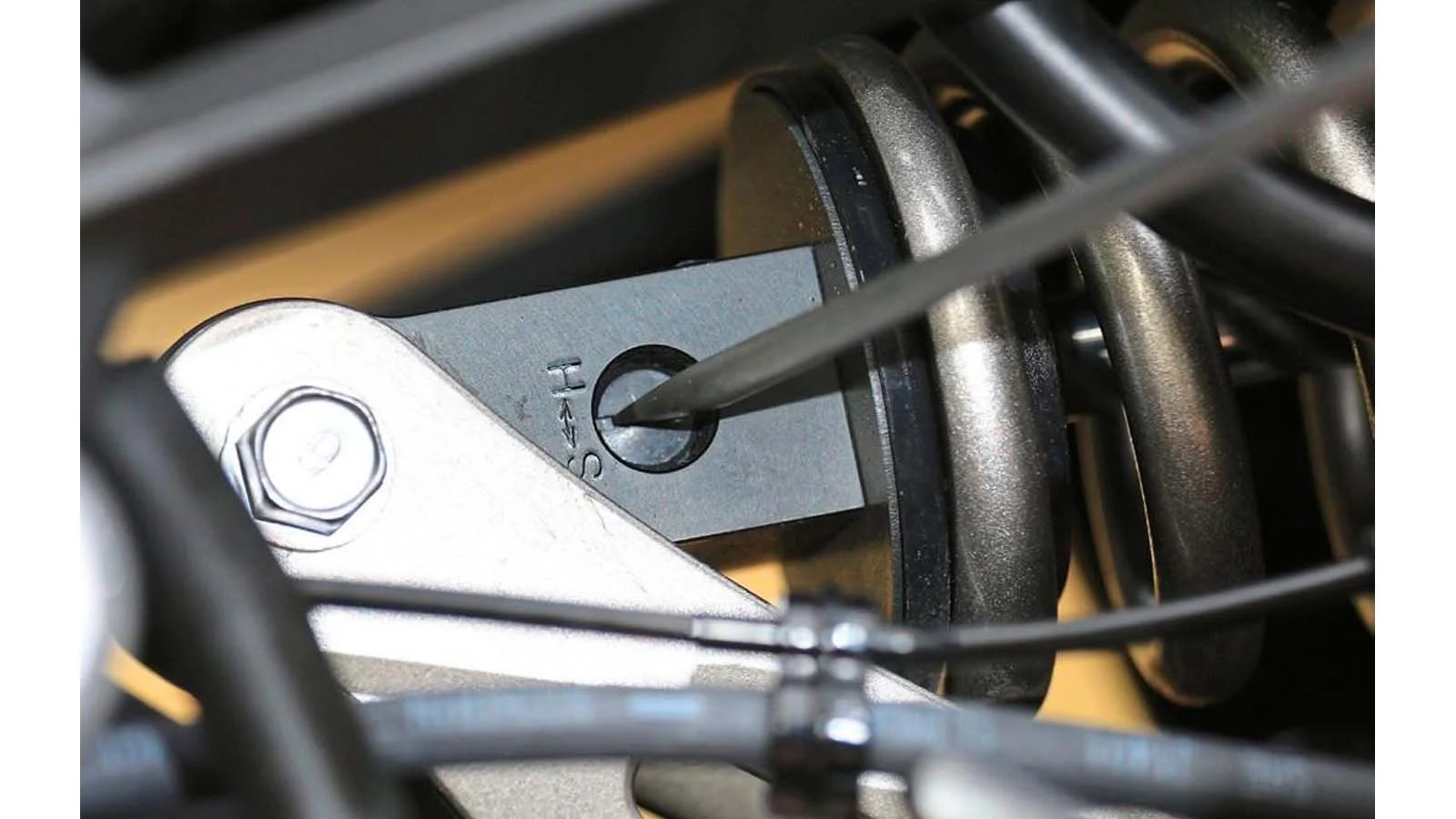
Most adjusters are labelled S to H, in case you forget
Used to be a thumb wheel under the shock, now usually a slotted adjuster at the shock base. Can be awkward (obscured by tie bars), but a long flathead screwdriver should reach. Less rebound (anti-clockwise) can feel plush but bouncy; more tightens up for cornering confidence. But balance is important: too much rebound may pack down and lose grip; too little may spring back off bumps.
4. Shock compression damping
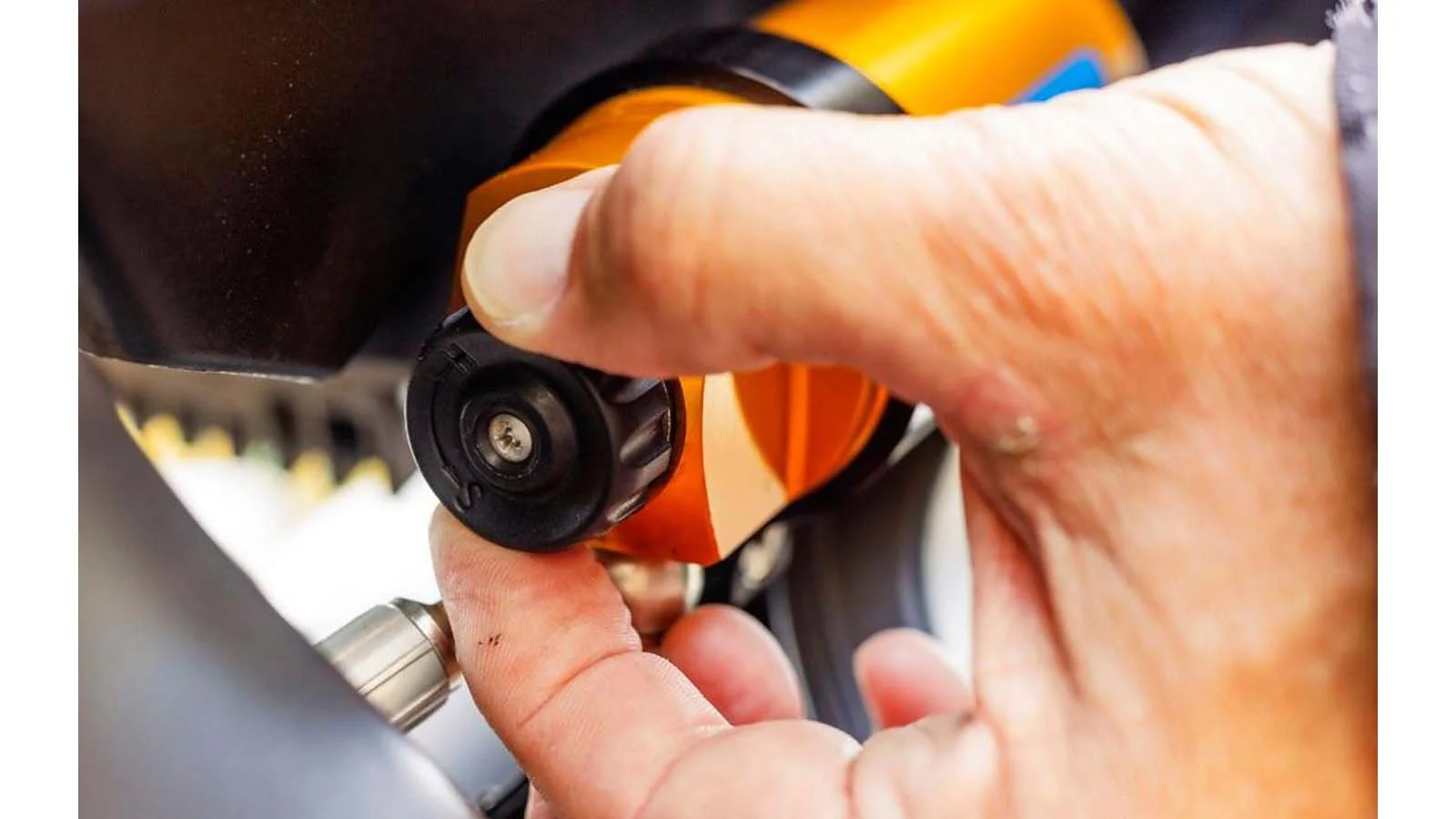
More compression adds stability and feel at the expense of plushness
Slotted adjuster or thumb wheel at the compression bottle base, or top of the shock. More (clockwise) increases stability, feel and grip on smooth roads. Less adds plushness and bump grip. Sometimes split into nested low and high-speed damper adjusters. Highspeed balances bump control (less) with chassis control (more); low-speed balances plushness (less) with chassis control (more).