
Perfect your preload to nail your sag
THE SMALL STUFF
The practical guide to twiddling preload for comfort and handling
Sag is not the amount the fleshier parts of our physiognomy descend as we age – in this context it’s how much a bike’s suspension compresses from fully extended.
Static sag is suspension compression under the bike’s own weight, while rider sag adds the weight of the fully kitted rider. If you’re carrying luggage and/or a passenger, these must be factored in, too.
The amount of sag dictates the moment the shock and fork springs start to move, and affects chassis geometry. It is changed by increasing or decreasing preload; spring rates also have an effect. And you can do it at home.
YOUR EXPERT
Alan Seeley is a bike mechanic and tech writer, so knows a thing or two about improving your bike’s sag
TOOLS NEEDED Tools for adjusters, measuring tape or rule
TIME TAKEN 20 minutes
DIFFICULTY ●●●●●
1 SORT THE FRONT PRELOAD
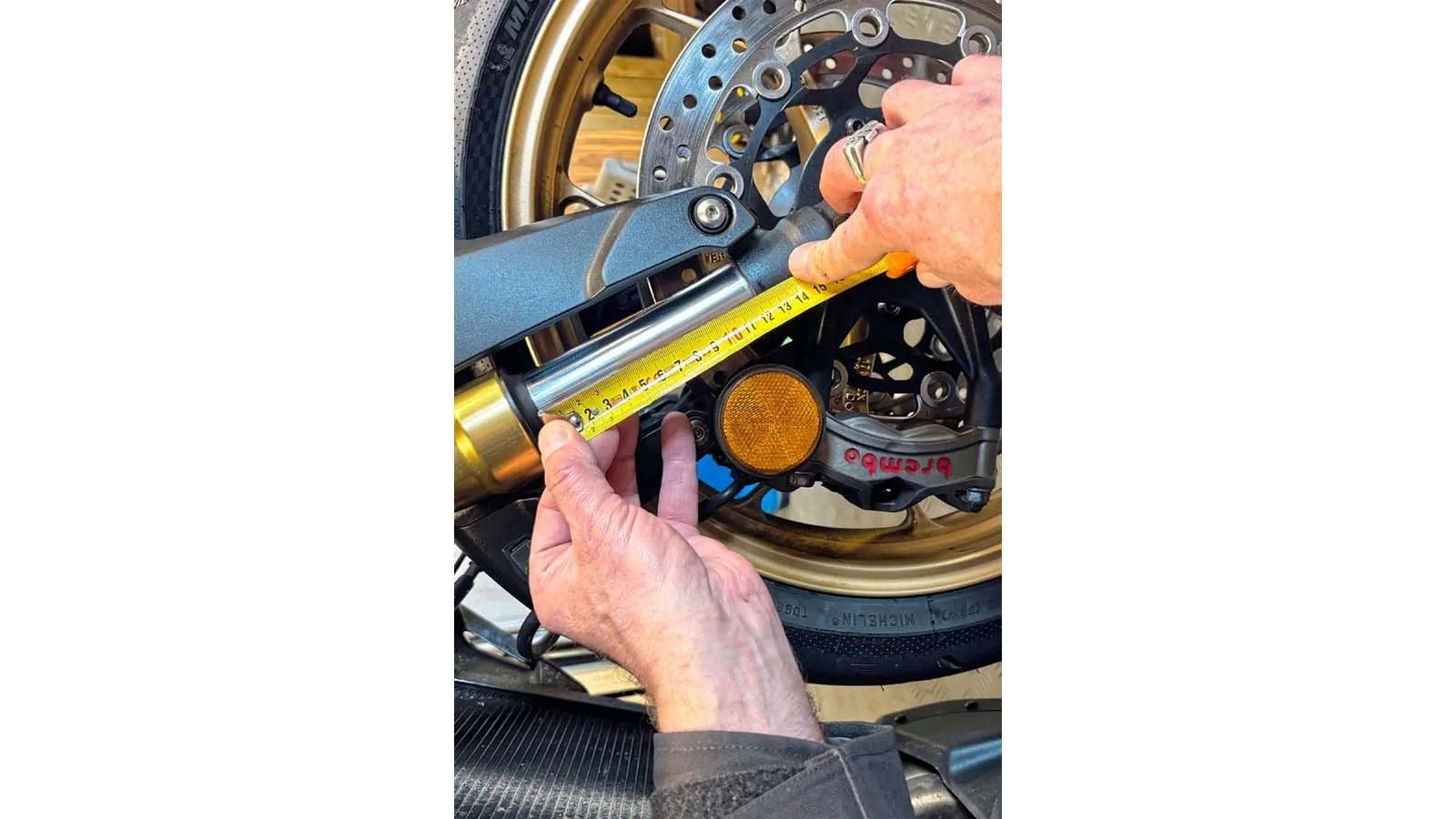
You’ll need a helper to measure while you sit on the bike
Get the weight off the front so the forks are fully extended, and measure how much stanchion is showing. Sit on the bike and bounce the suspension to settle it. Measure the stanchion again and subtract this amount from the first number. For a typical road bike the difference should be 30-40mm; about a third of full travel available. Add or remove preload on each leg until you get there.
2 TURN YOUR ATTENTION TO THE REAR
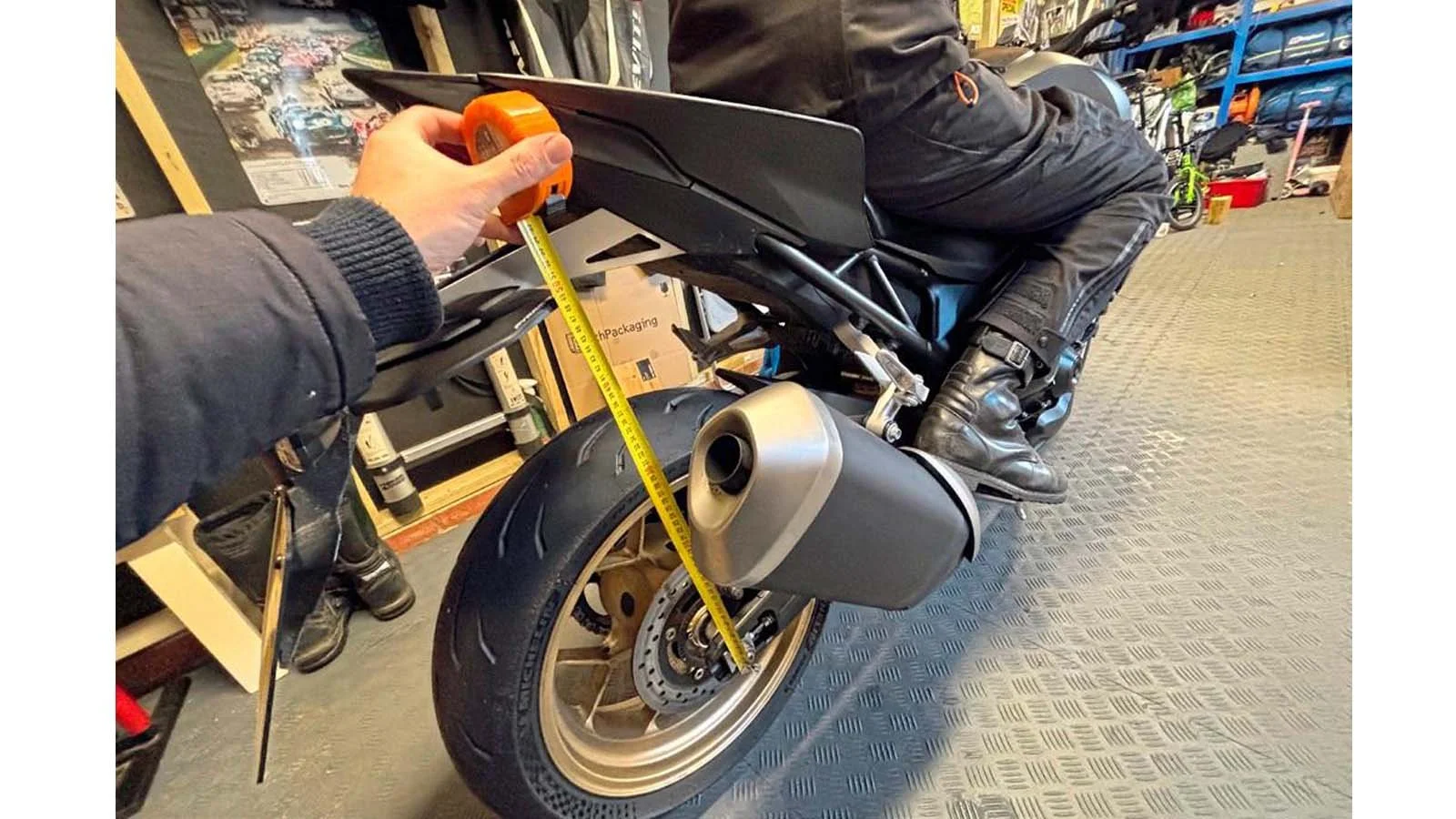
Don’t forget to be dressed in your normal riding gear
Start by getting the weight off of the suspension. Measure from the centre of the wheel spindle to a point on the tail unit. Sit on the bike, bounce the suspension, let it settle and measure again, then subtract from original measure as you did for the front. As previously, with a typical road bike the aim is 30-40mm. Twiddle the preload adjuster until you’re there.
3 ADJUSTING FOR PASSENGERS AND LUGGAGE

Wind in more preload to cope with extra load
If you’re carrying a pillion or loaded up with luggage for a tour – or possibly both – more preload (less sag) will compensate. Hence, you’ll need to load the bags or boxes and get your pillion (dressed in their riding gear) on the bike to ensure you get things right. Sounds like a faff, but it’s better than guessing to be sure of getting accurate measurements for best suspension performance.
4 PRELOAD AND HANDLING
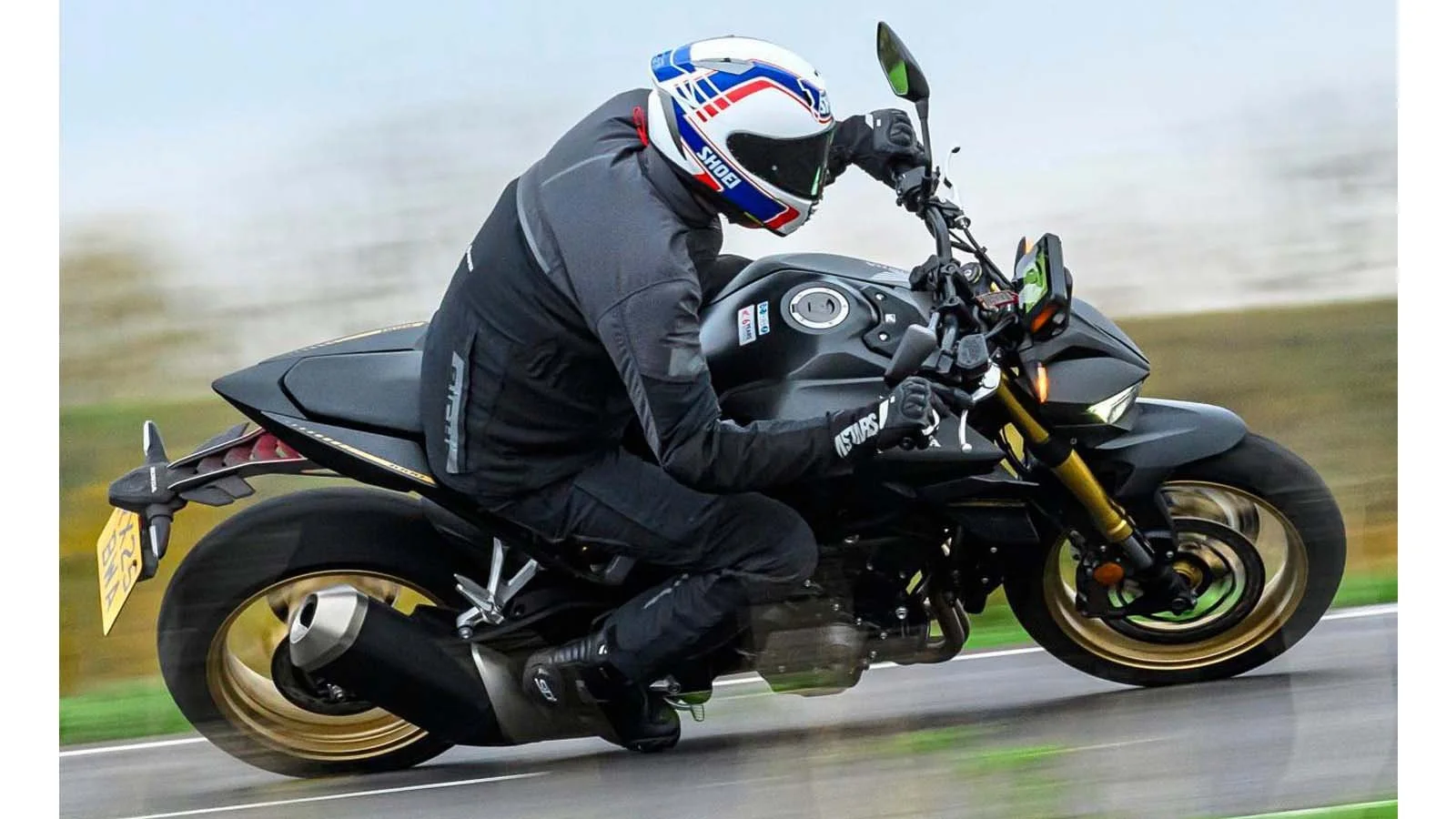
Correct preload affects other aspects of your bike’s performance. Too much sag – caused by too little preload – leads to yawing under braking and acceleration. If you want quicker steering, going towards the least possible sag at the rear within the aforementioned parameters will lift the rear slightly, changing the geometry and putting more weight on the front.