
Fit a new set of front brake pads
THE SMALL STUFF
An easy and highly satisfying DIY task – but pay attention to safety
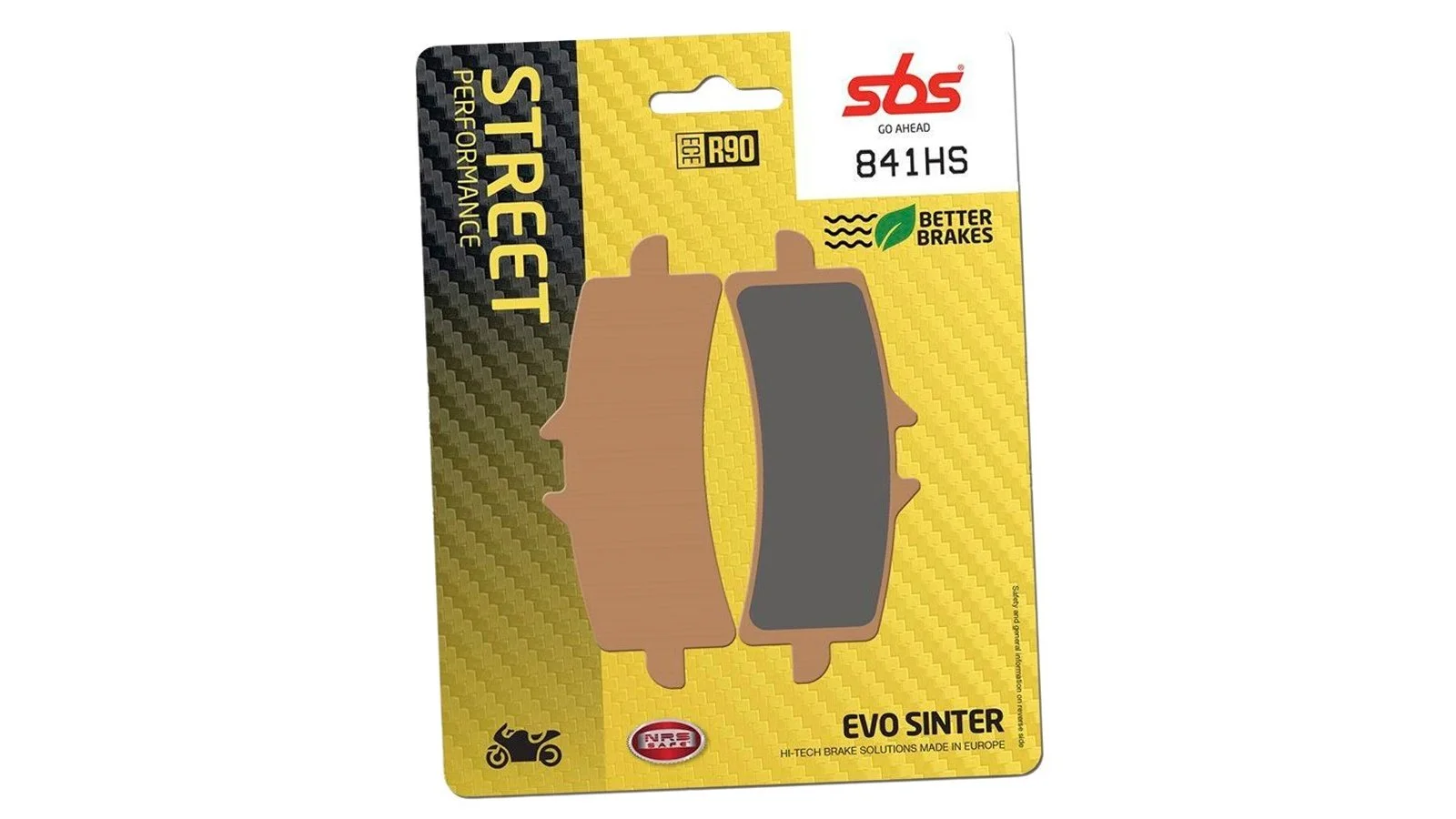
Depending on how and where you ride and the compound of brake pads you favour, they’re going to wear out sooner or later.
You can save the expense of a trip to the dealer by taking on the task yourself – but you do have to be meticulous when it comes to safety – brakes are brakes after all. So, it is important to take your time and doublecheck your handiwork as you go, and again once the task is completed.
Remember too that it will take a few applications of the brakes on the road until the new pads bed in to the discs.
TOOLS NEEDED Sockets, spanners, Allen keys
TIME TAKEN 25 minutes
DIFFICULTY ●●●●●
1. Get started on stoppers
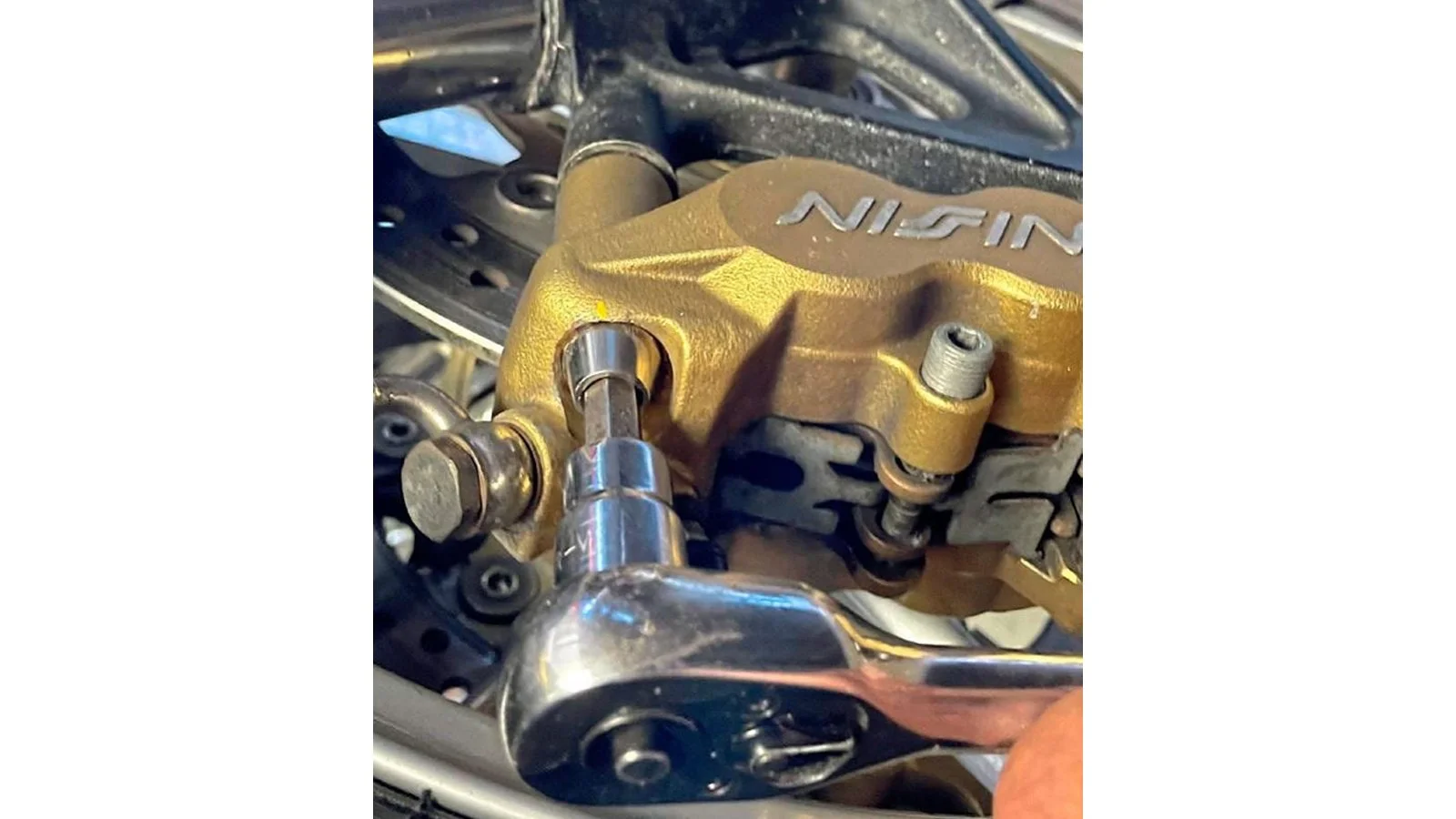
Having first taken the cap off of the master cylinder reservoir and wrapped some shop towel around it to catch spillages, loosen the pad retaining pin(s) – easier while the caliper is still on the bike. Next, loosen and remove the caliper retaining bolts. Note the orientation and fitting of the pad retaining spring. Once the caliper is off, use a bungee or some string to take its weight off the hose.
2. Take time to clean the caliper
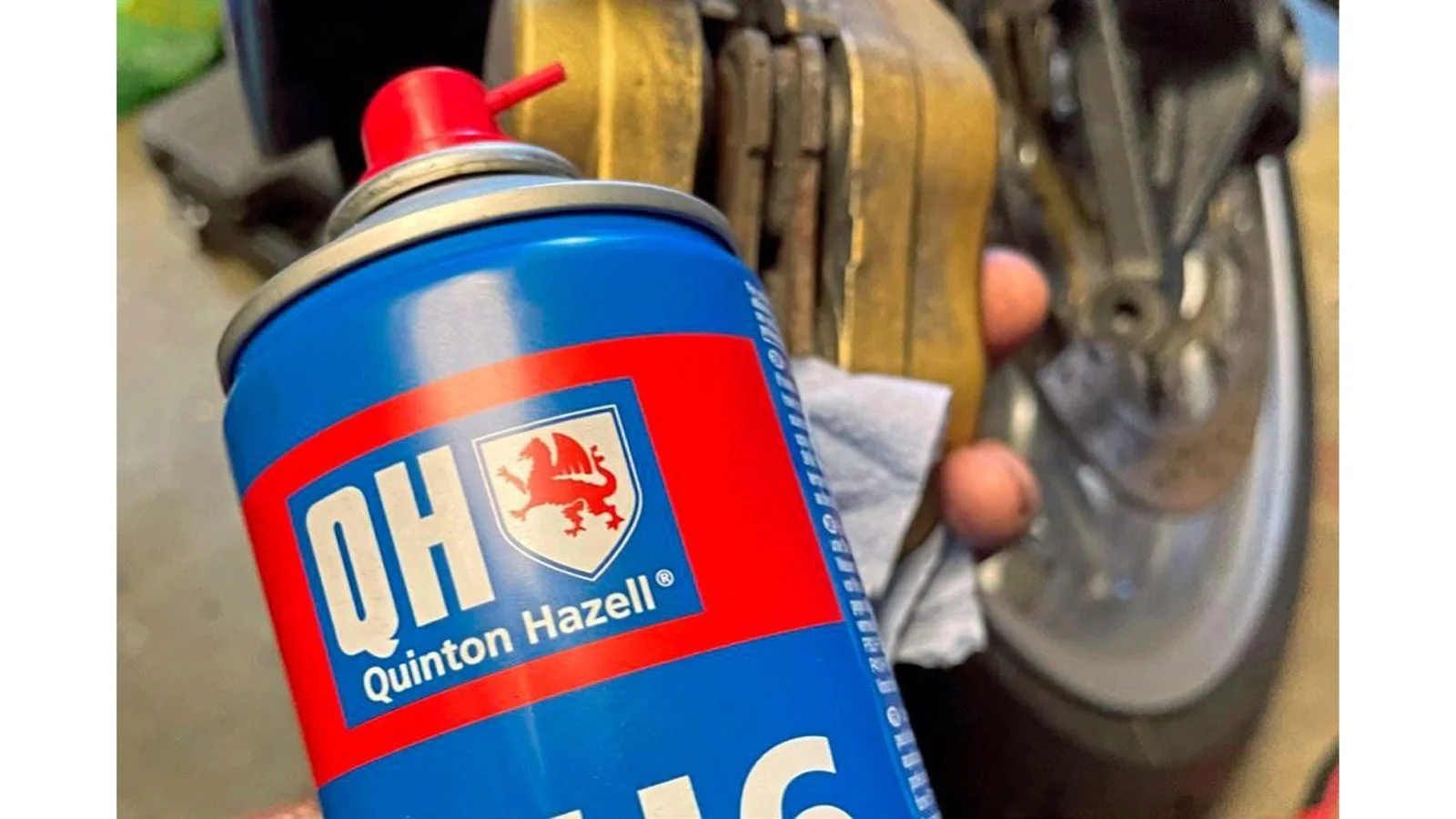
Invert the caliper and gently pump the brake lever to move the pistons out a little. Leave the old pads in while doing this to avoid popping the pistons out of their bores. Remove the pads and clean around the pistons using brake cleaner and something like an old toothbrush. Refit the old pads, insert an old large screwdriver between them, and slowly lever the pistons back into the caliper.
3. Ready for new pads
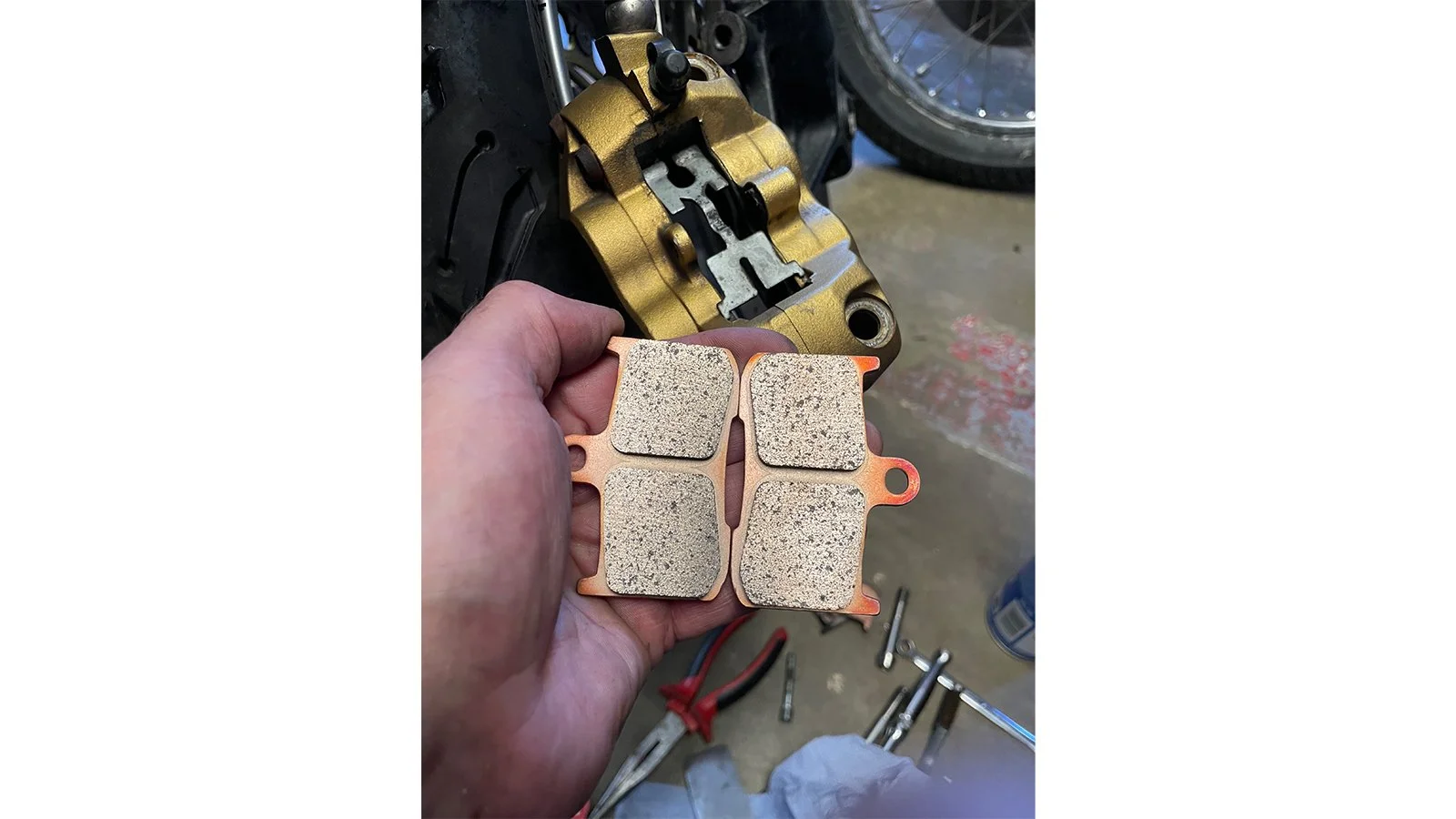
Check for fluid overflow at the reservoir and remedy as necessary. With the pistons fully retracted, the new pads can be fitted. Lightly grease the shaft of the retaining pin(s) and put copper grease on the threads. Check the pads are in their slots in the caliper and that everything is correctly orientated, then refit the caliper and tighten to the correct settings. Refit any R-clips to the retaining pins.
4. Pump the pads into position
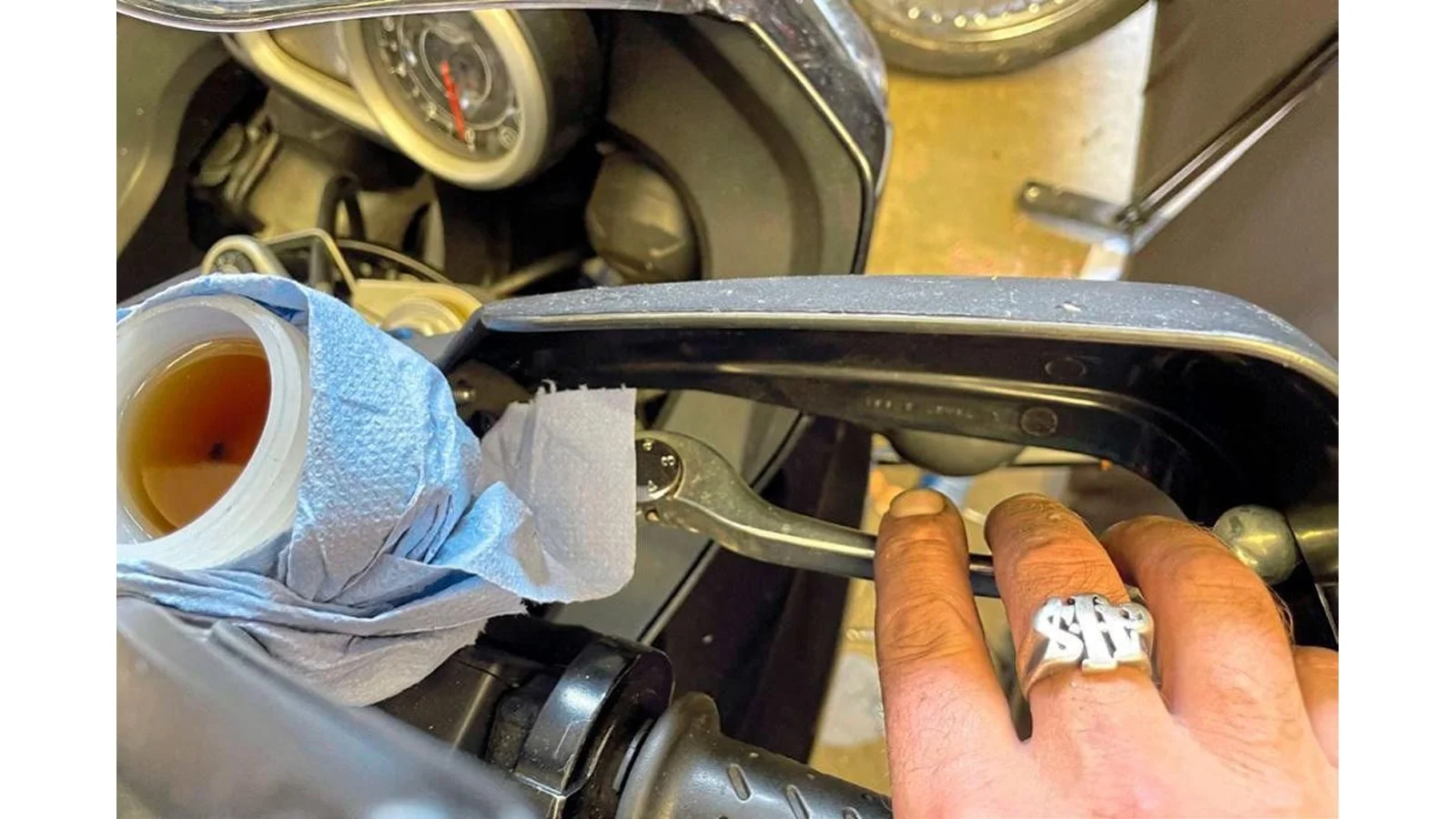
Satisfied that everything is tightened at the caliper end? Next, gently operate the brake lever to prevent any sudden spurts of fluid from the reservoir. The lever will go hard once the pads have made contact with the discs. Conduct a visual check of the pads to be doubly sure. Check the new pads haven’t raised the fluid level too high in the reservoir. Correct as necessary.